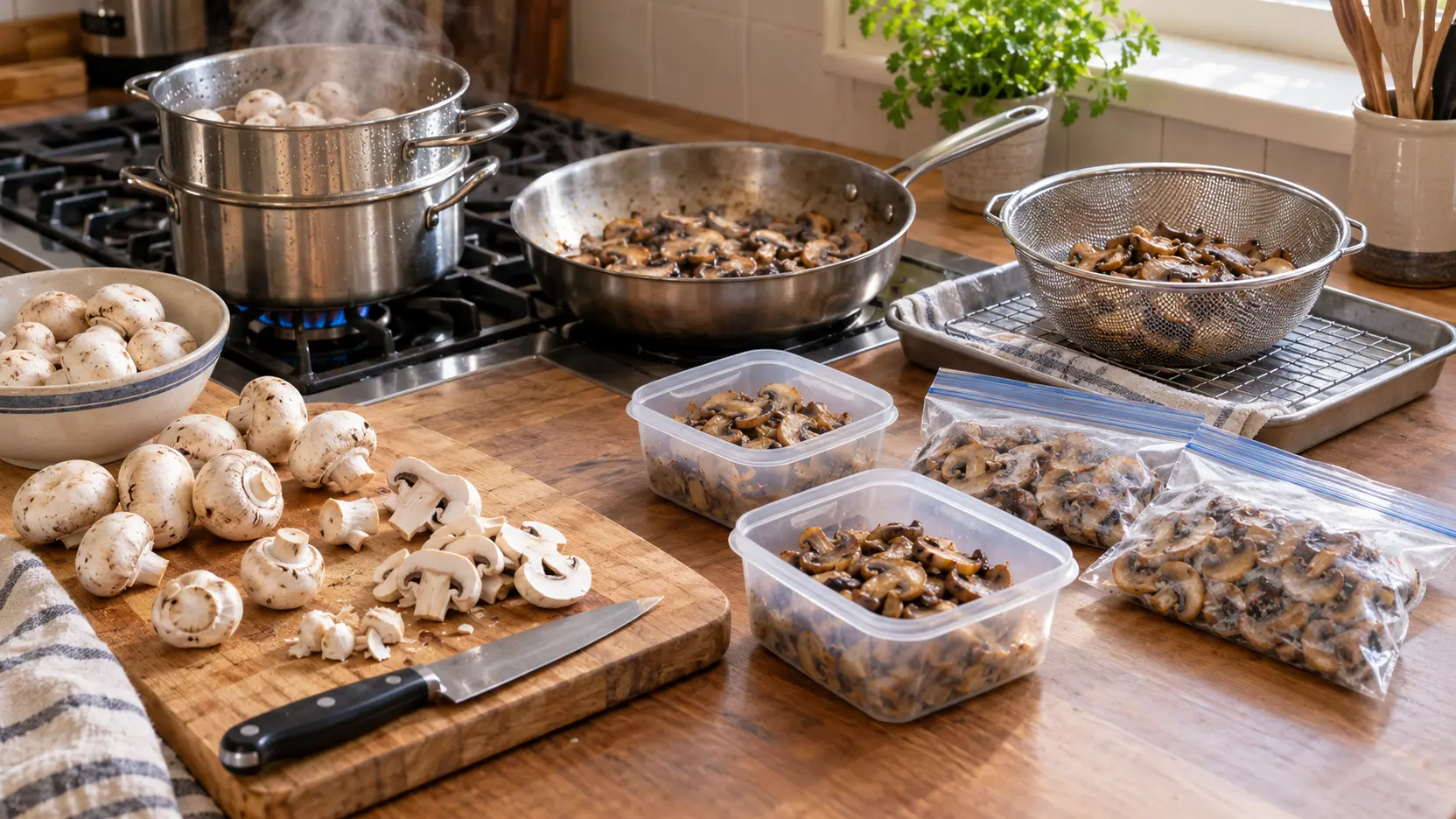
Can You Freeze Mushrooms Raw?
Raw mushrooms will freeze, but steaming or sautéing first gives more dependable quality. See exact steam times, anti-darkening treatment, and packing steps.
Read the practical guideSeasonal food, modern safety
Evidence-based guides to freezing, canning, drying, and storing food without risky folklore.
Preserving food saves money only when the result is safe, used, and replaces a later purchase. These guides separate tested methods from viral shortcuts.
25 practical guidesChoose the safe form first
Cutting, puréeing, acidifying, or thickening changes how heat moves through a jar. Match the exact food form to a complete tested process.
| Food and form | Safe method | What to know | Add only after opening |
|---|---|---|---|
| Unsweetened applesauce | Water-bath hot pack | Sugar is optional; process pints 15 minutes or quarts 20 minutes at 0–1,000 feet, longer above that. | Sweetener or spices, if wanted |
| Thickened apple pie filling | Use cook-type Clear Jel | Cornstarch, flour, tapioca, instant Clear Jel, and pectin are not substitutes in the tested recipe. | Alternative starch only after opening plain canned apples |
| Broth-based homemade soup | Pressure-can only | Fill jars halfway with solids; process pints 60 minutes or quarts 75 minutes. | Pasta, rice, flour, milk, cream, and thickeners |
| Pumpkin or winter squash purée | Freeze; do not home-can | No tested water-bath or pressure-canning process exists for the purée. | Nothing needed; freeze the finished purée |
| Pumpkin or winter squash, 1-inch cubes | Pressure-can only | Hot-pack cubes in liquid; process pints 55 minutes or quarts 90 minutes. | Purée the drained cubes after opening |
| Plain green beans | Pressure-can only | Process pints 20 minutes or quarts 25 minutes at the correct pressure. | Butter, bacon, dairy, or thickeners |
| Whole, crushed, or juiced tomatoes | Acidify every jar | Use bottled lemon juice or citric acid plus the complete tested heat process. | No required finish; acid goes in before processing |
| Apple butter | Use a complete tested recipe | Refrigerate or freeze an improvised recipe; a sealed lid alone is not proof of safety. | Only ingredients allowed by the tested recipe |
Sugar is recipe-specific
Sugar may be optional for flavor in one tested process and essential to another recipe's structure. Check the product before changing it.
| Product | Sugar rule | Safe next step |
|---|---|---|
| Applesauce | Optional for flavor | Use the tested hot-pack process and altitude-adjusted time with or without sugar. |
| Plain apple slices | Optional in the packing liquid | The USDA method permits hot water or tested syrup strengths; use the full fruit-canning process. |
| Apple pie filling | Follow the tested formula | Do not change the sugar, bottled lemon juice, or cook-type Clear Jel proportions. |
| Jam or jelly | Recipe-dependent | Use a tested reduced-sugar or no-sugar pectin recipe; do not alter a regular-pectin formula. |
Canning thickener checkpoint
The tested apple pie filling uses cook-type Clear Jel. If you do not have it, freeze the filling or can plain apples with a separate tested recipe and thicken after opening.
| Product | Canning verdict | Appropriate use |
|---|---|---|
| Cook-type Clear Jel | Use only as specified | The tested NCHFP canned apple pie filling |
| Instant Clear Jel | Do not substitute | Some freezer or fresh fillings; not the tested canned filling |
| Cornstarch, flour, or tapioca | Do not substitute | Add after opening plain canned apples, or use in a freezer recipe |
| Sure-Jell or other pectin | Do not substitute | Use only in the jam or jelly recipe that specifies it |
Canning safety checkpoint
These USDA-based amounts apply to whole, crushed, and juiced tomatoes. They do not replace the complete tested recipe or its heat-processing step.
| Jar size | Bottled lemon juice | Citric acid | 5%-acidity vinegar |
|---|---|---|---|
| Pint | 1 tablespoon | ¼ teaspoon | 2 tablespoons |
| Quart | 2 tablespoons | ½ teaspoon | 4 tablespoons |
Quick preservation answers
Sometimes—but not for every vegetable. Use this comparison to choose the right guide before you start cutting.
| Produce | Direct answer | What to know |
|---|---|---|
| Mushrooms | Steam or sauté first | Steam whole 5 min, buttons or quarters 3½ min, or slices 3 min; leave ½ inch headspace. |
| Broccoli | Water 3 min; steam 5 min | Use florets no more than 1½ inches across; cool, drain, and pack with no headspace. |
| Spinach and tender greens | Blanch 2 minutes | Collards need 3 minutes; cool for the corresponding time and drain thoroughly. |
| Raw eggs | Remove shells; mix and freeze | Never freeze intentionally in the shell; label salt or sugar additions. |
| Pumpkin purée | Cook, cool, and freeze | Leave ½ inch of headspace; do not home-can purée. |
| Apple slices | No cooking required | Use a measured ascorbic-acid treatment, then tray-freeze for loose slices. |
| Carrots | Blanch 2 or 5 minutes | Pieces need 2 minutes; small whole carrots need 5 minutes. |
| New potatoes | Blanch 3–5 minutes | The NCHFP method is specifically for smooth new potatoes; time depends on size. |
| Cabbage | Blanch 1½ minutes | Use medium-to-coarse shreds, thin wedges, or separated leaves. |
| Eggplant | Blanch 4 minutes | Use ⅓-inch slices and add ½ cup lemon juice per gallon of water. |
| Okra | Blanch 3–4 minutes | Sort by pod size; small pods need 3 minutes and large pods 4. |
| Bell peppers | No blanching needed | Cut and tray-freeze raw; best for cooked dishes. |
| Tomatoes | No blanching needed | Freeze raw for sauces, soups, and other cooked uses. |
| Green beans | Blanch 3 minutes | The tested method better protects color, flavor, and texture. |
| Corn on the cob | Blanch 7–11 minutes | Time depends on ear size; cool for twice the blanching time. |
| Zucchini slices | Blanch 3 minutes | Use steam blanching for grated zucchini. |
| Peaches | Sugar is optional | Use an anti-darkening treatment; sugar affects quality, not safety. |
Plain & Frugal research library
Every guide opens with the direct answer and names the evidence behind safety or savings claims.
Raw mushrooms will freeze, but steaming or sautéing first gives more dependable quality. See exact steam times, anti-darkening treatment, and packing steps.
Read the practical guide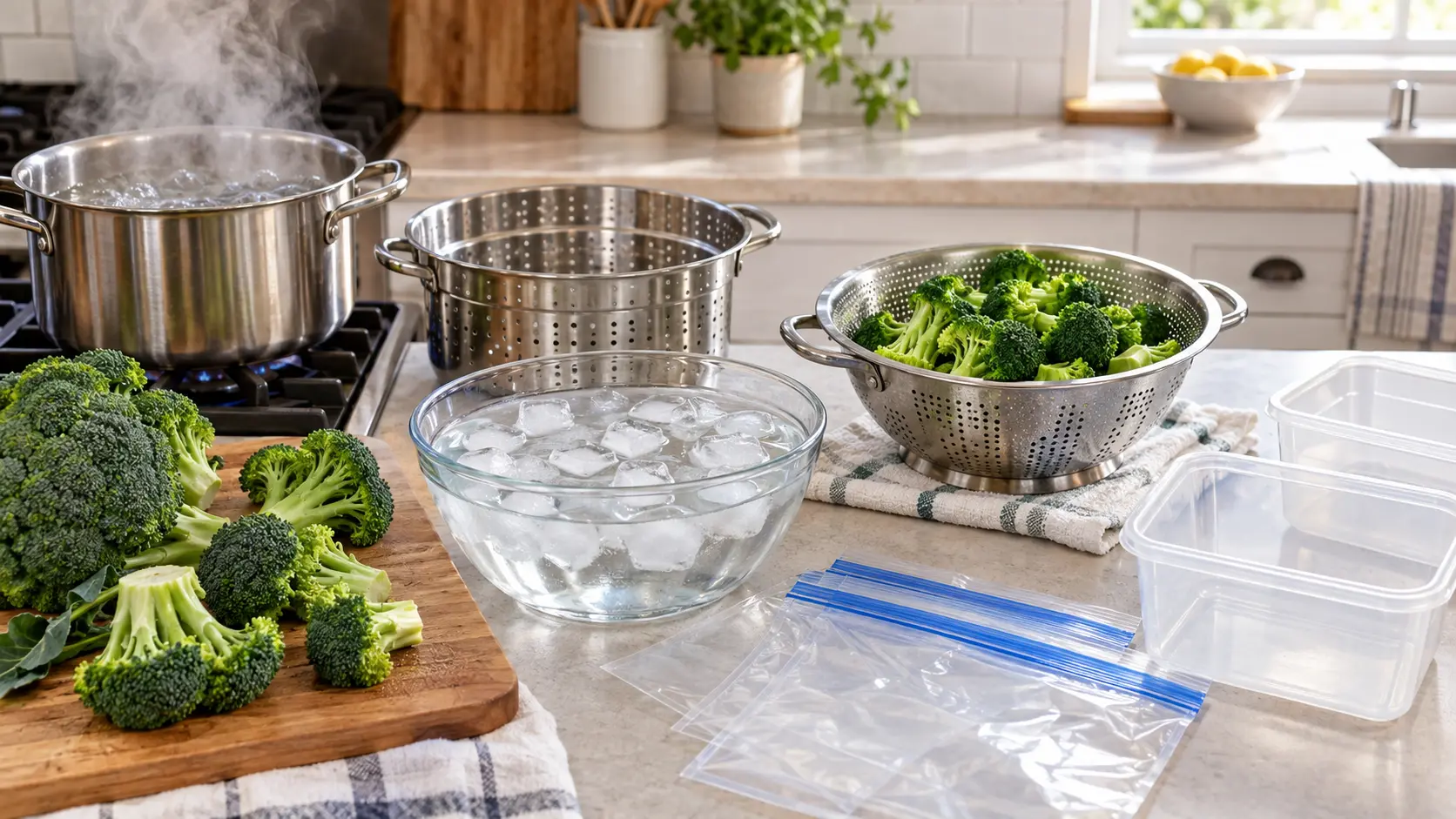
You can freeze broccoli raw, but blanching gives more dependable quality. Water-blanch 3 minutes or steam-blanch 5, cool, drain, and pack with no headspace.
Read the practical guide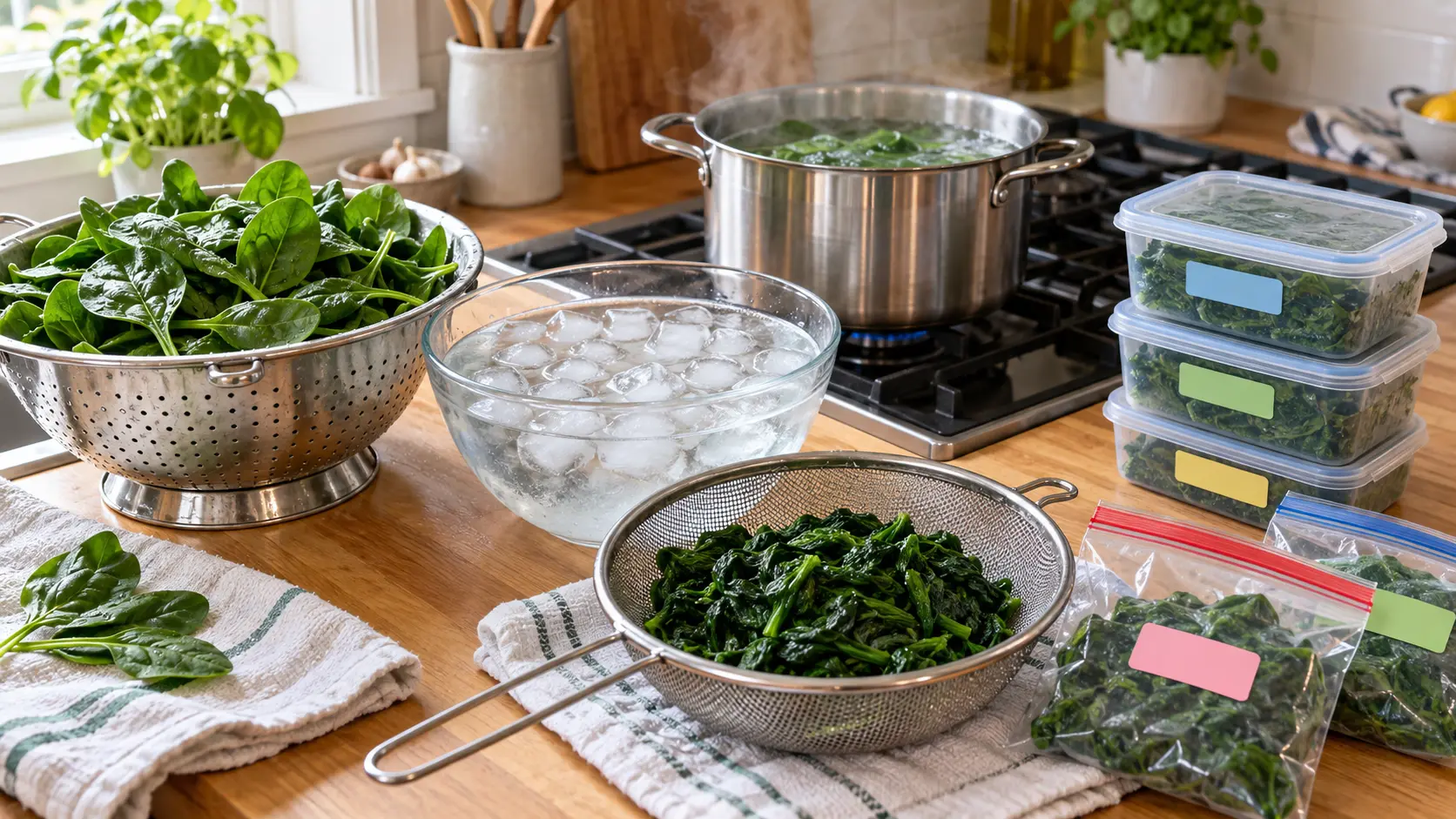
You can freeze spinach raw, but blanching it for 2 minutes gives more dependable color, flavor, and texture. Cool, drain, and pack with ½ inch headspace.
Read the practical guide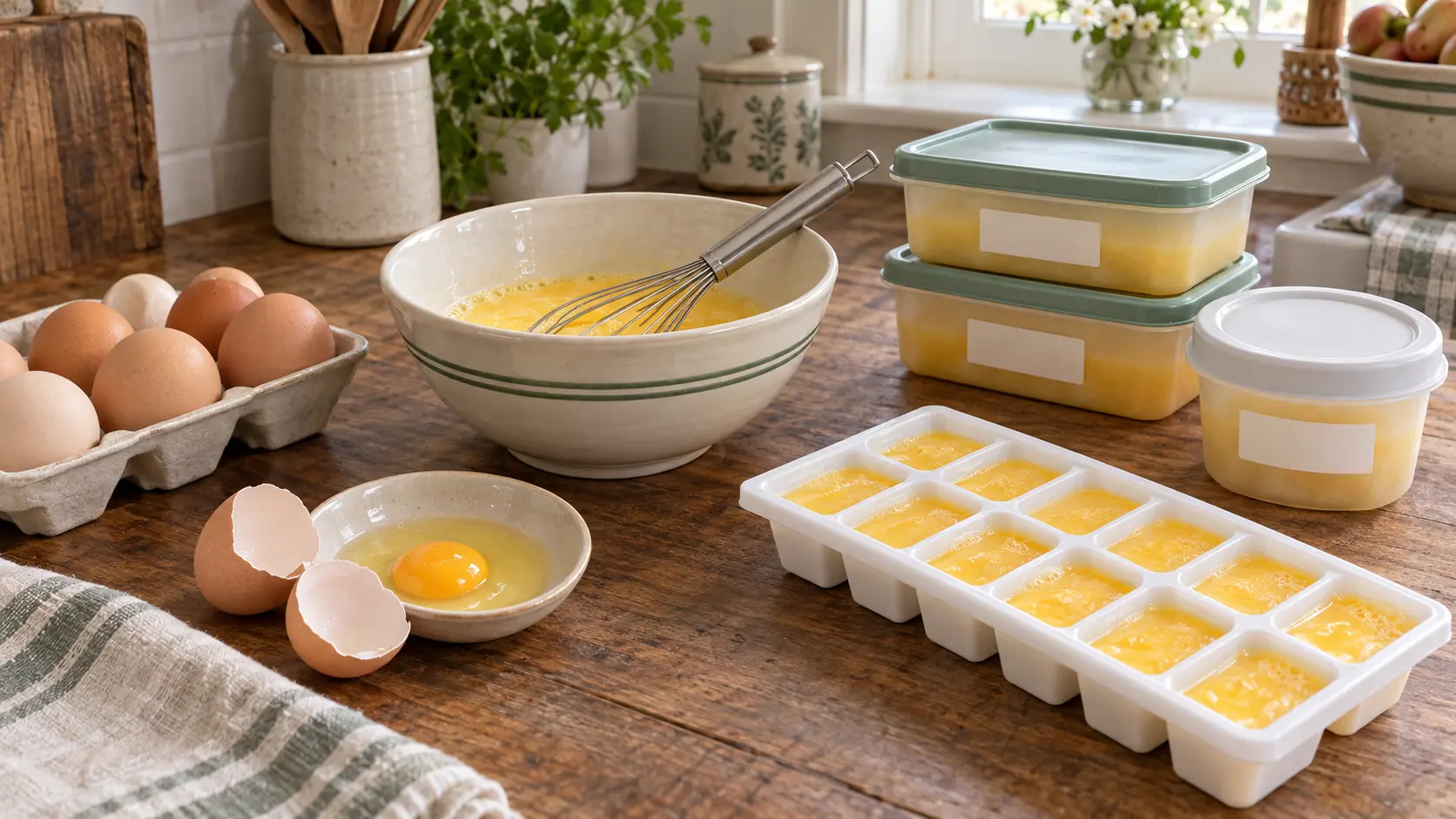
No. Remove eggs from their shells, gently mix whole eggs, and freeze measured portions. Use special treatment for yolks and no additive for whites.
Read the practical guide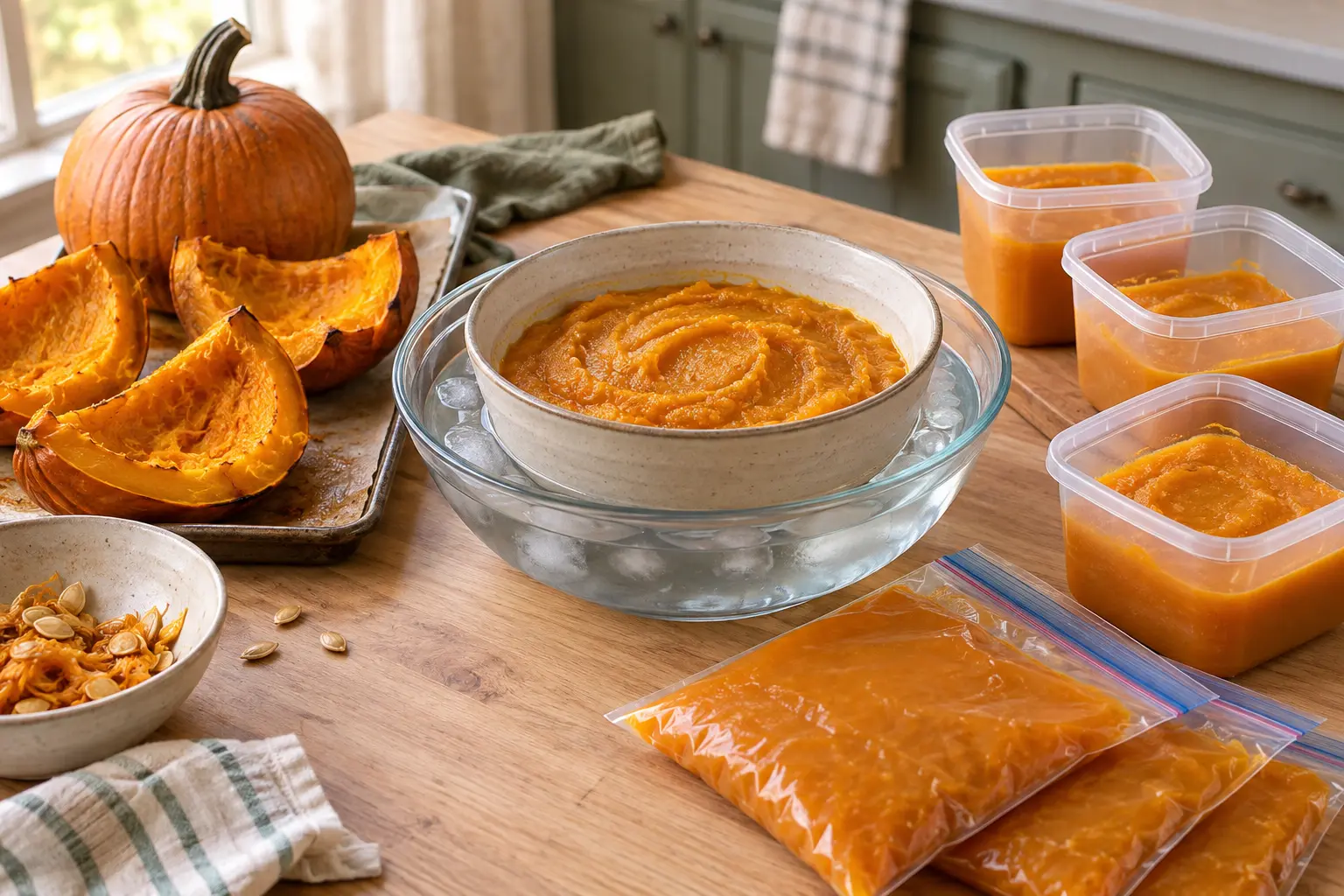
Yes. Cook and mash mature pumpkin, cool the purée promptly, pack it in recipe-size portions with ½ inch of headspace, and freeze at 0°F or below.
Read the practical guide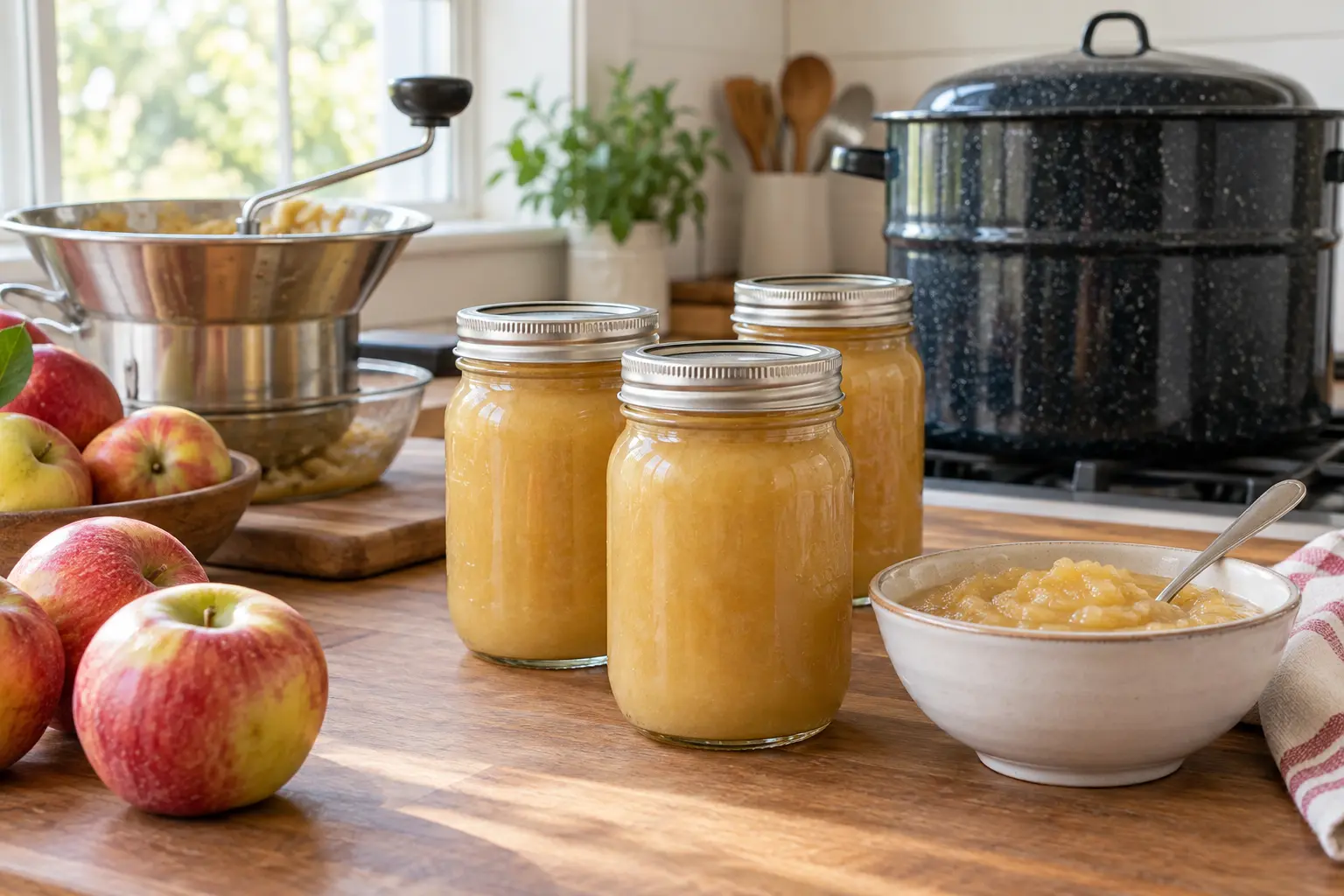
Yes. Sugar is optional in tested home-canned applesauce. Hot-pack the sauce, leave ½ inch of headspace, and water-bath process pints or quarts for the time required at your elevation.
Read the practical guide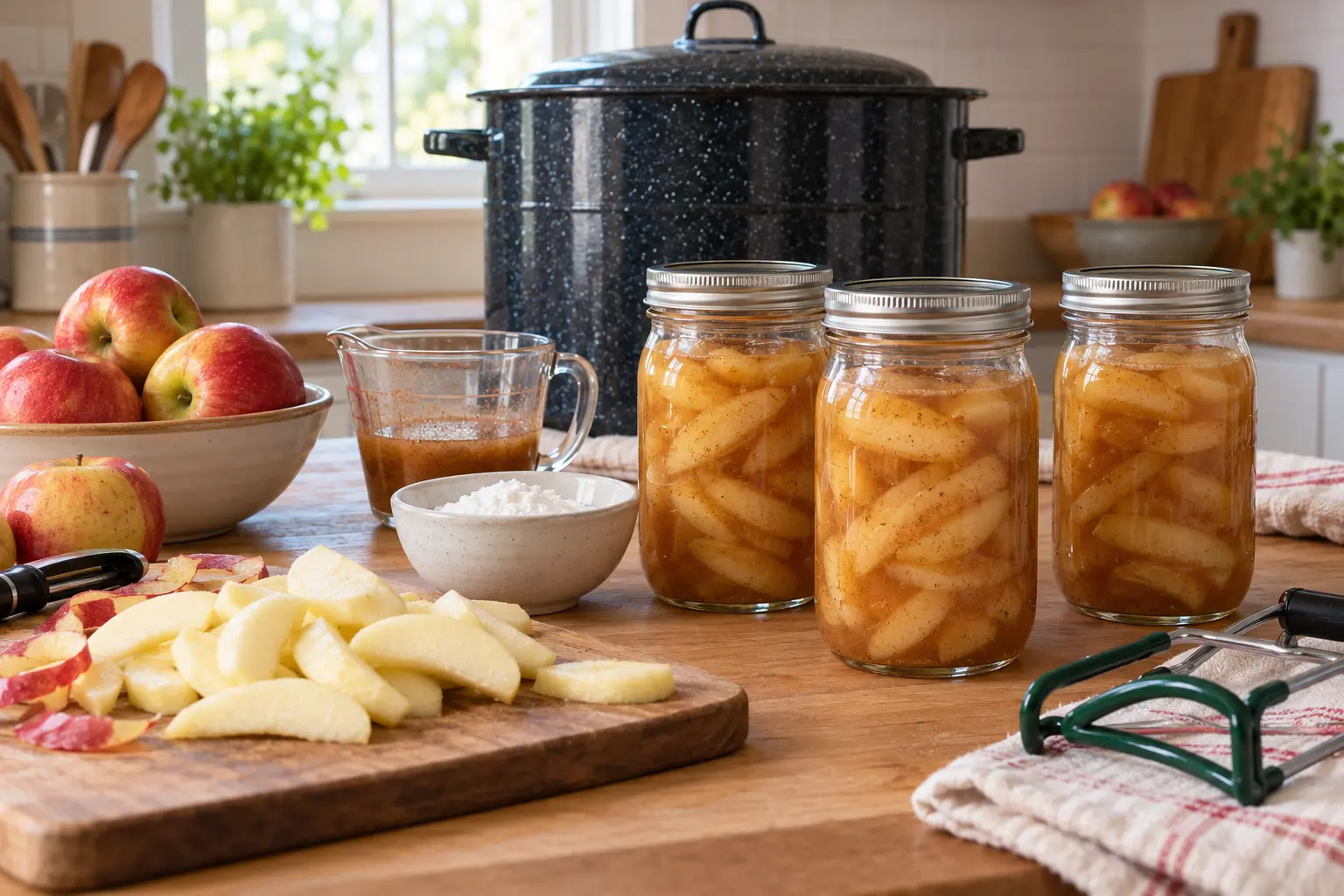
Do not replace cook-type Clear Jel with cornstarch, flour, tapioca, instant Clear Jel, or pectin in a tested canned apple pie filling recipe. Freeze the filling or can plain apples instead.
Read the practical guide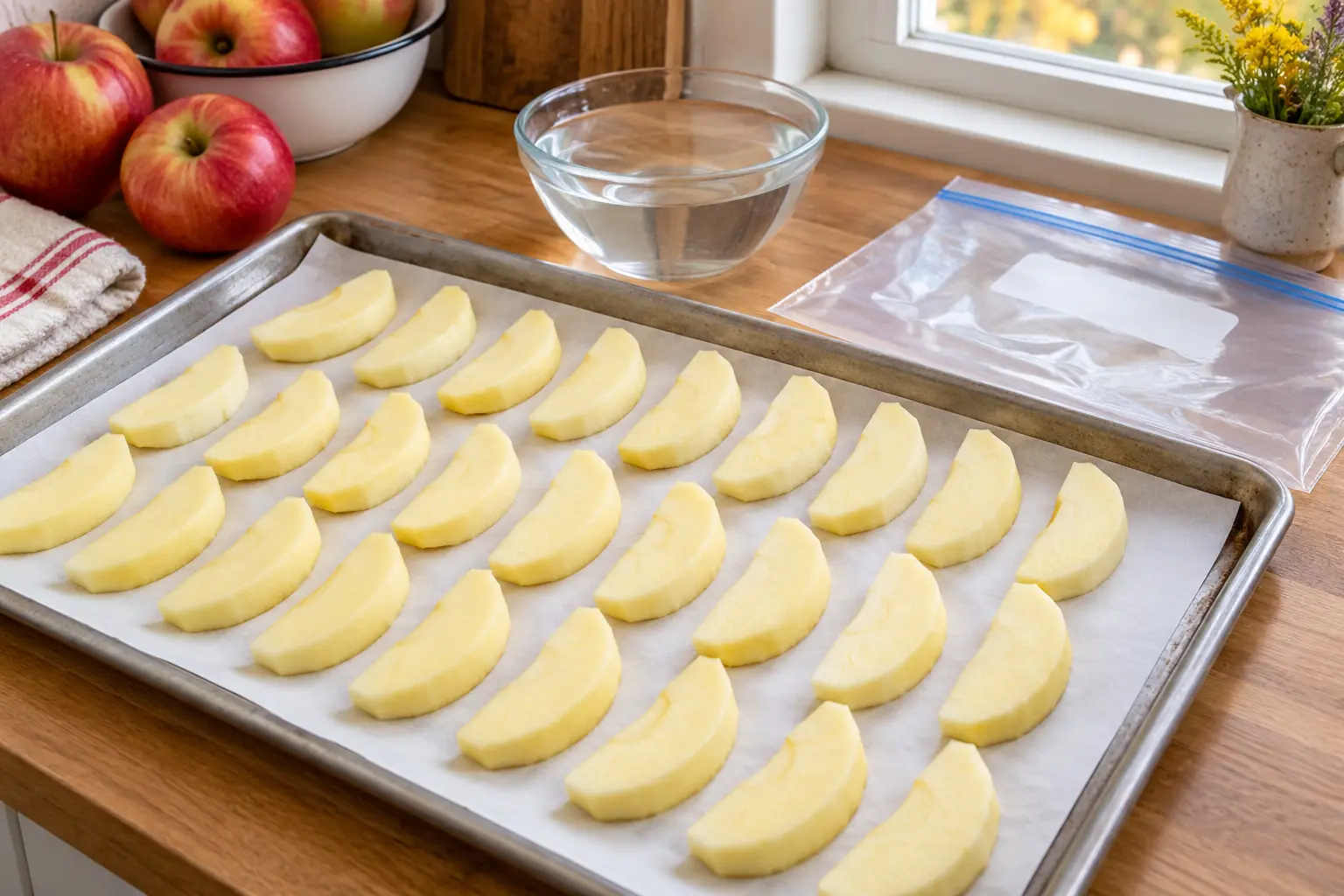
Yes. Freeze raw apple slices after an ascorbic-acid treatment, then tray-freeze and package them. Expect a softer texture and plan to use them in cooked dishes.
Read the practical guide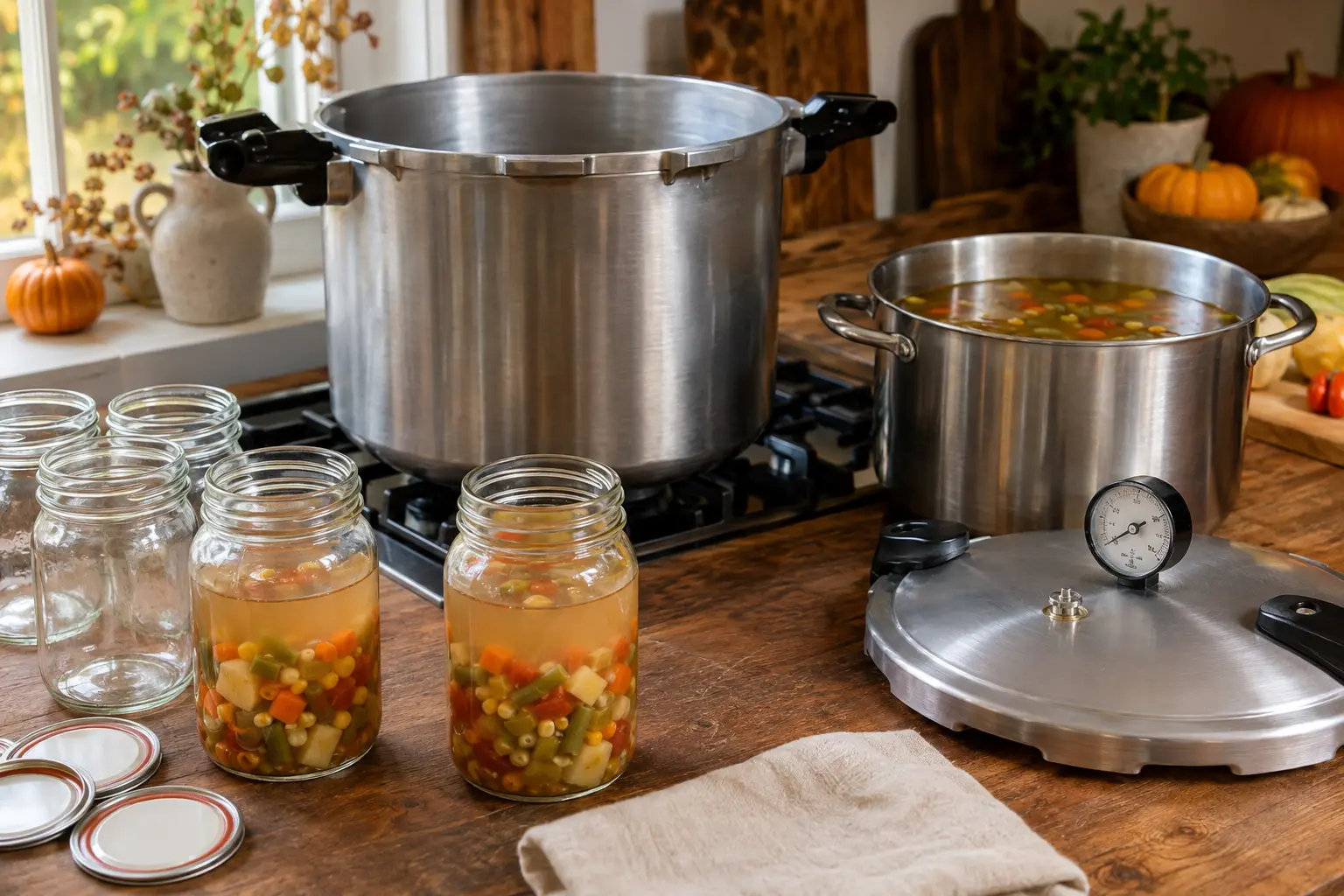
No—most homemade soups are low-acid and require a true pressure canner. Use the tested half-solids method and add pasta, rice, dairy, or thickeners after opening.
Read the practical guide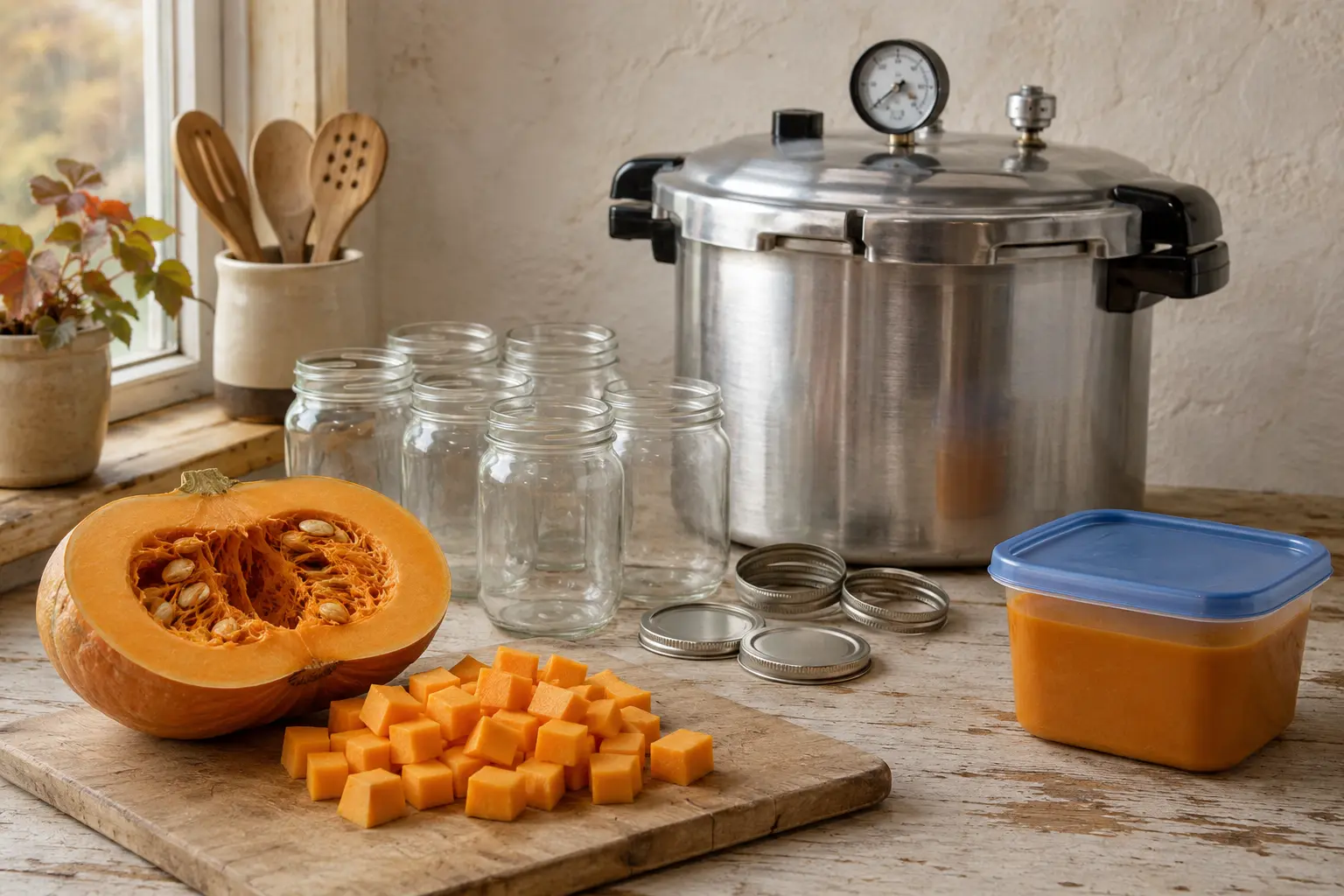
No—home-canned pumpkin purée is not recommended. Freeze the purée, or pressure-can 1-inch pumpkin cubes using the tested process.
Read the practical guide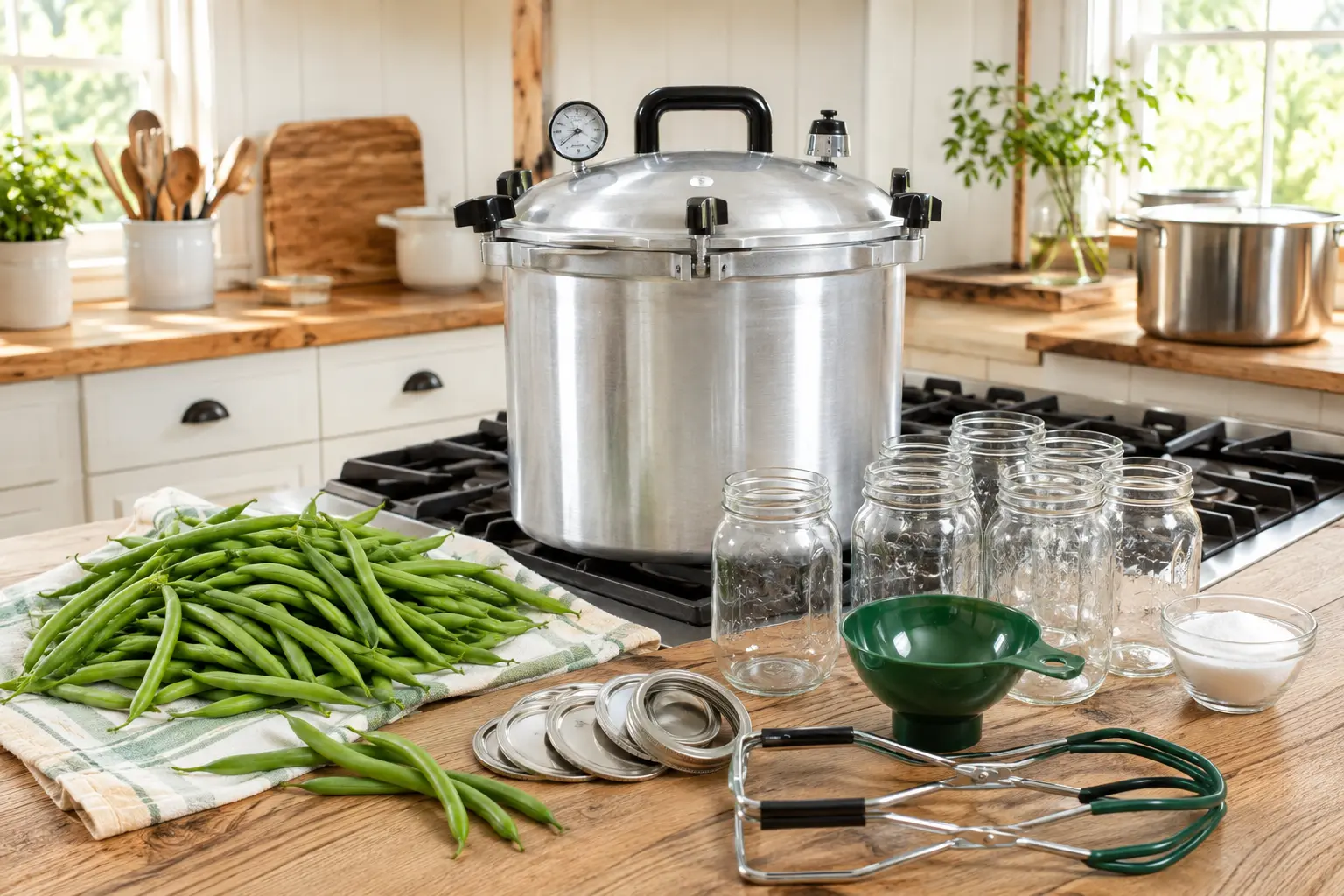
No—plain green beans are low-acid and require a real pressure canner. A tested pickled-bean recipe is the boiling-water alternative.
Read the practical guide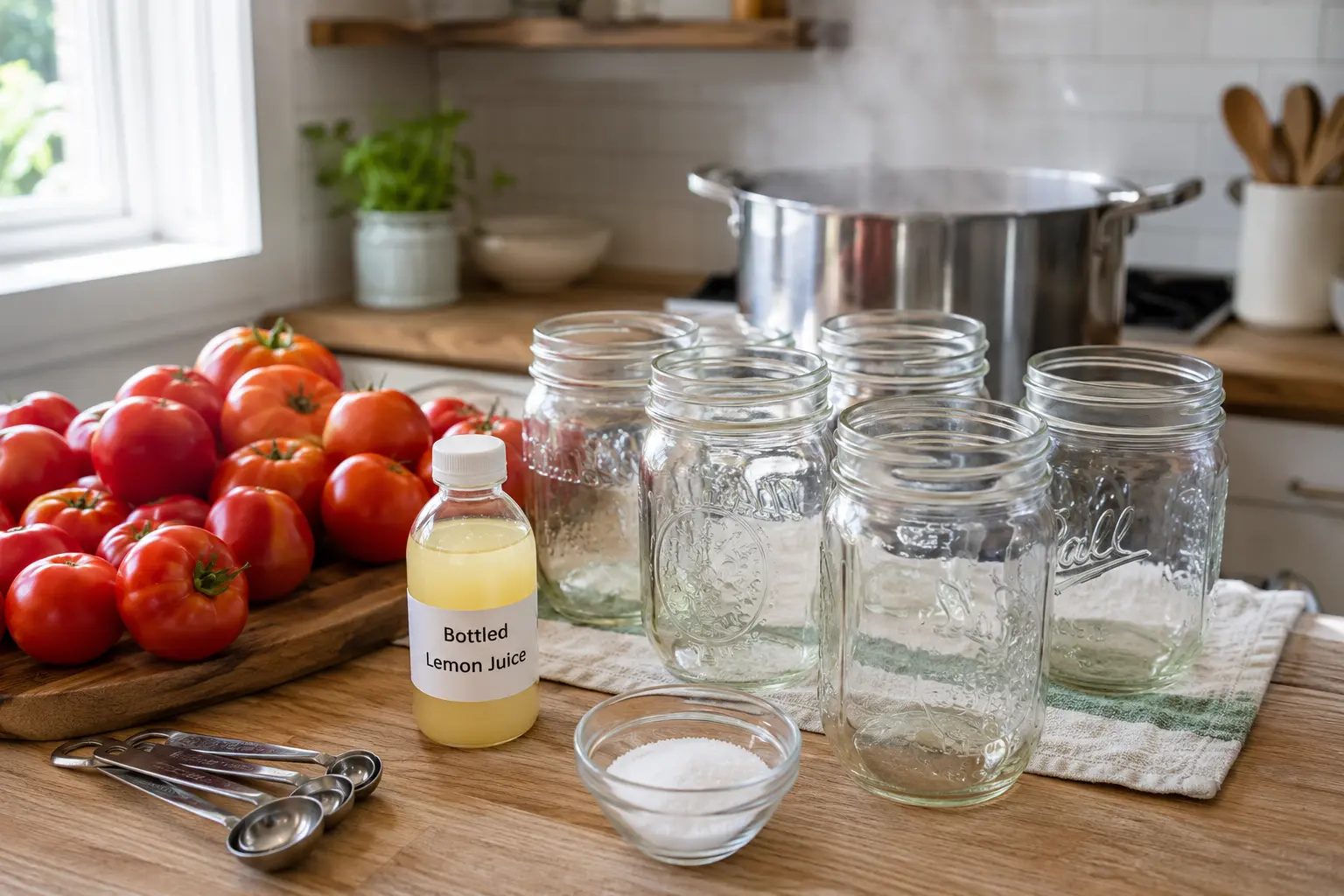
Yes—acidify whole, crushed, and juiced tomatoes with bottled lemon juice or citric acid, even when a tested recipe offers pressure-canning directions.
Read the practical guide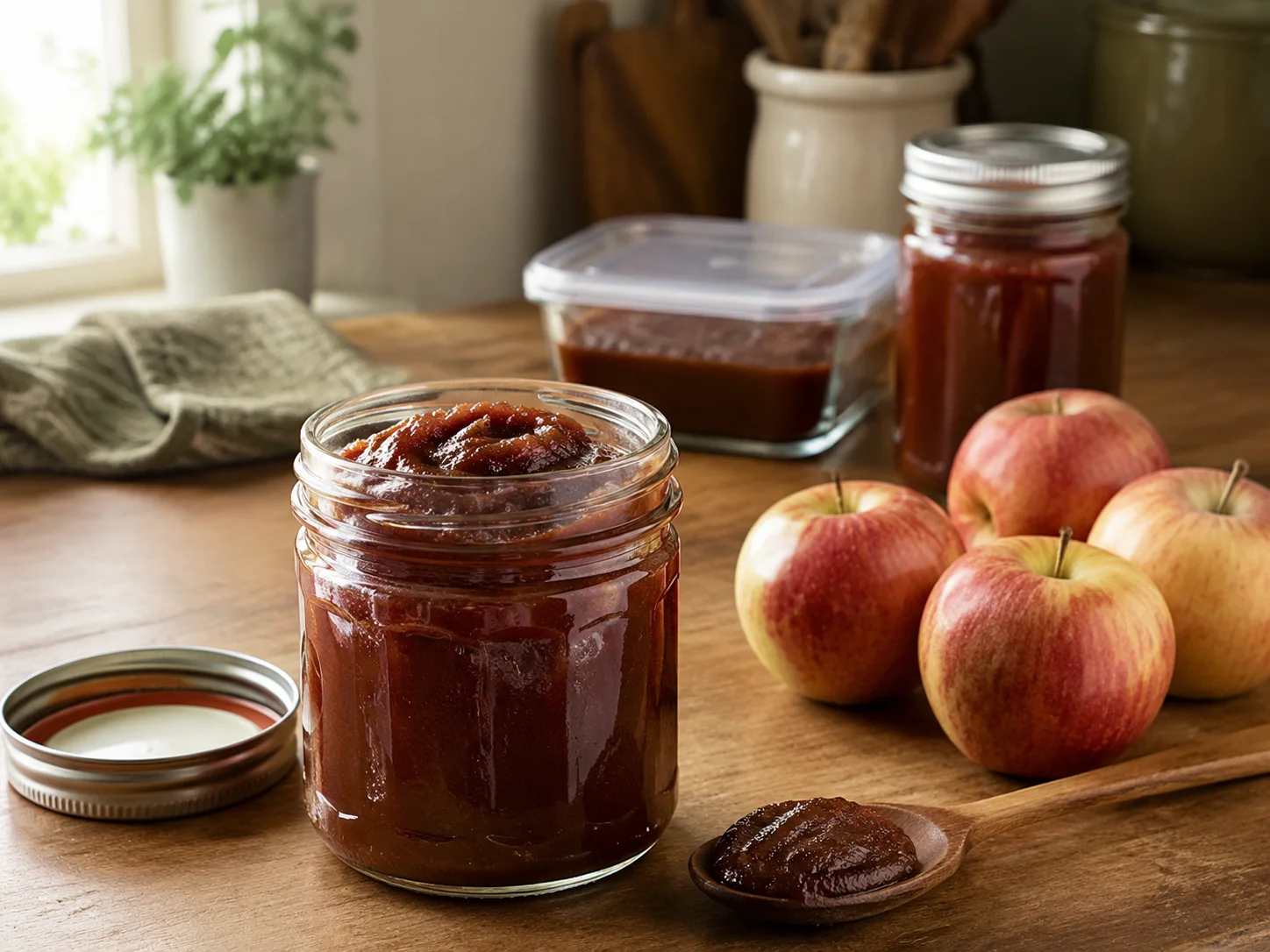
Yes—unless it was processed with a tested canning recipe. Use the refrigerator, freezer, or a complete boiling-water process; a popped lid alone is not enough.
Read the practical guide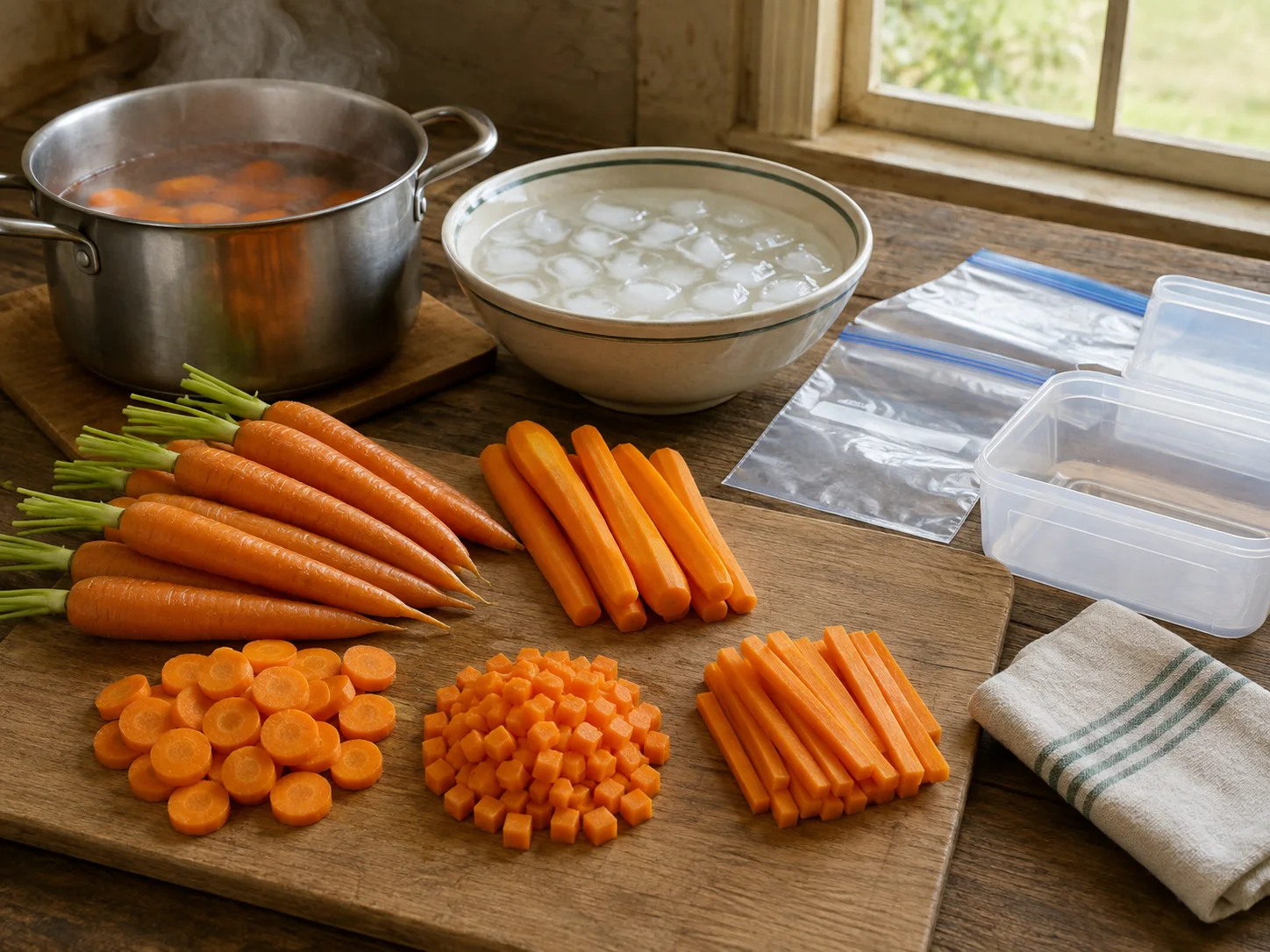
Raw carrots will freeze, but blanching gives more dependable quality. Use 2 minutes for pieces or 5 minutes for small whole carrots.
Read the practical guide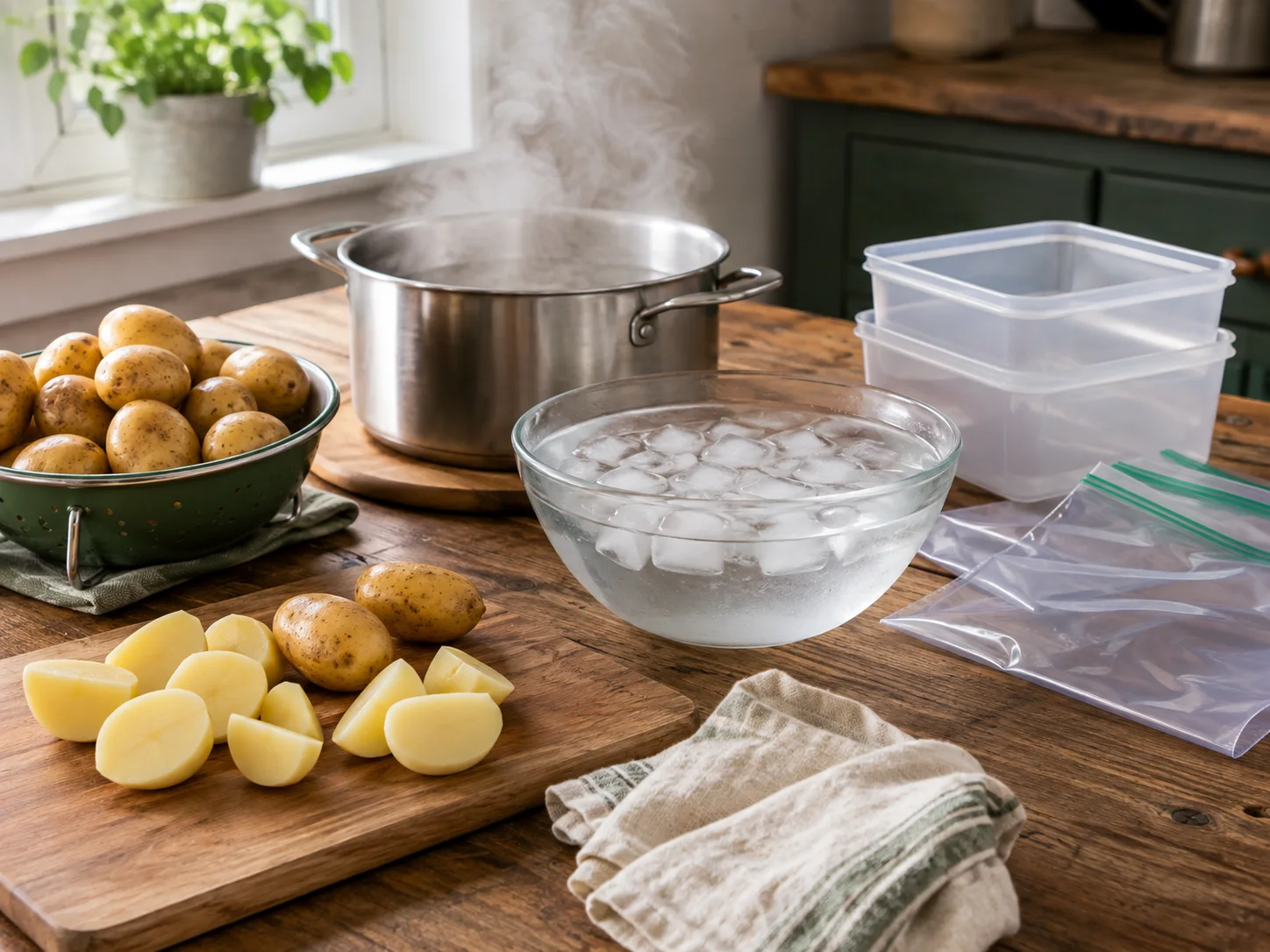
Raw potatoes freeze poorly. Use the tested 3–5 minute method for new potatoes—or partially fry homemade fries before freezing.
Read the practical guide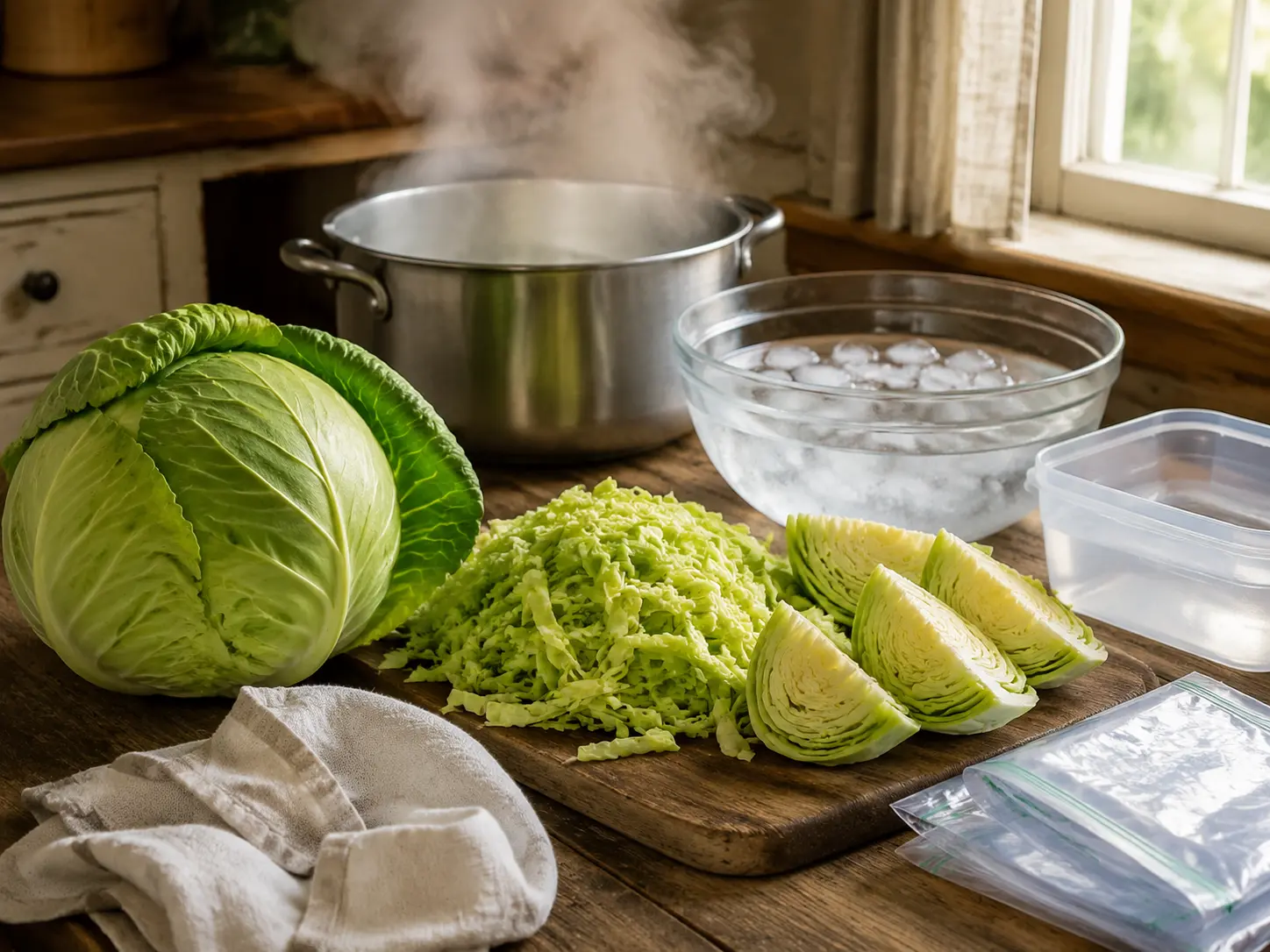
Raw cabbage can be frozen, but a 1½-minute water blanch gives more dependable color, flavor, and texture for cooked dishes.
Read the practical guide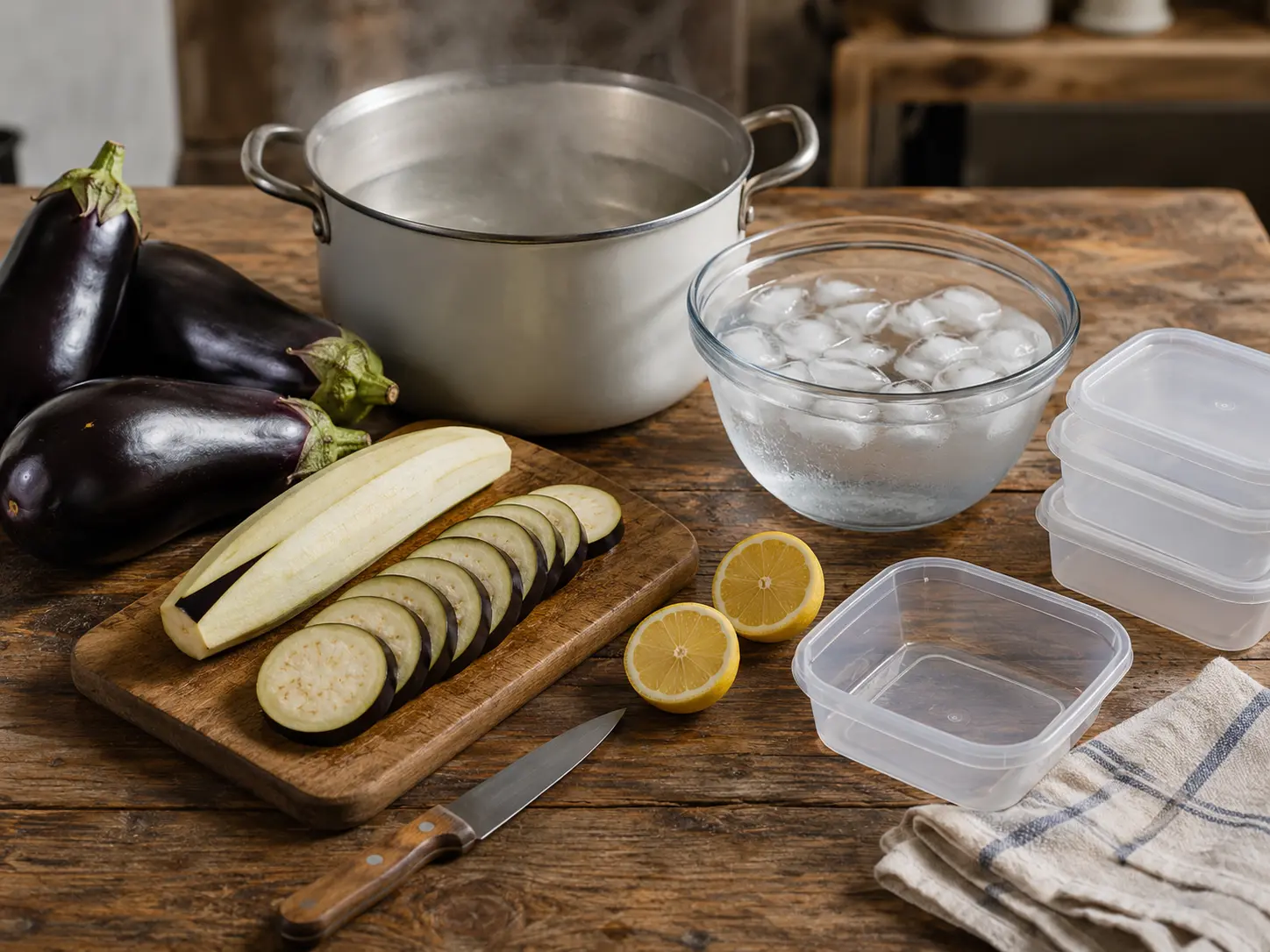
For better color, flavor, and texture, peel and slice eggplant ⅓ inch thick, then blanch it for 4 minutes in lemon-water before freezing.
Read the practical guide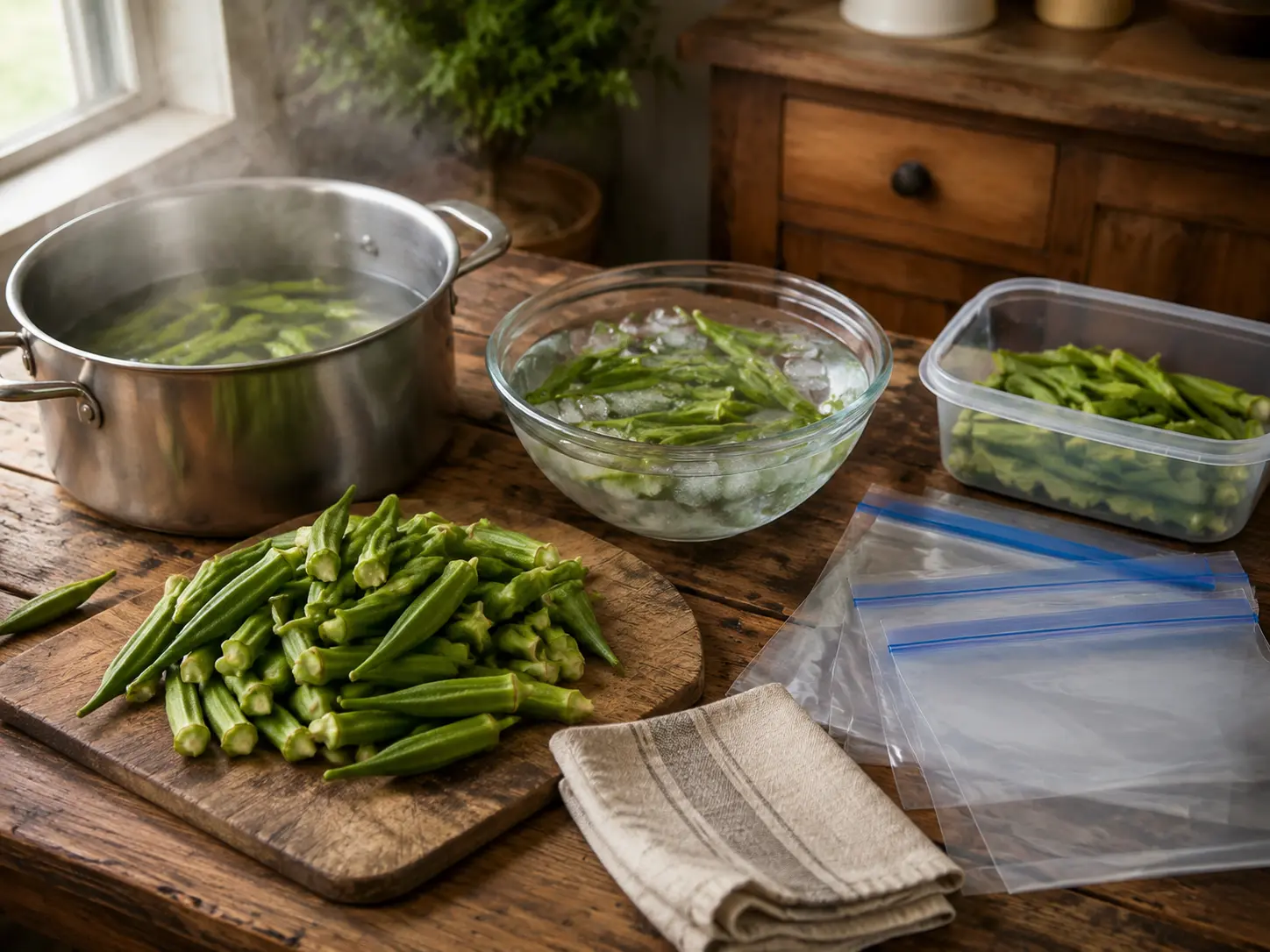
You can freeze raw okra, but blanching protects its color, flavor, and texture. Use 3 minutes for small pods and 4 minutes for large pods.
Read the practical guide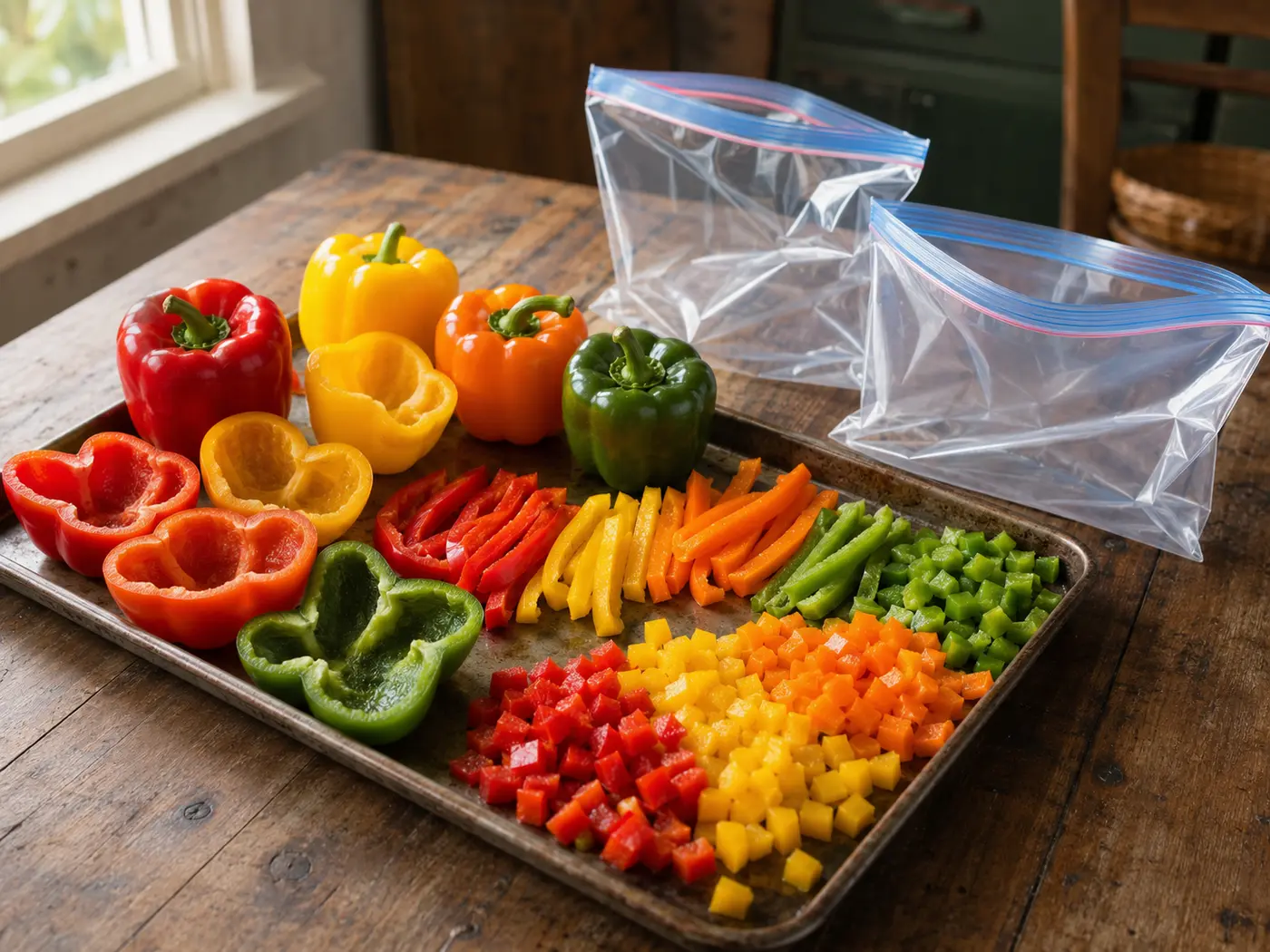
Freeze bell peppers raw without blanching: wash, core, cut, tray-freeze, and package airtight. Learn the best cuts, storage time, and uses.
Read the practical guide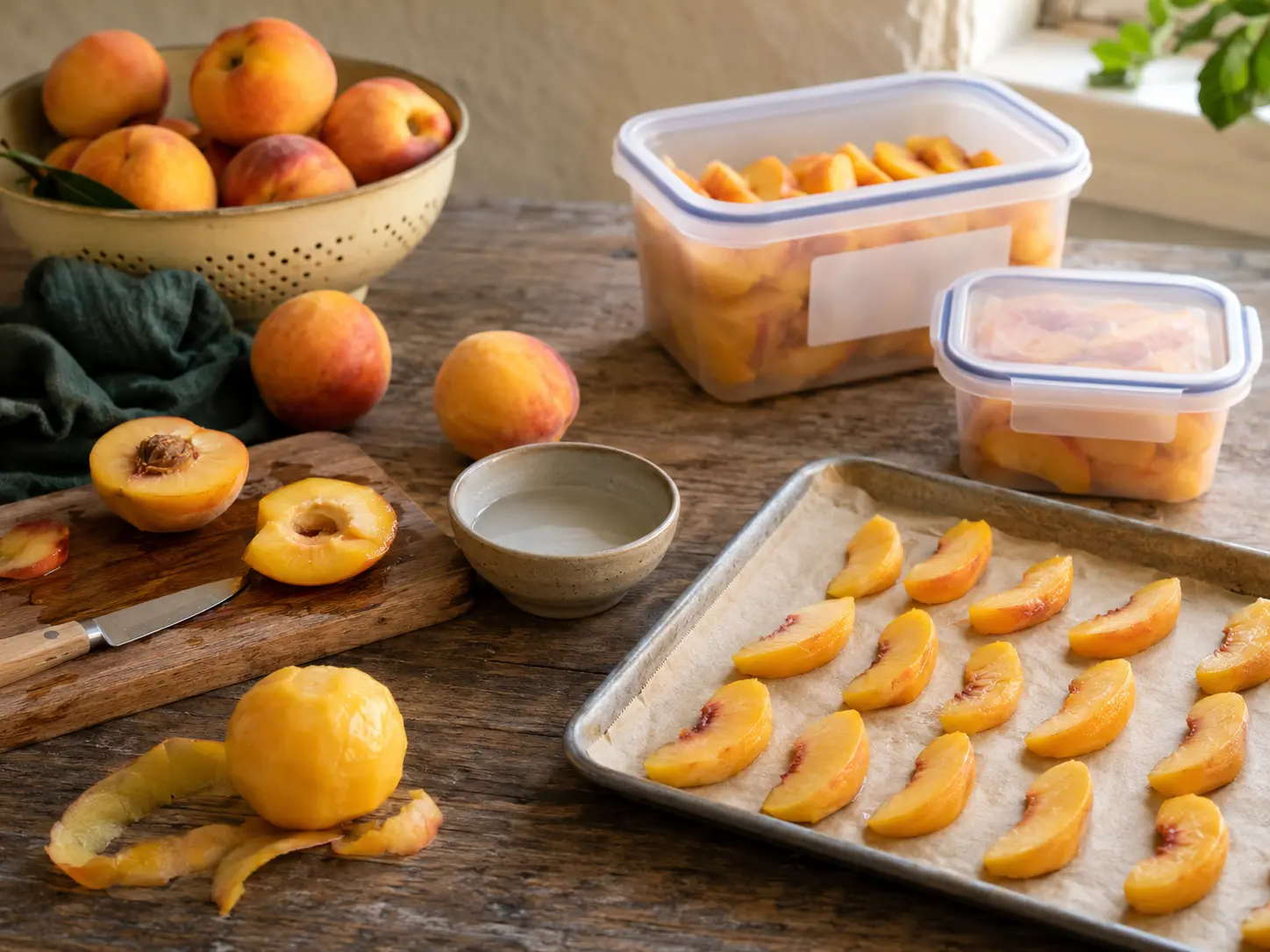
Freeze peaches without added sugar using a tray pack, 100% juice, or pectin syrup. Follow tested steps to limit browning and texture loss.
Read the practical guide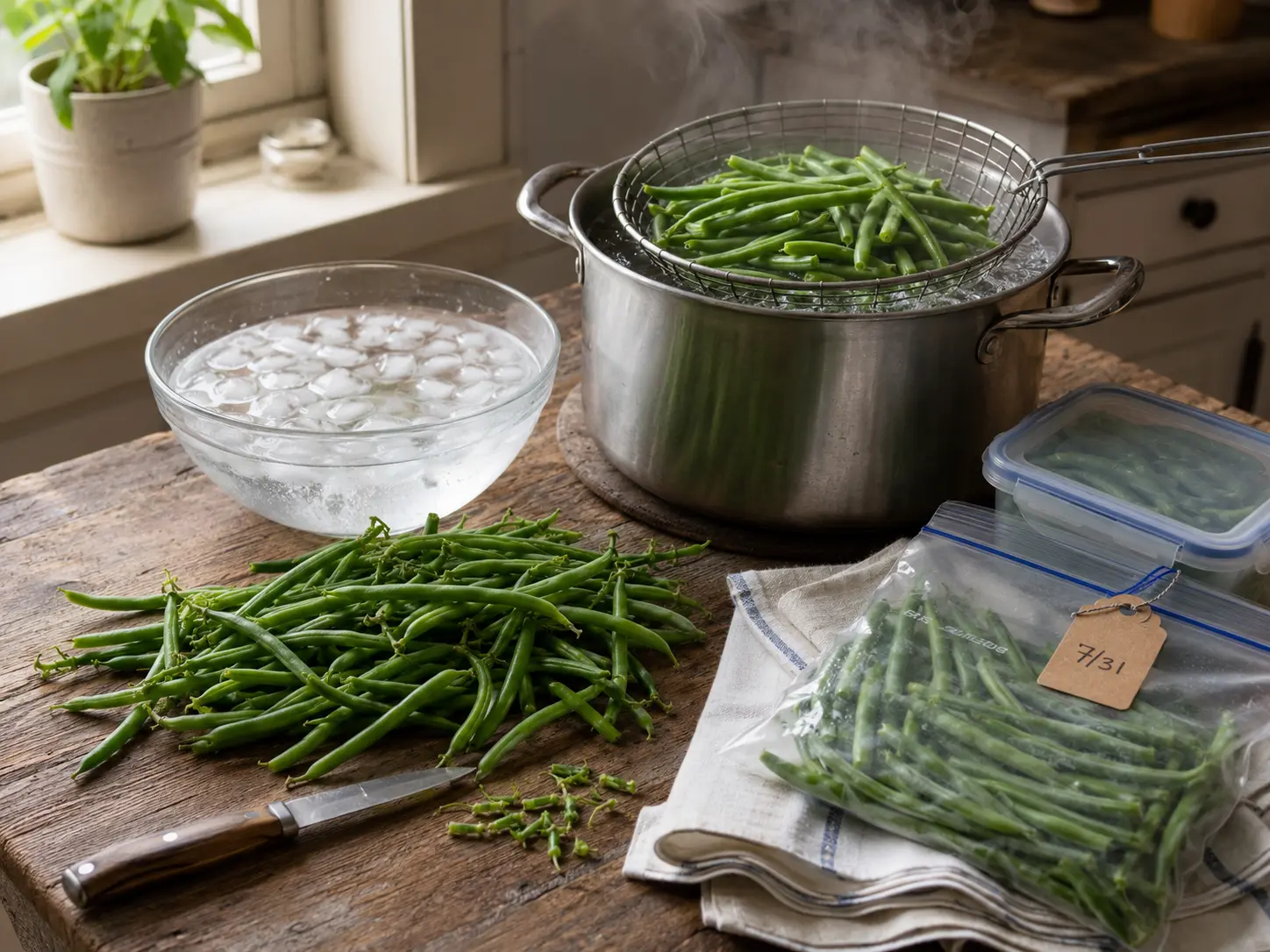
Yes, raw green beans will freeze—but here is what happens to their texture and why a 3-minute blanch gives better long-term quality.
Read the practical guide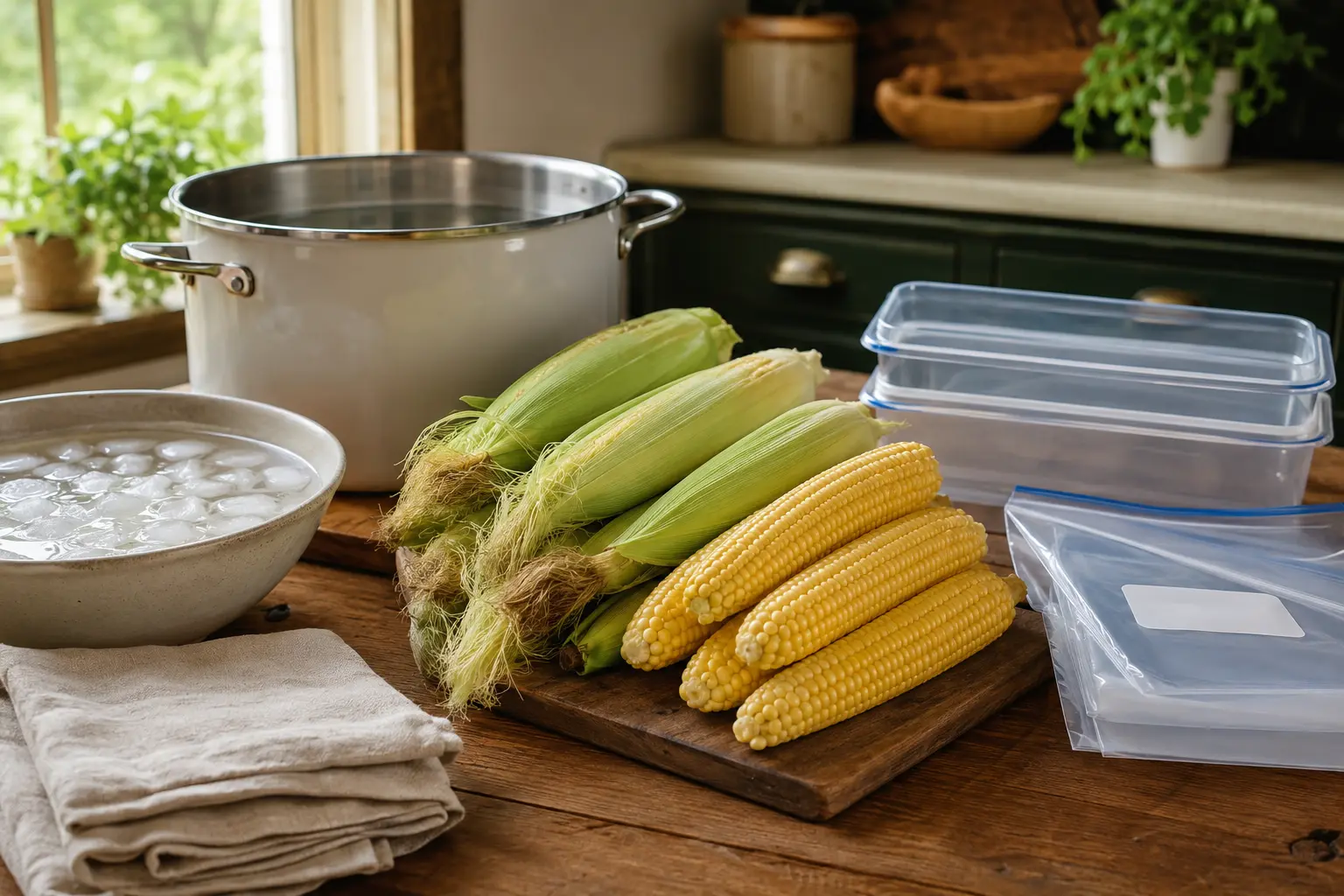
Yes, raw corn will freeze—but blanching protects sweetness, color, and texture. Compare the shortcut with the exact 7-, 9-, and 11-minute method.
Read the practical guide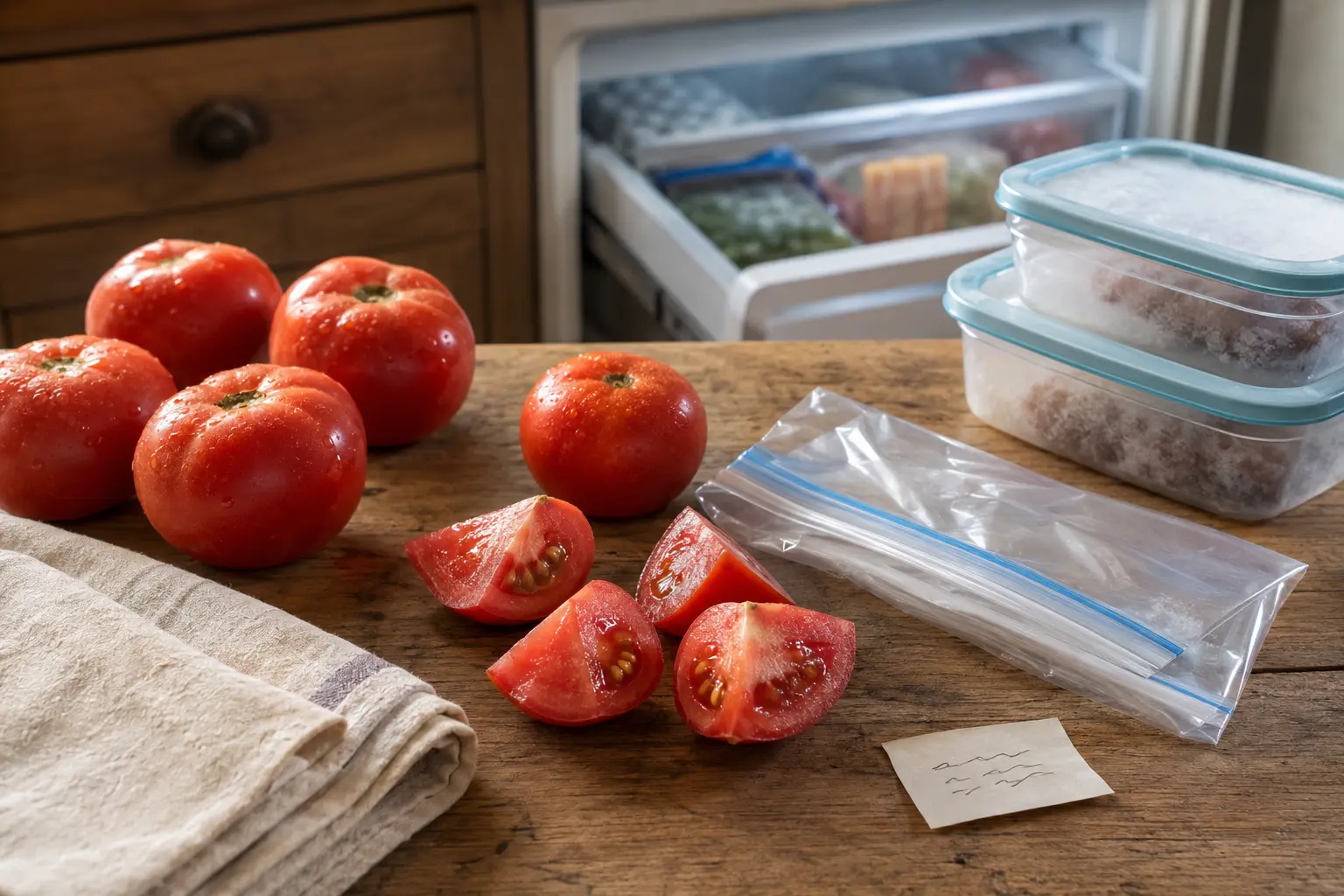
Yes—here is the tested skin-on method, the texture to expect, and the difference between freezing and canning tomatoes.
Read the practical guide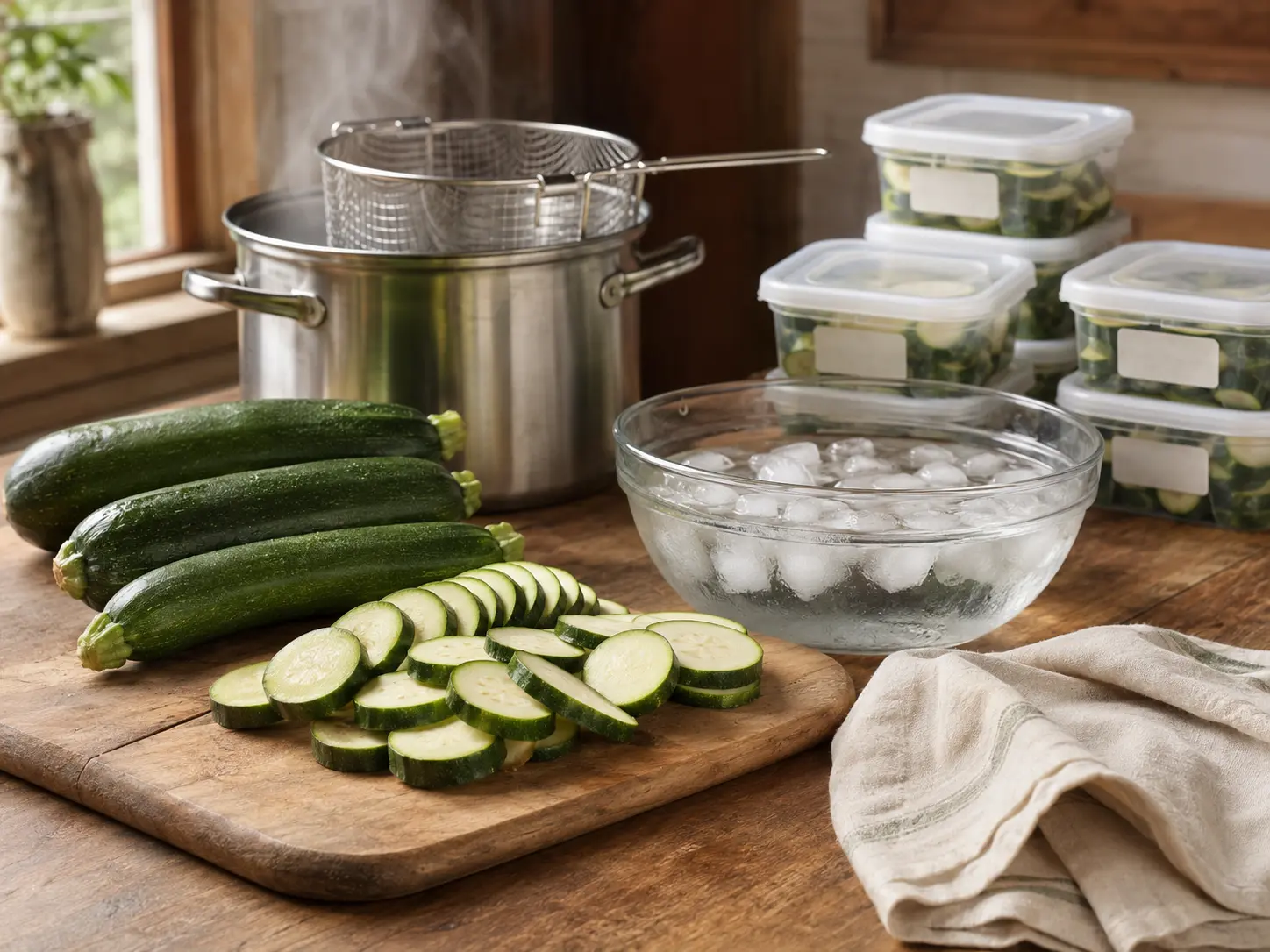
The evidence-based answer, exact blanching times, and a practical method for freezing sliced or grated zucchini.
Read the practical guide
Which traditional methods remain useful, where current tested recipes are essential, and which shortcuts to avoid.
Read the practical guide