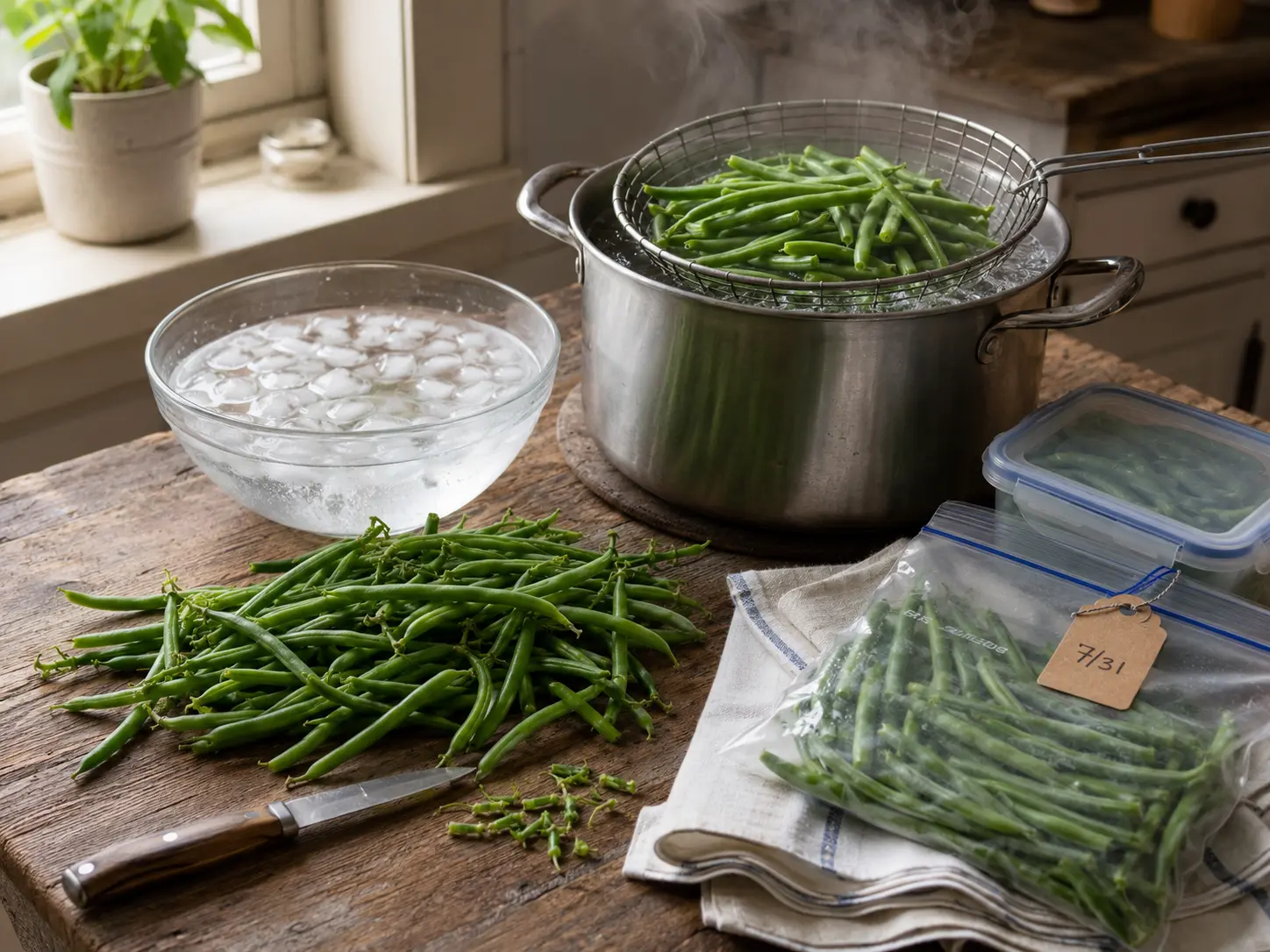
You can physically freeze green beans without blanching, but it is not the tested best-quality method for longer storage. The National Center for Home Food Preservation recommends washing and trimming young tender pods, water-blanching them for 3 minutes, cooling promptly, draining, packaging with 1/2 inch of headspace in rigid containers, and freezing. Blanching slows the enzyme activity that otherwise damages flavor, color, and texture.
Print a clean copy or save it as a PDF for the kitchen.
Why blanch green beans before freezing?
Freezing slows changes in vegetables, but it does not stop every enzyme. The National Center for Home Food Preservation says blanching is necessary for almost all vegetables because it stops enzyme actions that can cause losses of flavor, color, and texture. It also helps remove surface dirt and microorganisms, brightens color, and makes vegetables easier to pack.
Timing matters. Underblanching can stimulate enzyme activity and is worse than no blanching, while overblanching can cost flavor, color, vitamins, and minerals. For snap, green, or wax beans, the National Center's water-blanching time is 3 minutes.
The tested 3-minute method
Choose young, tender pods when the seeds have only begun to form. Work soon after harvest or purchase; freezing preserves the quality you start with rather than improving tough or overmature beans.
Prepare the ice water before the beans enter the pot so you can stop the cooking immediately. Use about 1 gallon of water per pound of prepared vegetables, and do not add so many beans that the water takes longer than 1 minute to return to a boil.
- Rinse the beans gently under cold running water; do not use soap, bleach, sanitizer, or commercial produce wash.
- Trim the stem ends and cut the beans into 2- to 4-inch lengths, or leave suitable pods whole.
- Lower the beans into vigorously boiling water, cover, and start the 3-minute timer when the water returns to a boil.
- Move the beans immediately into plenty of ice water and cool them for about the same length of time.
- Drain thoroughly. Extra surface water creates more ice and lowers quality.
- Pack in freezer bags with excess air pressed out, or in rigid freezer containers with 1/2 inch of headspace.
- Seal, label with the date, and freeze promptly at 0°F (-18°C) or below.
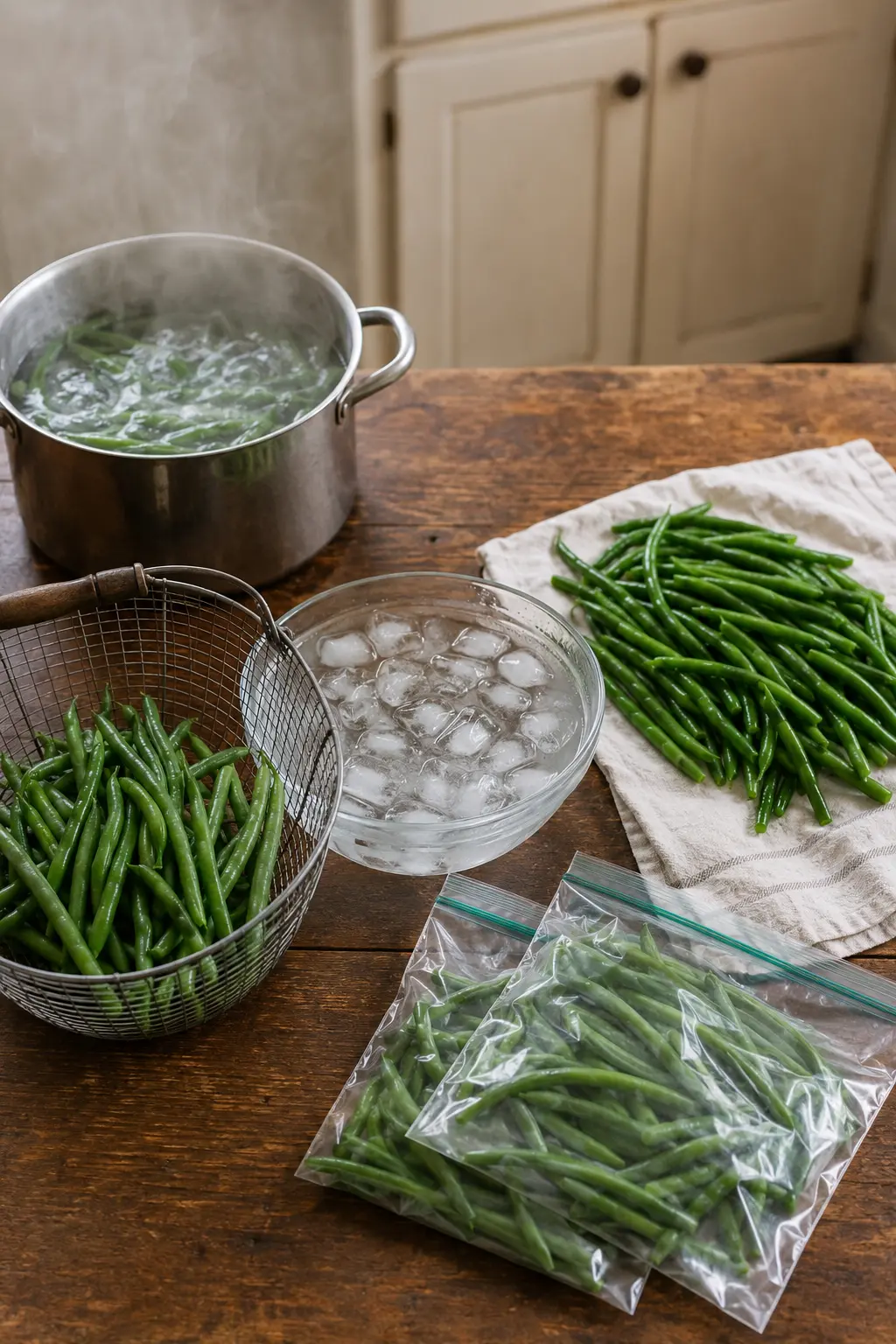
What happens if you freeze them raw?
Unblanched beans will freeze, but their enzymes were not inactivated first. As storage continues, duller color, weaker flavor, and a tougher or softer texture become more likely. Raw freezing is therefore a quality shortcut, not the tested method used by the National Center and university Extension guidance cited here.
If you already froze sound, clean beans without blanching, that does not automatically make them unsafe. Keep them continuously frozen, use them sooner rather than treating them as a long-storage batch, and expect lower quality. There is no authoritative tested storage period for the raw shortcut in the sources used for this guide, so a precise best-by claim would be guesswork.
Tray-freeze for portions that pour
After blanching, cooling, and draining, you can spread the beans in one layer on a shallow tray and freeze them just until solid before transferring them to freezer packaging. Penn State Extension describes this as individually quick or tray freezing.
The benefit is practical: the beans remain loose enough to pour out only what a soup, skillet, or casserole needs. Move them into their final packaging promptly after tray freezing so uncovered frozen food does not dry out.
How to cook frozen green beans
Frozen vegetables generally do not need to be thawed before cooking. Add the portion you need directly to a hot skillet, soup, stew, or boiling water and cook only until tender. Home-frozen beans may be softer than commercially frozen beans because commercial equipment freezes produce faster and causes less cell-wall damage.
For casserole, thawing and draining first can help prevent extra water in the finished dish. Whatever method you use, avoid long cooking if you want the beans to retain more shape and color.
Is this an Amish food-preservation practice?
Freezing green beans is not uniquely Amish. It is a modern home-preservation method used by households across the United States. Amish technology choices vary by affiliation and local church district, so no single freezer practice should be presented as universal Amish tradition.
The broadly useful Amish-inspired principle is simply to preserve a seasonal surplus for meals the household will actually use. The 3-minute blanching time in this guide comes from current food-preservation authorities, not folklore.
Frequently asked questions
How long do you blanch green beans before freezing?
Water-blanch snap, green, or wax beans for 3 minutes, starting the timer when the water returns to a boil. Cool them promptly in ice water for about the same amount of time, then drain and package.
Can you freeze green beans whole?
Yes. Select young tender pods, wash and trim them, then leave them whole or cut them into 2- to 4-inch lengths before the 3-minute water blanch.
Do frozen green beans need to be thawed before cooking?
Usually no. They can go directly into soups, stews, skillets, or boiling water. For a casserole where extra moisture matters, thawing and draining first may give a better result.
Why did my frozen green beans turn soft?
Freezing forms ice crystals that damage plant cell walls, and a home freezer usually freezes food more slowly than commercial equipment. Starting with tender beans, blanching for the correct time, cooling promptly, draining well, and freezing small batches can reduce—but not eliminate—softening.
Can you freeze yellow wax beans the same way?
Yes. The National Center lists snap, green, and wax beans together: prepare young tender pods, water-blanch for 3 minutes, cool, drain, package, and freeze.
Sources and further reading
- National Center for Home Food Preservation — Freezing Beans: Green, Snap, or Wax
- National Center for Home Food Preservation — Blanching Vegetables
- Penn State Extension — Let's Preserve: Freezing Vegetables
- Penn State Extension — Let's Preserve: Snap Beans
- FoodSafety.gov — Safe Ways to Handle and Clean Produce
- University of Minnesota Extension — Blanching Vegetables
- Illinois Extension — Freezing FAQ
- Elizabethtown College Young Center — Amish Studies FAQ
This article may use AI-assisted research organization and drafting. Claims involving safety, energy, or household costs are checked against the named sources above. Read about the founder and our editorial standards.