
The strongest Amish-inspired saving habits are ordinary systems: use what you already own, plan meals around the pantry, repair before replacing, preserve seasonal surplus safely, line-dry when practical, and keep recurring expenses simple. They save money only when they reduce a real purchase, prevent waste, or extend the useful life of something you already own.
Print a clean copy or save it as a PDF for the kitchen.
Start with the rule: measurable beats picturesque
A hand-cranked tool, a jar-lined pantry, or a clothesline may look frugal, but appearance is not evidence. A habit is financially useful when it lowers a repeat expense without creating a larger cost in time, spoiled food, unsafe storage, or unnecessary equipment.
That is why Plain & Frugal uses the phrase “Amish-inspired.” Amish communities are diverse, and a practice associated with plain living is not automatically universal or exclusive to Amish households.
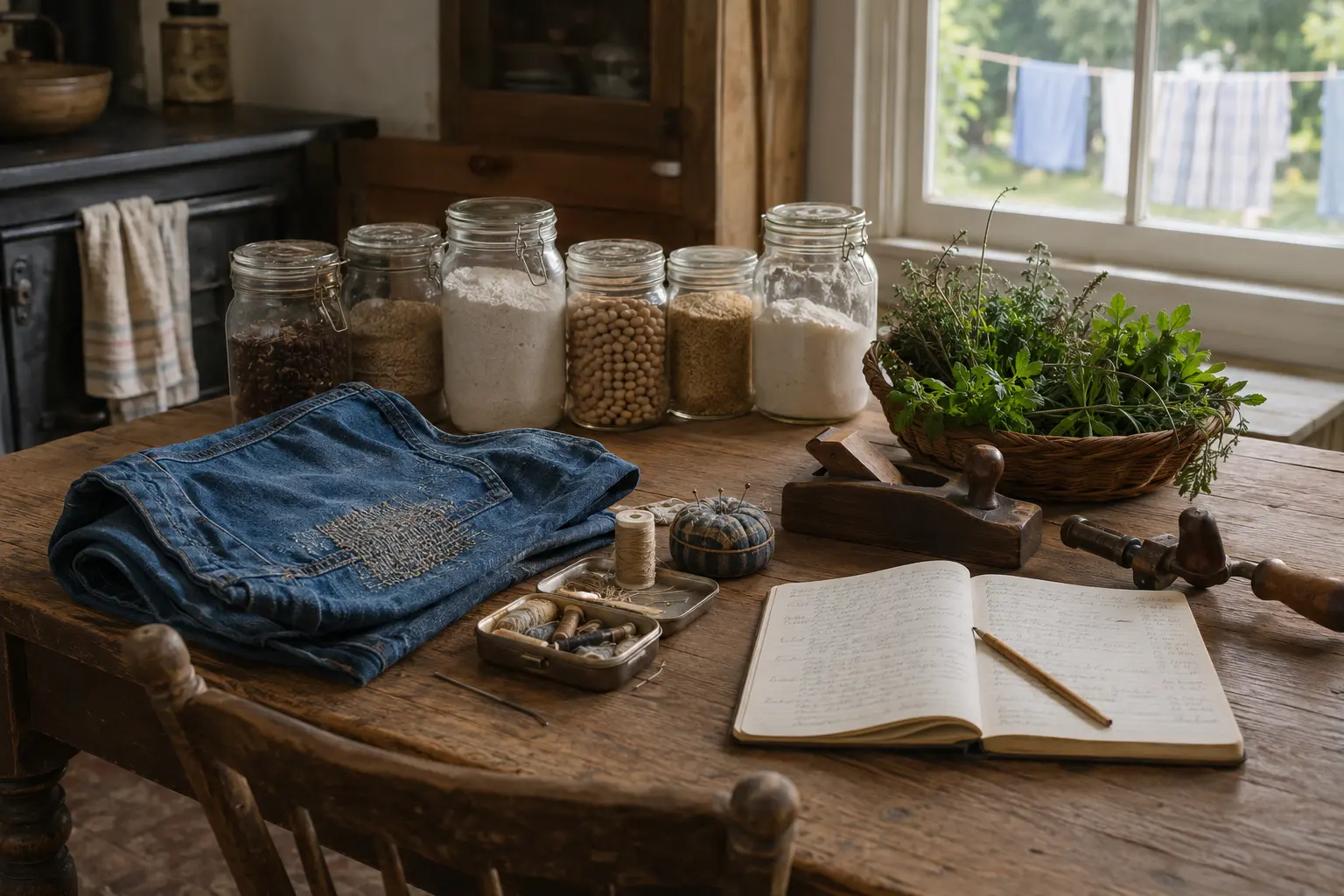
The 15 habits worth testing
Choose two or three habits that address your household’s largest sources of waste. Track the result for a month before buying special equipment.
- Shop your refrigerator, freezer, and pantry before making a grocery list.
- Plan meals around ingredients that need to be used first.
- Keep a visible inventory of staple foods.
- Cook flexible base foods instead of isolated one-use recipes.
- Freeze surplus before it becomes waste.
- Preserve seasonal food only with tested, current safety guidance.
- Repair sturdy household goods before replacing them.
- Borrow or rent rarely used tools.
- Air-dry a portion of laundry when weather and housing rules allow.
- Use manual tools when they are genuinely faster for a small task.
- Grow high-use herbs before attempting a large garden.
- Buy in bulk only when the full quantity will be used.
- Maintain appliances so they last and run efficiently.
- Create a 24-hour waiting rule for nonessential purchases.
- Review one recurring bill every month.
Food waste is the first place to look
The U.S. Environmental Protection Agency estimates that food waste costs the average American consumer hundreds of dollars per year. For most households, preventing one forgotten bag of produce or one unused bulk purchase is more valuable than chasing tiny coupon savings.
A useful old-fashioned pantry is therefore not a collection of decorative jars. It is a rotation system: older food stays visible, containers are labeled, and weekly meals deliberately use what is already present.
What not to copy blindly
Never treat viral claims about refrigeration, canning, meat storage, herbal remedies, or off-grid heating as safe because they are described as traditional. Food preservation and household safety require current, tested instructions.
The best version of plain living combines durable habits with modern evidence. Keep the thrift; keep the thermometer too.
Frequently asked questions
Do Amish people all follow the same money-saving practices?
No. Amish affiliations and communities differ in technology use, occupations, household routines, and local rules. It is more accurate to describe broadly useful ideas as Amish-inspired unless a practice is documented for a specific community.
Which frugal habit should I start first?
Start with a one-week food inventory and meal plan. It requires no purchase and targets a category where waste can be measured quickly.
Does simple living always cost less?
No. Premium heritage products, hobby equipment, and aesthetic renovations can make “simple living” expensive. Judge each choice by total cost and actual use.
Sources and further reading
- U.S. EPA — Preventing Wasted Food at Home
- U.S. EPA — Estimating the Cost of Food Waste to American Consumers
- National Center for Home Food Preservation
This article may use AI-assisted research organization and drafting. Claims involving safety, energy, or household costs are checked against the named sources above. Read about the founder and our editorial standards.