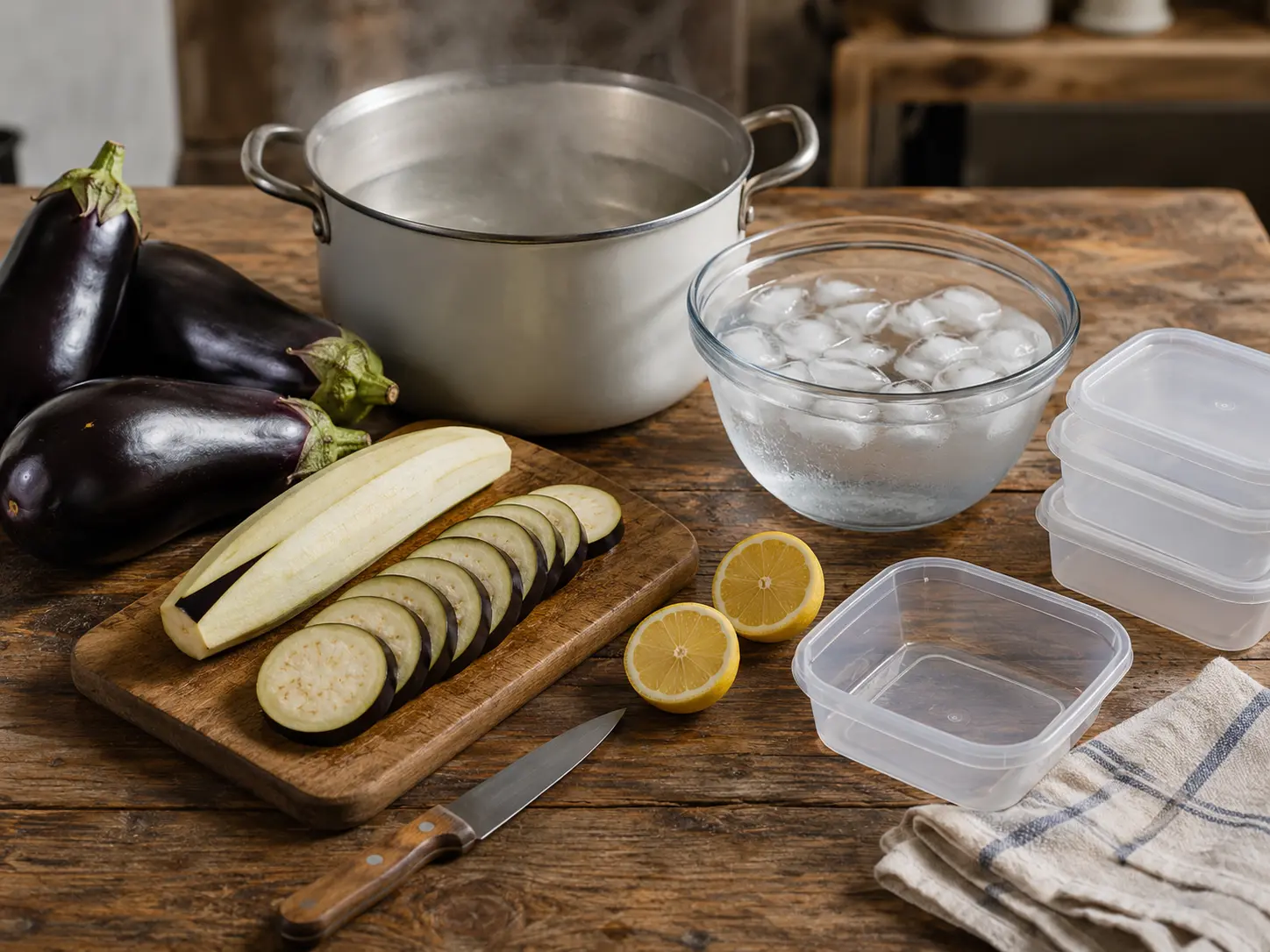
You can put raw eggplant in the freezer, but it is not the tested best-quality method. For a more dependable result, choose firm, dark eggplant before the seeds mature; wash, peel, and cut it into ⅓-inch slices; water-blanch one batch at a time for 4 minutes in 1 gallon of boiling water mixed with ½ cup lemon juice; cool promptly, drain, package with ½ inch of headspace, seal, and freeze at 0°F (-18°C) or below.
Print a clean copy or save it as a PDF for the kitchen.
Why raw eggplant freezes poorly
Eggplant contains plenty of water and its cut flesh browns quickly. Freezing raw slices will make them solid, but it does not stop the enzymes that gradually damage flavor, color, and texture. After thawing, the result is likely to be much softer and wetter than fresh eggplant.
Blanching is a short, timed heat treatment—not full cooking. It slows or stops enzyme activity before the food is frozen. University of Minnesota Extension lists peppers, onions, leeks, and green onions as blanching exceptions; eggplant is not one of those exceptions.
The tested way to freeze eggplant slices
Work quickly and prepare only enough eggplant for one blanching batch at a time. Choose eggplant with uniformly dark color before the seeds become mature. Wash it under cool running water, then peel and slice it ⅓ inch thick.
The National Center for Home Food Preservation specifies lemon juice in the blanching water. That acid helps protect the pale flesh from darkening while the slices are prepared for freezing.
- Fill a large pot with 1 gallon of water and add ½ cup bottled or fresh lemon juice.
- Bring the lemon-water to a vigorous boil while preparing one batch of ⅓-inch eggplant slices.
- Lower the slices into the boiling water, cover, and water-blanch for 4 minutes.
- Move the slices immediately to plenty of ice water so they cool quickly and stop cooking.
- Drain thoroughly; excess surface water encourages ice crystals and makes packages harder to use.
- Pack in freezer bags or rigid freezer containers, leaving ½ inch of headspace in rigid containers.
- Remove as much air as practical, seal, label with the date and intended dish, and freeze promptly at 0°F (-18°C) or below.
How to freeze eggplant for frying or Parmesan
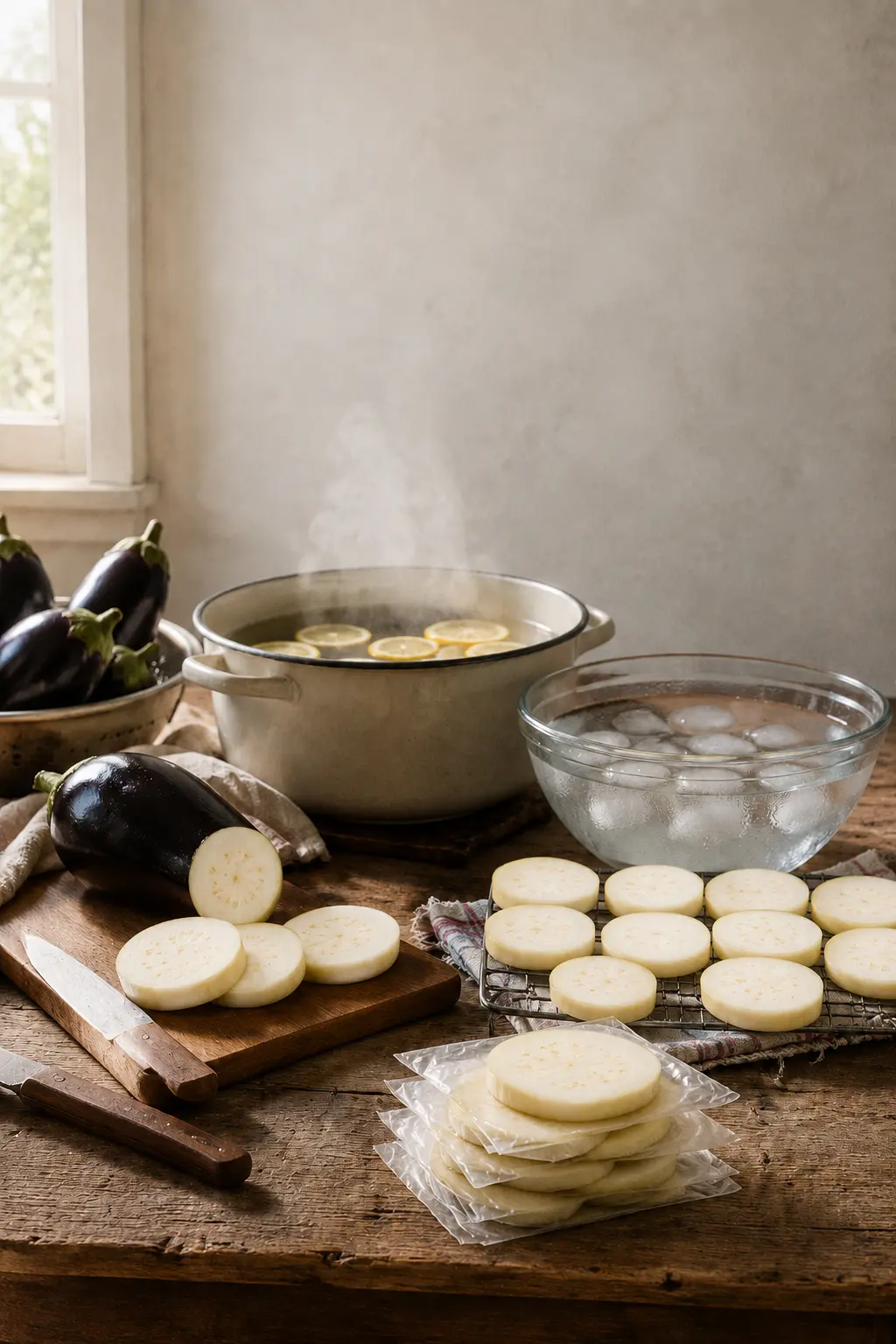
For slices you plan to fry or layer in eggplant Parmesan, blanch, cool, and drain them as described above. Then place freezer wrap between the drained slices before sealing the package. The separators let you remove only the number of slices a recipe needs.
Frozen eggplant will not regain the firm texture of a fresh slice, so build the rest of the dish with that softer texture in mind. Do not leave frozen eggplant at room temperature to thaw; use the refrigerator when a recipe requires thawing first.
Can you roast eggplant before freezing it?
Yes. Penn State Extension notes that cooked eggplant may be frozen. Roasting is practical when you already know the future use: freeze roasted cubes for sauces and stews, baked slices for casseroles, or cooked pulp for a dip.
Cool cooked eggplant promptly before packaging it in freezer-safe portions. Label the package with the preparation—roasted cubes, cooked slices, or purée—so it does not become an unidentified block at the back of the freezer.
How long frozen eggplant keeps
Properly prepared and packaged frozen vegetables generally keep their best quality for about 8 to 12 months at 0°F (-18°C). Continuous freezing keeps food safe longer, but color, flavor, and texture gradually decline, especially when the packaging admits air or moisture.
Use the oldest package first and choose cooked dishes that welcome a tender texture: tomato sauce, curry, soup, stew, dip, casserole, or eggplant Parmesan. Freezing preserves a surplus; it does not preserve the crisp bite of fresh produce.
Is freezing eggplant an Amish practice?
No. Freezing eggplant is a general modern home-preservation method, not a uniquely Amish practice. Technology choices also vary across Amish affiliations and local church districts, so one freezer routine should never be described as universal Amish tradition.
The Amish-inspired lesson is broader and modest: preserve a seasonal surplus for food the household will actually use. The slice thickness, lemon-water ratio, and blanching time in this guide come from research-based food-preservation guidance rather than cultural folklore.
Frequently asked questions
How long do you blanch eggplant before freezing?
Water-blanch ⅓-inch eggplant slices for 4 minutes in 1 gallon of boiling water containing ½ cup lemon juice. Cool promptly in ice water and drain well before packaging.
Can you freeze a whole raw eggplant?
A whole raw eggplant will freeze, but it is not the tested best-quality method and will be awkward to use after thawing. Peel and cut it into ⅓-inch slices, blanch, cool, drain, and package instead—or cook it before freezing.
Do you have to peel eggplant before freezing it?
The National Center’s tested sliced-eggplant method directs home cooks to wash and peel the eggplant before cutting it into ⅓-inch slices.
Why add lemon juice when blanching eggplant?
Cut eggplant browns quickly. The tested method uses ½ cup lemon juice per gallon of blanching water to help protect the color of the pale flesh during preparation.
Can you freeze cooked or roasted eggplant?
Yes. Cool it promptly, divide it into useful portions, package airtight, label, and freeze. Roasted cubes, cooked slices, and cooked pulp are most useful later in sauces, soups, casseroles, and dips.
Sources and further reading
- National Center for Home Food Preservation — Freezing Eggplant
- University of Minnesota Extension — Blanching Vegetables, reviewed 2025
- Penn State Extension — Eggplant in the Garden and the Kitchen, July 24, 2024
- FoodSafety.gov — Safe Ways to Handle and Clean Produce
- Elizabethtown College Young Center — Amish Studies FAQ
This article may use AI-assisted research organization and drafting. Claims involving safety, energy, or household costs are checked against the named sources above. Read about the founder and our editorial standards.