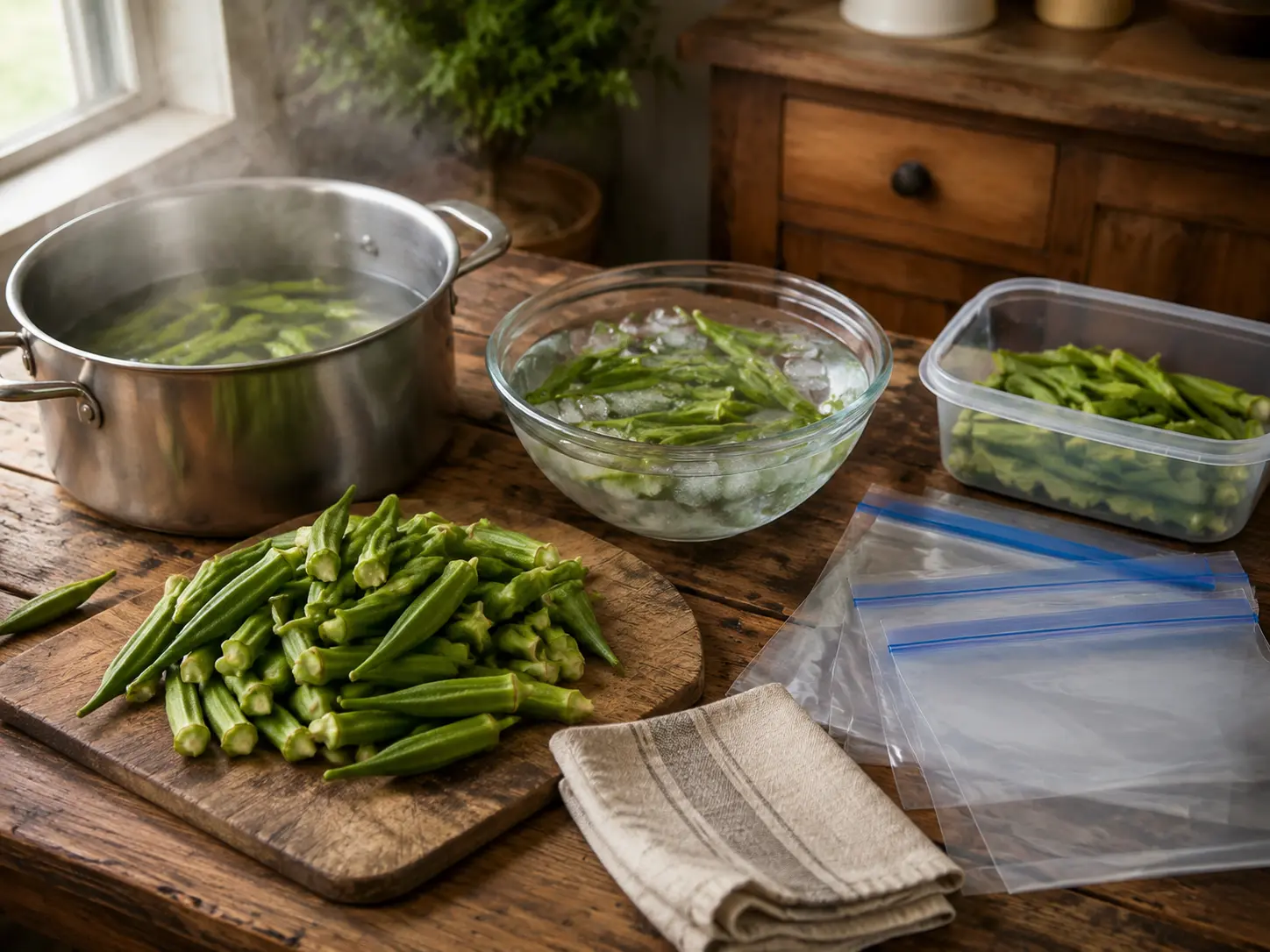
You can put raw okra in the freezer, but blanching is the tested method for better long-term quality. Select young, tender pods; water-blanch pods 4 inches or shorter for 3 minutes and larger pods for 4 minutes; cool them promptly in ice water; drain well; then leave them whole or slice, package, and freeze at 0°F (-18°C) or below. Skipping blanching mainly risks faster loss of color, flavor, and texture.
Print a clean copy or save it as a PDF for the kitchen.
Why blanch okra before freezing?
Freezing slows food changes, but it does not stop every enzyme in a vegetable. A brief blanch slows or stops the enzyme activity that can damage color, flavor, texture, and nutrients during frozen storage. It also helps clean the surface and makes the pods easier to pack.
The timing matters. The National Center for Home Food Preservation warns that underblanching can stimulate enzyme activity, while overblanching can cost flavor, color, vitamins, and minerals. For okra, sort by pod size before the pot reaches a boil so every batch gets the correct time.
The tested way to freeze okra
Begin with young, tender pods. Smooth-podded varieties tend to freeze as well as or better than ridged varieties because they are less likely to split. Rinse the okra under cool running water; do not wash produce with soap, bleach, or another household chemical.
Trim only the stem end and avoid cutting into the seed cell before blanching. Keep a large bowl of ice water ready beside the stove, because cooling immediately is part of the process rather than an optional extra.
- Sort the okra into small pods, 4 inches or shorter, and larger pods.
- Use about 1 gallon of vigorously boiling water for each pound of prepared okra.
- Lower one batch into the water, cover the pot, and begin timing when the water returns to a boil.
- Water-blanch small pods for 3 minutes and large pods for 4 minutes.
- Move the pods promptly into plenty of ice water and cool them for about the same length of time.
- Drain very well. Leave the pods whole or slice them crosswise, then pack in freezer bags or rigid containers.
- Remove as much air as practical; leave ½ inch of headspace in rigid containers. Seal, label, and freeze promptly at 0°F (-18°C) or below.
How to freeze okra for frying
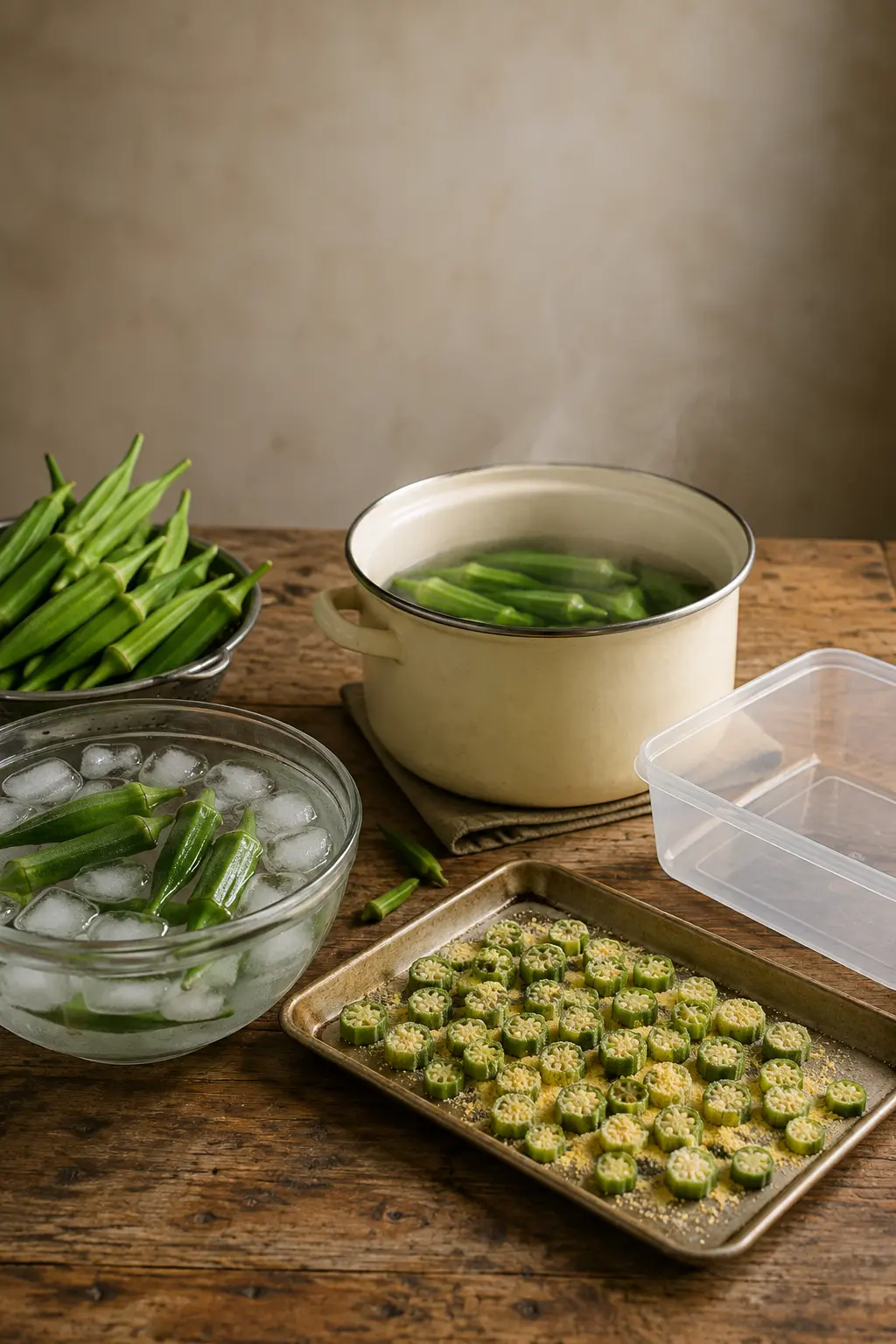
The National Center provides a separate, useful finish for okra intended for frying. After blanching, cooling, and draining, slice the pods crosswise and dredge the pieces lightly with meal or flour. Spread them in one layer on a shallow tray and freeze only until firm.
Transfer the firm pieces quickly to freezer packaging, leave ½ inch of headspace in a rigid container, seal, label, and return them to the freezer. The tray step keeps the coated pieces from becoming one solid block and lets you take out only the amount you plan to cook.
What if you freeze okra raw?
Raw okra will become frozen, but the active enzymes were not slowed first. That means the pods are more likely to lose fresh flavor, green color, and pleasant texture as storage continues. A quick raw-freezing shortcut may look successful on day one without showing how the food will hold up months later.
Blanching is primarily a quality step; it does not turn questionable produce into good food. Start with sound okra, keep it continuously frozen, and cook it appropriately after freezing. If you already froze a clean, sound batch raw, use it sooner and expect a less dependable result rather than treating it as equivalent to the tested method.
How long frozen okra keeps
Properly blanched, packaged vegetables generally keep their best quality for about 8 to 12 months at 0°F (-18°C) or below. Frozen food kept continuously at 0°F remains safe longer, but flavor, color, and texture gradually decline, especially when packaging lets air or moisture move through.
Write the date and intended use—whole, sliced, or breaded for frying—on every package. For gumbo, soup, or stew, add frozen okra directly to the cooking pot. Avoid leaving it to thaw on the counter.
Is freezing okra an Amish practice?
No. Freezing okra is a modern home-preservation method used across the United States, especially where okra grows well. It should not be presented as a uniquely Amish technique or as evidence of one universal Amish household routine.
Technology choices vary among Amish affiliations and local church districts. The broadly useful, Amish-inspired principle here is simply to preserve a seasonal surplus for meals the household will actually eat; the blanching times come from current research-based preservation guidance.
Frequently asked questions
How long do you blanch okra before freezing?
Water-blanch small pods measuring 4 inches or shorter for 3 minutes and larger pods for 4 minutes. Cool them promptly in ice water for about the same length of time, then drain well before packaging.
Can you freeze whole okra?
Yes. After blanching, cooling, and draining, okra can be frozen whole or sliced crosswise. Whole pods are convenient for roasting or later slicing; sliced okra is ready for gumbo, soup, or frying.
Can you freeze okra without cooking it first?
You can freeze it raw, but the research-based best-quality method briefly blanches it first. Blanching is not full cooking; it is a timed heat treatment that slows enzymes before freezing.
Should frozen okra be thawed before cooking?
For gumbo, soup, and stew, add okra directly from the freezer. For other uses, follow the recipe and thaw safely in the refrigerator rather than on the counter.
How do you keep frozen okra from sticking together?
After blanching, cooling, and draining, spread whole or sliced okra in one layer on a shallow tray. Freeze just until firm, then transfer it quickly to airtight freezer packaging.
Sources and further reading
- National Center for Home Food Preservation — Freezing Okra
- National Center for Home Food Preservation — Blanching Vegetables
- National Center for Home Food Preservation — Freezing Pointers
- Alabama Cooperative Extension — Freezing Summer’s Bounty of Vegetables, reviewed November 2023
- FoodSafety.gov — Safe Ways to Handle and Clean Produce
- Elizabethtown College Young Center — Amish Studies FAQ
This article may use AI-assisted research organization and drafting. Claims involving safety, energy, or household costs are checked against the named sources above. Read about the founder and our editorial standards.