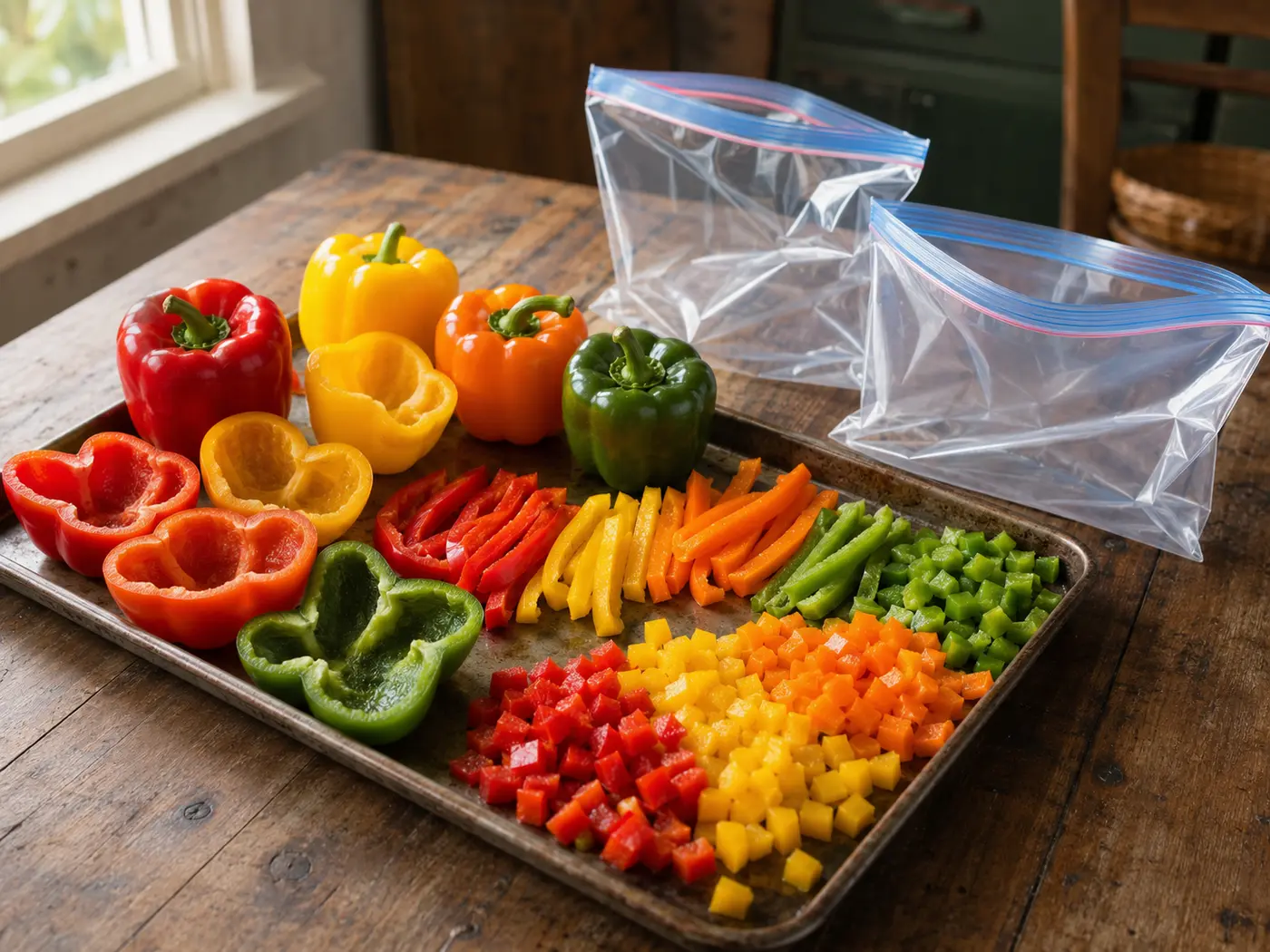
Yes. Bell peppers are one of the vegetables that can be frozen raw without blanching. Wash crisp peppers under running water, remove the stems, seeds, and membranes, cut them for their intended use, freeze the pieces in one layer on a clean rimmed tray, then transfer them to freezer packaging with as much air removed as practical. Keep them at 0°F (-18°C) or below and plan to use them mainly in cooked dishes after freezing.
Print a clean copy or save it as a PDF for the kitchen.
Why bell peppers are an exception to the blanching rule
Most vegetables are blanched before freezing to slow enzyme activity that can damage color, flavor, and texture. Peppers are a documented exception. University of Minnesota Extension lists peppers among the vegetables that do not need blanching, and Nebraska Extension specifically directs home cooks to freeze sweet, bell, and hot peppers raw.
That makes peppers unusually convenient for preserving a garden surplus or a grocery sale. Skipping blanching is not a social-media shortcut here; it is supported by university Extension and National Center for Home Food Preservation guidance.
The easiest method: cut, tray-freeze, and bag
Decide how you are likely to cook the peppers before cutting them. Strips work for fajitas and stir-fries; dice work for eggs, soups, casseroles, pizza, and sauces. Freezing cannot improve tired produce, so begin with crisp, tender peppers without soft or moldy areas.
Tray-freezing is optional, but it keeps the pieces separate so you can measure out only what a recipe needs. Nebraska and Illinois Extension both describe this method for peppers.
- Wash peppers under cool running water. Scrub firm bell peppers gently with a clean vegetable brush; do not use soap or bleach.
- Cut out the stems, halve the peppers, and remove the seeds and pale inner membranes.
- Cut into strips, rings, or dice according to the meals you actually cook.
- Pat the pieces dry and spread them in one layer on a clean rimmed tray.
- Freeze for about 1 hour, or until the pieces are firm enough to stay separate.
- Transfer promptly to freezer bags or freezer-safe containers, remove as much air as practical, seal, label, and date.
- Return the packages to a freezer held at 0°F (-18°C) or below.
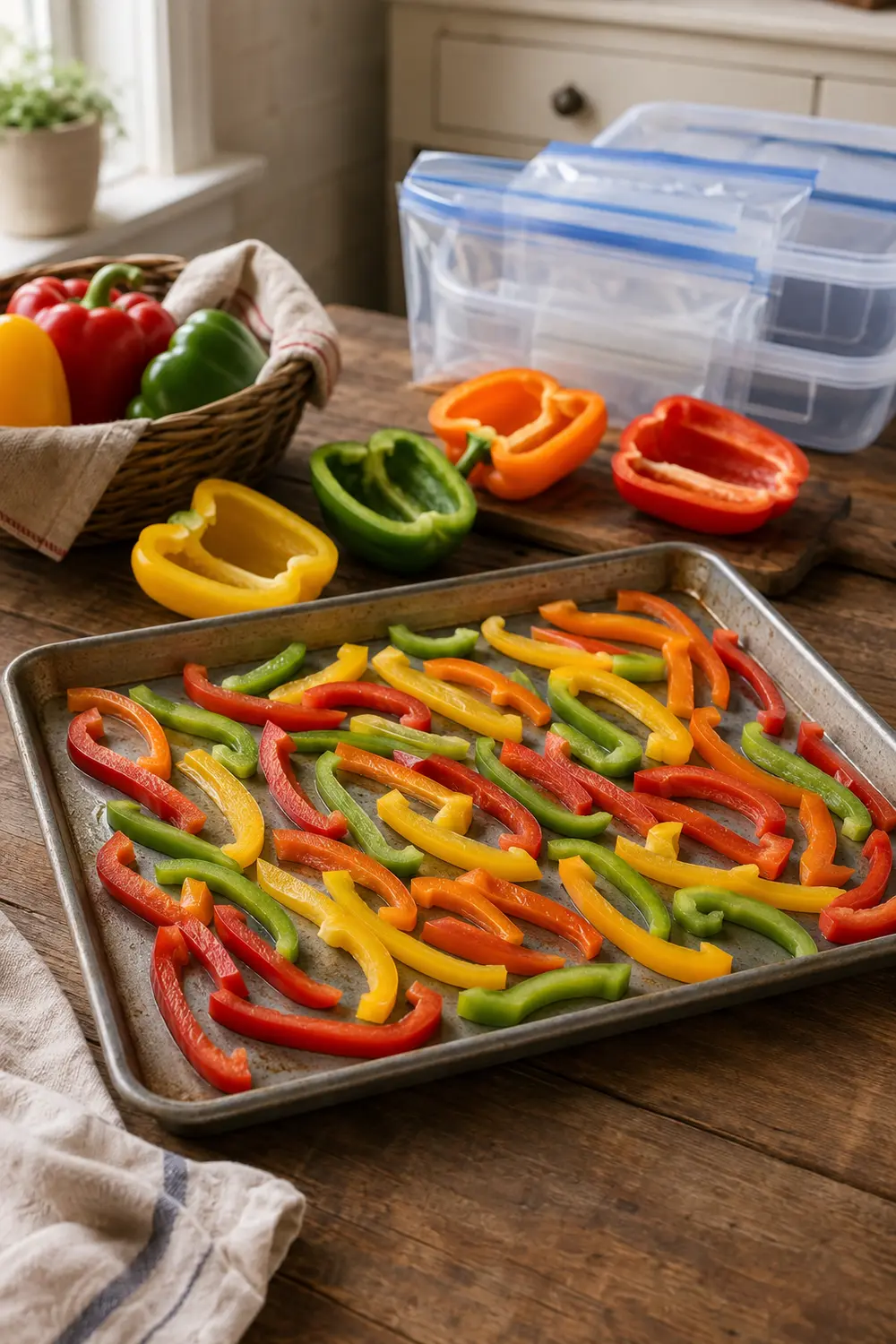
How to package peppers without a frozen clump
Air and temperature changes reduce frozen-food quality. Use packaging intended for the freezer rather than thin sandwich bags, bread bags, or reused dairy tubs. Nebraska Extension recommends excluding as much air as possible after tray-freezing.
Freeze recipe-size portions if you prefer to skip the tray. Flatten diced peppers in a thin layer inside each freezer bag so the package freezes quickly and stores neatly. Once frozen, break off only what you need and return the rest to the freezer before it begins to thaw.
What texture should you expect after thawing?
Frozen bell peppers will not behave exactly like fresh peppers. Ice crystals disrupt plant cells, so thawed pieces are generally softer and release more moisture. Nebraska and Illinois Extension say they retain some crispness, but cooked dishes are the most dependable use.
Add frozen strips directly to a hot skillet, soup, stew, casserole, pasta sauce, or sheet-pan meal. Direct cooking avoids a puddle created by thawing. For pizza or eggs, briefly sauté the frozen peppers first if excess water would make the finished dish soggy.
How long do frozen bell peppers last?
Nebraska Extension generally recommends eating frozen vegetables within about 8 months for best quality when held at 0°F (-18°C) or below. That is a quality target, not a claim that properly frozen peppers become unsafe on day one of month nine.
Date every package and use the oldest first. Discard peppers affected by spoilage before freezing, and do not rely on freezing to destroy harmful bacteria. Freezing pauses bacterial growth; safe handling still matters when the food thaws.
Can you freeze hot peppers the same way?
Yes. Nebraska Extension says hot peppers may be stemmed and frozen whole without chopping or blanching. Package them with no headspace, seal, and freeze.
Wear disposable or reusable food-safe gloves when cutting hot peppers. Avoid touching your face and eyes, and wash your hands thoroughly with soap and water afterward. Keep hot-pepper tools and surfaces away from foods that will be eaten without cooking.
Is this an Amish food-preservation practice?
Not specifically. Freezing raw peppers is a broadly used modern preservation method, not evidence of a universal Amish practice. Amish households and church districts differ in how they use electricity, appliances, and shared freezer facilities.
The plain-living lesson is simply to preserve surplus food in a form the household will use. The method and measurements in this guide come from the National Center for Home Food Preservation and university Extension sources—not from romanticized cultural claims.
Frequently asked questions
Do bell peppers need to be blanched before freezing?
No. University of Minnesota Extension lists peppers as an exception to the usual blanching rule, while Nebraska and Illinois Extension provide raw tray-freezing directions for bell peppers.
Can you freeze whole bell peppers?
You can, but halving, coring, and cutting them before freezing saves space and makes them easier to use. Hot peppers may be frozen whole after washing and stemming, according to Nebraska Extension.
How long can bell peppers stay in the freezer?
For best quality, Nebraska Extension generally recommends using frozen vegetables within about 8 months at 0°F (-18°C) or below. Airtight freezer packaging and a steady temperature help preserve quality.
Will frozen bell peppers become mushy?
They become softer than fresh peppers because freezing damages plant cells. They work best in cooked dishes. Cooking them directly from frozen limits the extra liquid created by thawing.
Should you thaw frozen peppers before cooking?
Usually not. Add strips or dice directly to soups, stews, sauces, casseroles, or a hot skillet. Thaw only when a recipe specifically requires it, then drain excess liquid.
Can frozen peppers be used for home canning later?
Do not improvise. Freezing changes texture and water distribution. For canning, use a current tested recipe from the National Center for Home Food Preservation or a university Extension source and follow its ingredient form exactly.
Sources and further reading
- National Center for Home Food Preservation — Freezing Bell or Sweet Peppers
- Nebraska Extension — How to Freeze Sweet, Bell and Hot Peppers (updated 2026)
- University of Minnesota Extension — Blanching Vegetables
- Illinois Extension — Preparing Peppers
- Oregon State University Extension — Freezing Fruits and Vegetables
- FoodSafety.gov — Safe Ways to Handle and Clean Produce
- Elizabethtown College Young Center — Amish Studies FAQ
This article may use AI-assisted research organization and drafting. Claims involving safety, energy, or household costs are checked against the named sources above. Read about the founder and our editorial standards.