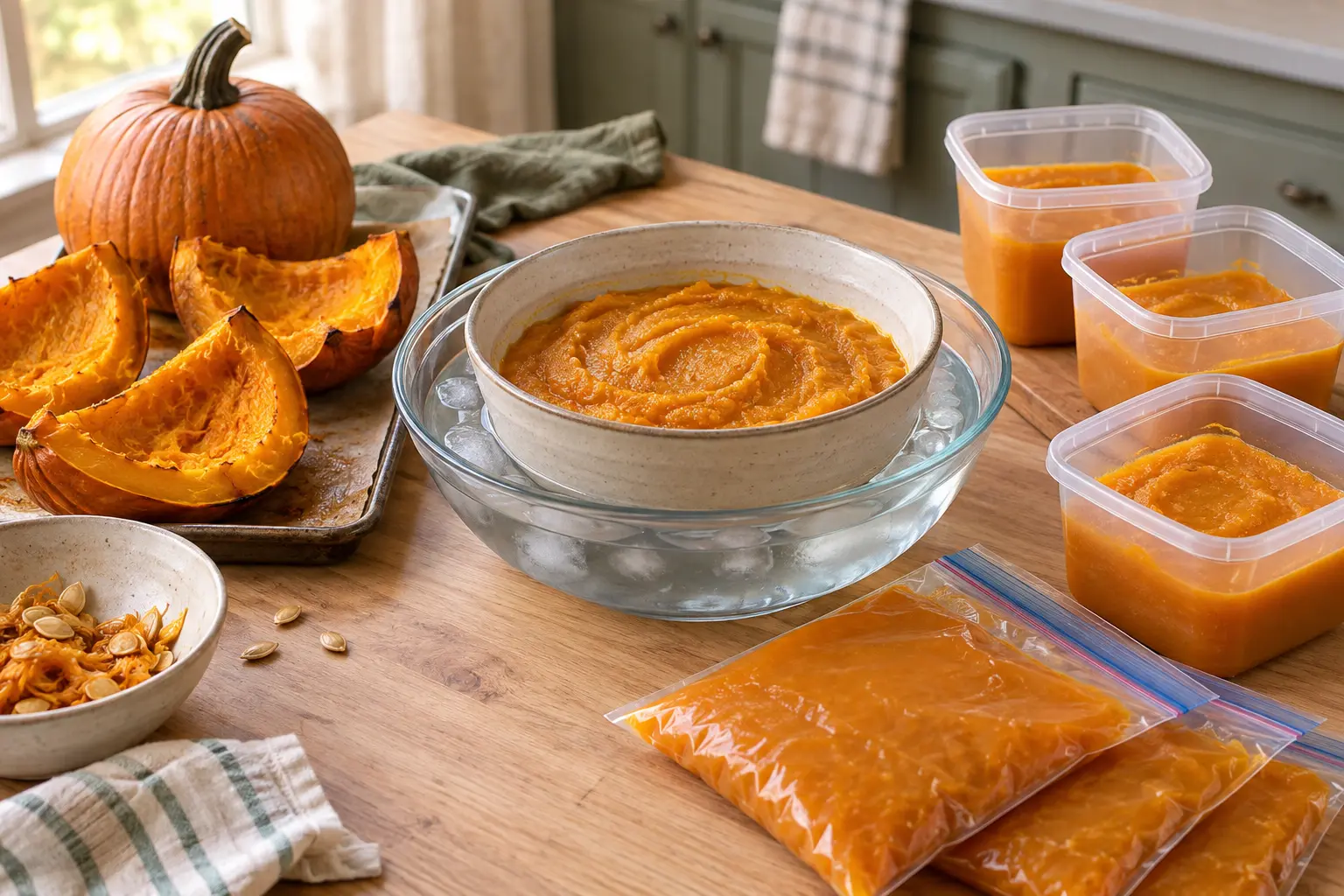
Yes. Freezing is the recommended home-preservation method for pumpkin purée. Choose a mature, fine-textured pumpkin; wash, cut, seed, and cook it until soft; scoop out and mash the flesh; then cool the purée promptly in a pan set in cold water. Pack it in useful recipe portions, leaving ½ inch of headspace, seal, label, and freeze at 0°F or below. Do not water-bath can or pressure-can pumpkin purée: its variable thickness prevents a single home-canning process from being safely recommended.
Print a clean copy or save it as a PDF for the kitchen.
Saveable field method
How to freeze homemade pumpkin purée safely
Cook mature pumpkin until soft, cool the mashed flesh promptly, and freeze it in labeled recipe-size portions.
What you need
- Mature, full-colored pumpkin with sound, fine-textured flesh
- Cold water for cooling the pan
- Freezer-safe containers or moisture-resistant freezer bags
- Clean cutting board, sturdy knife, and spoon
- Oven, steamer, pressure cooker, or large cooking pot
- Potato masher, food mill, or blender
- Shallow pan or basin for cold-water cooling
- Choose and wash a mature pumpkin
Select a full-colored, mature pumpkin with firm, sound flesh. Wash the outside under running water before cutting so soil and surface microbes are not carried into the flesh.
- Cut and remove the seeds
Cut the pumpkin into cooking-size sections and scrape out the seeds and stringy material. Work on a stable surface with a sharp knife; discard any moldy, bruised, or soft areas.
- Cook until completely soft
Cook the sections until soft using boiling water, steam, a pressure cooker, or an oven. The NCHFP method cooks pumpkin before freezing rather than freezing raw mashed flesh.
- Remove the rind and mash
Scoop the cooked pulp from the rind and mash or purée it to the texture you use in breads, pies, pancakes, soups, or sauces. Do not add dairy, eggs, flour, or pie filling ingredients before freezing.
- Cool the purée promptly
Set the pan of purée in cold water and stir occasionally so it cools evenly. Do not leave a large, warm batch on the counter, and do not package it while hot.
- Portion, seal, label, and freeze
Pack cooled purée in amounts your recipes use, leaving ½ inch of headspace for expansion. Remove excess air from freezer bags, seal tightly, label with the amount and date, and freeze promptly at 0°F or below.
Why freezing works for pumpkin purée
The National Center for Home Food Preservation gives a specific freezing method for mashed pumpkin: cook the pumpkin until soft, remove the pulp, mash it, cool the pan in cold water, and package it with ½ inch of headspace. That process gives home cooks a ready-to-measure ingredient without asking a home canner to heat through an unpredictable thick product.
Freezing pauses microbial growth but does not sterilize food. Start with sound pumpkin, keep equipment and hands clean, cool the cooked purée promptly, and keep it continuously frozen until you are ready to thaw it safely.
How much pumpkin should you freeze in each package?
Measure the purée into the portions you actually use—1 cup for quick breads and soups, 2 cups for larger recipes, or another clearly marked amount. Smaller packages freeze faster and let you thaw only what you need, reducing waste.
Rigid freezer containers are easy to stack and must have ½ inch of headspace. Freezer bags save space: press out excess air without forcing purée into the seal, leave room for expansion, seal, and lay them flat on a tray until solid. Use packaging designed for freezing so moisture loss and freezer burn do not quickly dull the flavor.
How long does frozen pumpkin purée keep?
For best quality, use frozen fruits and vegetables within 8 to 12 months when stored at 0°F or below. That is a quality window, not a date when continuously frozen food suddenly becomes unsafe. Flavor, color, and texture gradually decline, especially when packaging lets in air or freezer temperature fluctuates.
Label every package with the contents, amount, and freezing date, then use the oldest first. A small freezer thermometer is a cheap way to confirm that the appliance stays at 0°F or colder.
How to thaw and use frozen pumpkin purée
The refrigerator is the best thawing method because the purée stays cold as it softens. Set the package in a bowl to catch leaks and use the thawed purée within 2 to 3 days. For immediate cooking, you can also thaw it in the microwave and use it right away.
Thawed homemade purée may separate or release some liquid. Stir it first. If a baking recipe needs a thick result, let excess liquid drain briefly through a fine sieve; for soup or sauce, the extra moisture may be useful. Measure after thawing if precision matters.
Do not home-can pumpkin purée
Freezing and canning are not interchangeable. Pumpkin is a low-acid food, and purée varies widely in viscosity. Current tested guidance does not provide a boiling-water or pressure-canning process for mashed or puréed pumpkin because heat may not move reliably through every jar.
If freezer space is limited, the tested shelf-stable option is peeled, uniform 1-inch pumpkin cubes processed in a true pressure canner. Use the complete cube recipe, then drain and purée the cubes after opening. Never thicken or purée pumpkin before canning it.
Is freezing pumpkin purée an Amish practice?
No. Freezing cooked pumpkin is a general modern food-preservation method, not an exclusively Amish tradition. Amish communities are diverse, and access to electricity and household technology varies by affiliation, church district, and local rules.
This site may take inspiration from careful seasonal cooking and low-waste household habits, but the preparation, packaging, temperature, and safety advice here comes from the National Center for Home Food Preservation and university Extension sources—not from a cultural claim.
Frequently asked questions
Can you freeze pumpkin purée in freezer bags?
Yes. Cool the purée first, use moisture-resistant freezer bags, press out excess air without contaminating the seal, leave room for expansion, and freeze flat in clearly labeled recipe-size portions.
Do you have to cook pumpkin before freezing the purée?
Yes. The NCHFP method cooks pumpkin until soft by boiling, steaming, pressure cooking, or baking, then removes the pulp, mashes it, cools it promptly, and freezes it.
How much headspace does pumpkin purée need?
Leave ½ inch of headspace in a freezer container so the purée can expand as it freezes. Seal the container tightly after the purée has cooled.
How long is frozen pumpkin purée good for?
For best quality, use frozen pumpkin purée within 8 to 12 months at 0°F or below. Food kept continuously frozen can remain safe longer, but its flavor, color, and texture may decline.
Why is thawed pumpkin purée watery?
Freezing forms ice crystals and can release water from plant cells during thawing. Stir the purée; if a recipe needs it thick, drain only the excess liquid before measuring.
Can you can pumpkin purée instead of freezing it?
No. There is no currently recommended home-canning process for pumpkin purée, even with a pressure canner. Freeze the purée, or pressure-can uniform 1-inch cubes with the complete tested method and purée them after opening.
Sources and further reading
- National Center for Home Food Preservation — Freezing Pumpkin
- National Center for Home Food Preservation — How Long Can I Store Frozen Foods?
- University of Minnesota Extension — Preserving Food at Home: Freezing
- Illinois Extension — Preserving Pumpkin
- Young Center for Anabaptist and Pietist Studies — Amish Diversity
This article may use AI-assisted research organization and drafting. Claims involving safety, energy, or household costs are checked against the named sources above. Read about the founder and our editorial standards.