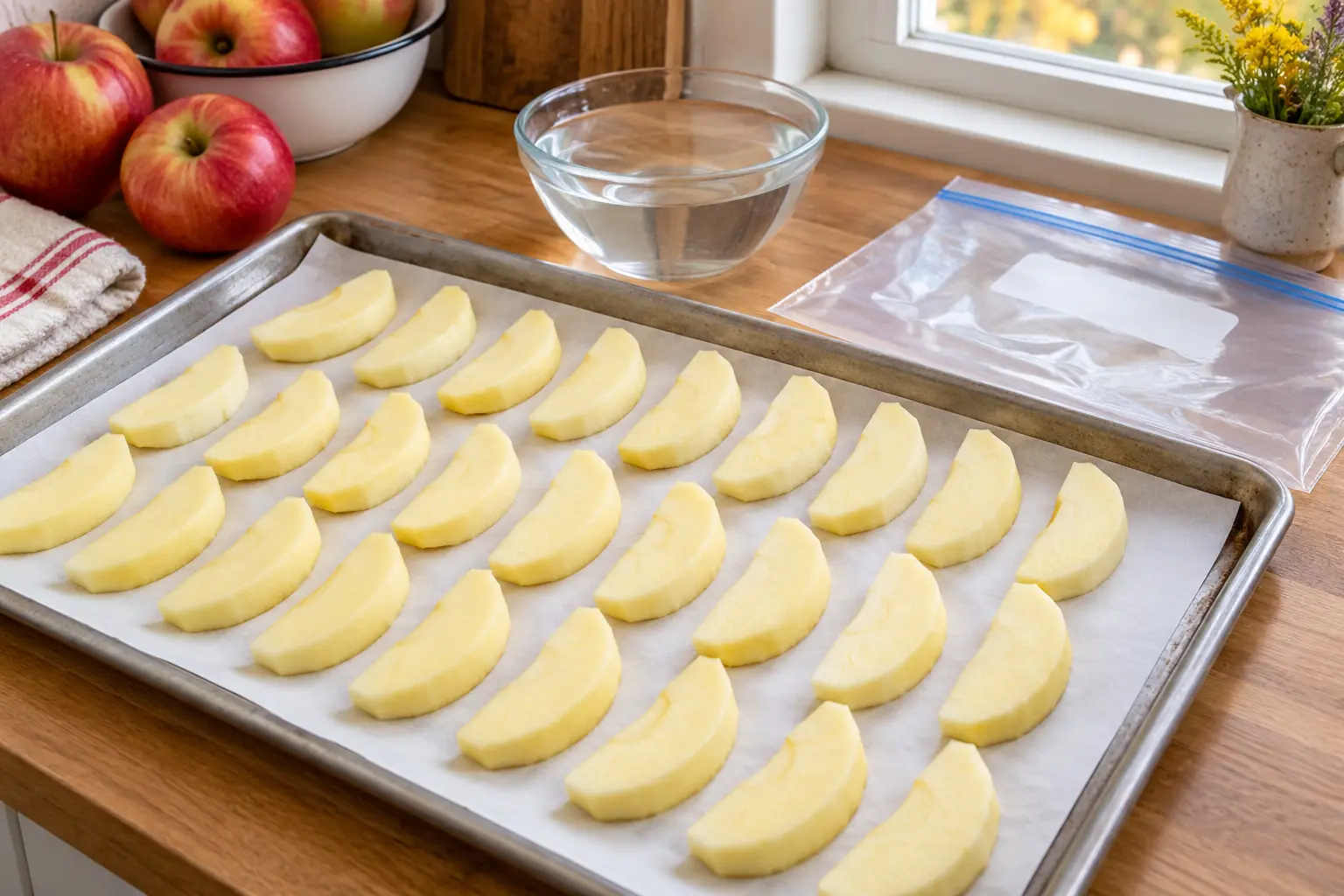
Yes. Apples can be frozen raw without cooking or blanching. Wash, peel, core, and slice firm apples; prevent browning by dissolving ½ teaspoon (1,500 mg) ascorbic acid in 3 tablespoons water and sprinkling it over the fruit. For an unsweetened dry pack, freeze the treated slices in one layer on a tray, then transfer them promptly to freezer bags or containers. Keep them at 0°F or below and use within 8–12 months for best quality. Thawed apples soften, so they are best for pies, crisps, sauces, oatmeal, and baking rather than fresh eating.
Print a clean copy or save it as a PDF for the kitchen.
Saveable field method
How to freeze raw apple slices without cooking
Treat fresh apple slices to reduce browning, freeze them individually on a tray, and package them for cooked dishes.
What you need
- Crisp, firm, full-flavored apples
- ½ teaspoon (1,500 mg) ascorbic acid
- 3 tablespoons water
- Moisture-vapor-resistant freezer bags or containers
- Clean knife and cutting board
- Peeler and apple corer
- Small bowl and measuring spoons
- Rimmed tray lined with parchment or a freezer-safe mat
- Choose and wash the apples
Select crisp, firm apples rather than mealy fruit. Rinse them under cool running water and dry with a clean towel; do not use soap, bleach, or household cleaners.
- Peel, core, and slice
Peel and core the apples. Slice medium apples into about 12 wedges or large apples into about 16 wedges so the pieces freeze and cook evenly.
- Make the anti-browning treatment
Dissolve ½ teaspoon (1,500 mg) ascorbic acid in 3 tablespoons water. Use pure ascorbic acid or a commercial fruit-preservation product according to its label; do not substitute an unmeasured splash of lemon juice for this exact method.
- Treat the slices
Sprinkle the measured solution evenly over the prepared apple slices and turn them gently so the cut surfaces are coated.
- Tray-freeze in one layer
Arrange the treated slices in a single layer without crowding. Freeze until solid so you can remove only the amount needed later.
- Package, label, and freeze
Transfer the frozen slices promptly to moisture-vapor-resistant bags or containers, press out excess air, label with the contents and date, and return them to a freezer at 0°F or below.
Why raw apples can be frozen without blanching
Blanching is essential for many vegetables because it slows enzymes that damage flavor, color, and texture. Apples are fruit, and the National Center for Home Food Preservation provides a dry-pack method that uses an anti-darkening treatment instead of cooking. Steam blanching for 1½–2 minutes is an allowed alternative, but it is not required when the slices receive the measured ascorbic-acid treatment.
Freezing still changes the fruit. Ice crystals disrupt cell walls, so thawed slices will be softer and release more juice than fresh apples. The method preserves a useful ingredient, not the crisp texture of an apple eaten out of hand.
The exact unsweetened dry-pack method
The NCHFP dry pack follows its sugar-pack preparation while omitting the sugar. For each batch, dissolve ½ teaspoon (1,500 mg) ascorbic acid in 3 tablespoons water and sprinkle it over the fruit. The treated slices can go directly into suitable containers, or they can be frozen on a tray first and packaged as soon as they are solid.
Tray-freezing keeps the pieces loose, which is practical when you want a handful for oatmeal or a measured amount for muffins. It does not eliminate the need for freezer-grade packaging. Ordinary thin sandwich bags allow moisture loss and freezer odors to reach the fruit more easily.
Can you freeze apples without sugar?
Yes. Sugar is optional for frozen fruit and is used for quality rather than safety. The NCHFP says a sugar or dry pack works well for pie making; its dry pack simply omits the sugar after the slices have received the anti-browning treatment.
A syrup pack is preferred when the apples will be served in an uncooked dessert or fruit cocktail because syrup helps protect texture and flavor. For pies, crisps, breads, oatmeal, sauces, and other cooked uses, the unsweetened tray pack is usually the most flexible choice.
How long frozen apples keep
University of Minnesota Extension recommends using frozen fruit within 8–12 months for best quality. Keep the freezer at 0°F (-18°C) or below, freeze packages quickly, and label each one with the date. That range is a quality target, not permission to ignore a thawed or damaged package.
Discard fruit that has been left warm for an unsafe length of time or shows mold, fermentation, or an off odor after thawing. Freezing stops bacterial growth while food remains frozen, but it does not kill every microorganism already present on the fruit.
How to use frozen apple slices
Use the slices from frozen for oatmeal, muffins, quick breads, sauces, and smoothies. For a pie or crisp, follow the recipe's directions: some recipes work well with frozen slices, while others account for the extra juice by adjusting thickener or baking time.
Do not expect a raw snack with fresh-apple crunch after thawing. If your goal is an uncooked fruit cup, use the NCHFP syrup pack rather than a dry tray pack, and still expect some texture change.
Is freezing apples an Amish practice?
No. Freezing apples is a general modern home-preservation method, not an exclusively Amish practice. The Young Center explains that Amish affiliations and local church districts differ substantially, including in their use of electricity and technology, so one freezer routine should not be presented as universal Amish tradition.
The Amish-inspired idea here is narrower: preserve a seasonal surplus with simple equipment and plan meals around what you already have. The preparation ratios, packaging, and storage guidance come from current research-based preservation sources rather than cultural folklore.
Frequently asked questions
Do you have to cook apples before freezing them?
No. The NCHFP provides a dry-pack method for raw apple slices. Treat the cut fruit with the measured ascorbic-acid solution, then package it directly or tray-freeze it before packaging.
Do you have to blanch apples before freezing?
No. Steam blanching for 1½–2 minutes is one anti-darkening option, but raw slices can instead be treated with ½ teaspoon (1,500 mg) ascorbic acid dissolved in 3 tablespoons water.
Can you freeze apples with the peel on?
The NCHFP's tested preparation says to wash, peel, and core the apples before slicing. Following that method gives a more predictable texture for pies, sauces, and baking.
Can you freeze apples without sugar?
Yes. Use the NCHFP dry-pack method, which omits sugar after the anti-browning treatment. Sugar improves some quality characteristics but is not what makes frozen fruit safe.
Can lemon juice replace ascorbic acid?
Do not substitute an unmeasured splash of lemon juice for the NCHFP's exact apple method. Use ½ teaspoon (1,500 mg) ascorbic acid in 3 tablespoons water or follow the label on a commercial anti-darkening product.
How long are frozen apples good for?
University of Minnesota Extension recommends 8–12 months for best quality when fruit remains at 0°F or below. Label the package and use older batches first.
Sources and further reading
- National Center for Home Food Preservation — Freezing Apples
- University of Minnesota Extension — How to Freeze Fruit Safely
- FoodSafety.gov — Safe Ways to Handle and Clean Fresh Produce
- Young Center for Anabaptist and Pietist Studies — Amish Diversity
This article may use AI-assisted research organization and drafting. Claims involving safety, energy, or household costs are checked against the named sources above. Read about the founder and our editorial standards.