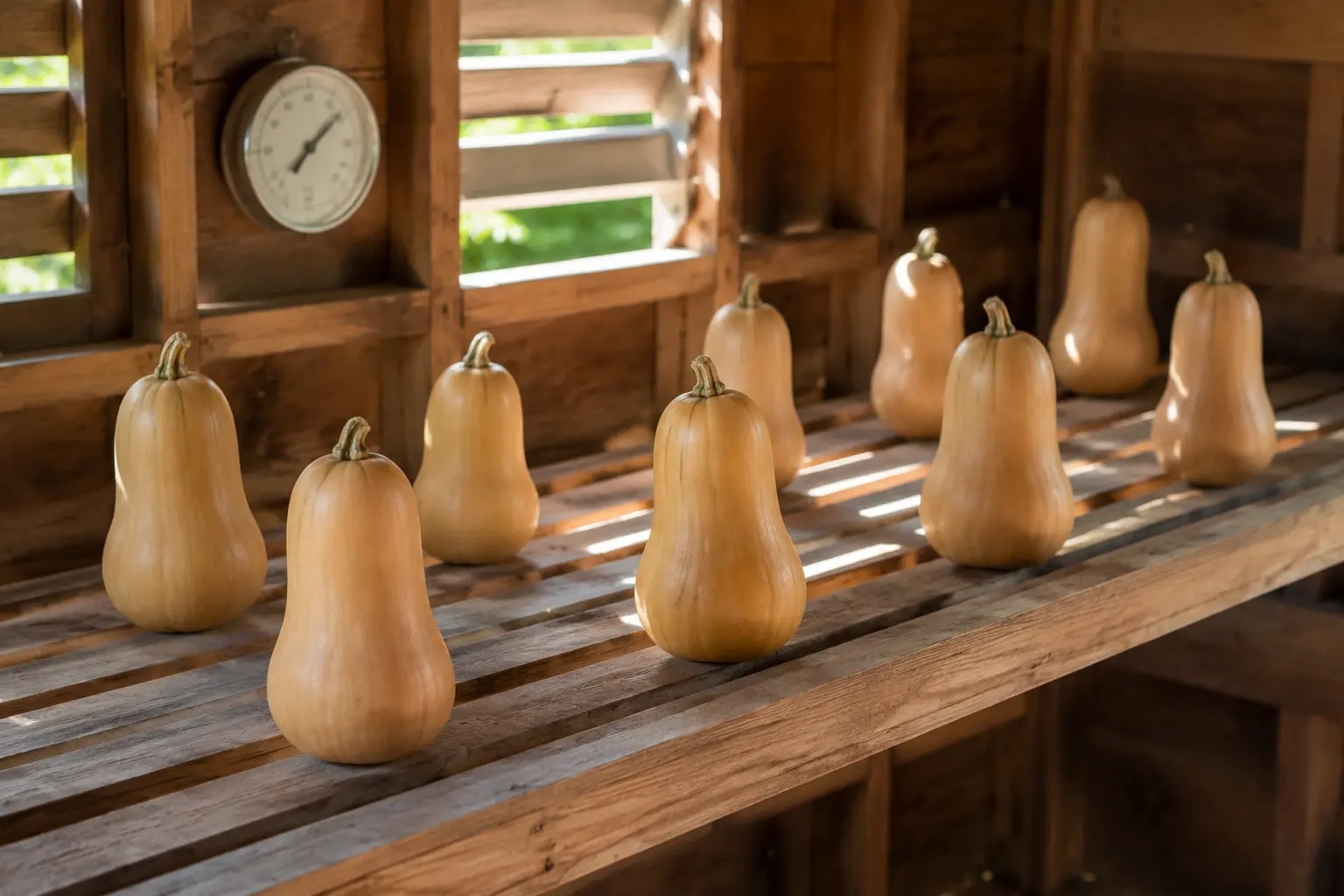
Yes, cure mature butternut squash if you want to store it for more than a few weeks. Keep sound, dry squash in a warm, ventilated place for about 10 days; a practical home target is 75–80°F. Then move it to a dry, dark, well-ventilated space around 50–55°F and keep the fruits in a single layer without touching. Curing helps harden the rind and heal small surface injuries, but it cannot rescue immature, bruised, frost-damaged, or rotting squash. Acorn, delicata, and sweet dumpling squash are exceptions and should not be cured like butternut.
Print a clean copy or save it as a PDF for the kitchen.
Saveable field method
How to cure butternut squash before storage
A six-step home-garden method for harvesting, curing, sorting, and storing butternut squash.
What you need
- Mature, sound butternut squash with stems attached
- Sharp pruning shears or knife
- Slatted shelf, rack, or shallow ventilated crate
- Room thermometer
- Clean dry cloth or soft brush
- Confirm the squash is mature
Harvest when the rind has reached its mature tan color, looks dull rather than glossy, and cannot be easily pierced with a fingernail. Harvest before a hard frost.
- Cut and keep the stem
Cut the squash from the vine instead of twisting it off. Leave about 2 inches of stem attached and never carry the fruit by the stem.
- Sort before curing
Set aside immature, deeply cut, bruised, soft, stemless, or frost-damaged squash for prompt use. Cure only sound fruit intended for storage.
- Keep the surface dry
Brush or wipe off loose dry soil. Do not put wet squash into the curing area; wash the rind under running water just before cooking instead.
- Cure warm with airflow
Arrange squash in one layer without touching and hold them for about 10 days in a warm, dry, ventilated place. A practical household target is 75–80°F.
- Move to cool storage
Store cured squash around 50–55°F in a dry, dark, ventilated place. Keep fruits separated, inspect weekly, and remove any that soften or develop mold.
Harvest butternut squash only when the rind is hard
Curing starts with mature fruit. Illinois Extension recommends harvesting winter squash after it develops a deep, solid color and a hard rind. For butternut, look for the variety's mature tan or beige color, a dull rather than glossy surface, and skin that does not yield easily to a fingernail. Cut the fruit before a hard frost; heavy frost damage sharply reduces storage potential.
Use clean pruning shears or a knife and leave about 2 inches of stem. Do not twist the squash off or lift it by the stem. A broken stem leaves a wound where decay can begin. Handle each fruit as if it bruises easily, because internal damage may not be visible at harvest.
Cure butternut squash warm for about 10 days
University Extension recommendations use slightly different but overlapping home-curing ranges. Utah State University recommends 75–85°F for 10 days, while Illinois Extension describes roughly 70°F for 10–20 days. For a simple household method, aim for about 75–80°F for 10 days with steady ventilation. A warm spare room, dry shed, or protected porch may work if you measure the temperature and avoid cold nights.
Place the squash on a slatted shelf, rack, or shallow ventilated crate in one layer so the fruits do not touch. Air needs to reach the rind; do not seal squash in plastic bags or stack it in a deep bin. Turn only if needed for inspection, and remove a fruit that becomes wet, soft, or moldy.
- Use only mature, sound fruit with intact stems.
- Aim for 75–80°F for about 10 days at home.
- Keep the surface dry and maintain good air circulation.
- Arrange squash in one layer without touching.
Do not cure every winter squash the same way
Butternut, Hubbard, and many pumpkins benefit from curing, but the rule is not universal. Illinois Extension specifically lists acorn, sweet dumpling, and delicata as exceptions. Extra warmth can shorten the quality life of varieties that are not meant to be cured.
This is why a generic instruction to cure every hard-skinned squash can be misleading. Identify the variety first. If you bought the squash rather than harvesting it, it may already have been conditioned during commercial handling; use it promptly if the rind or stem shows damage instead of attempting to restart the process.
Store cured butternut squash at 50–55°F
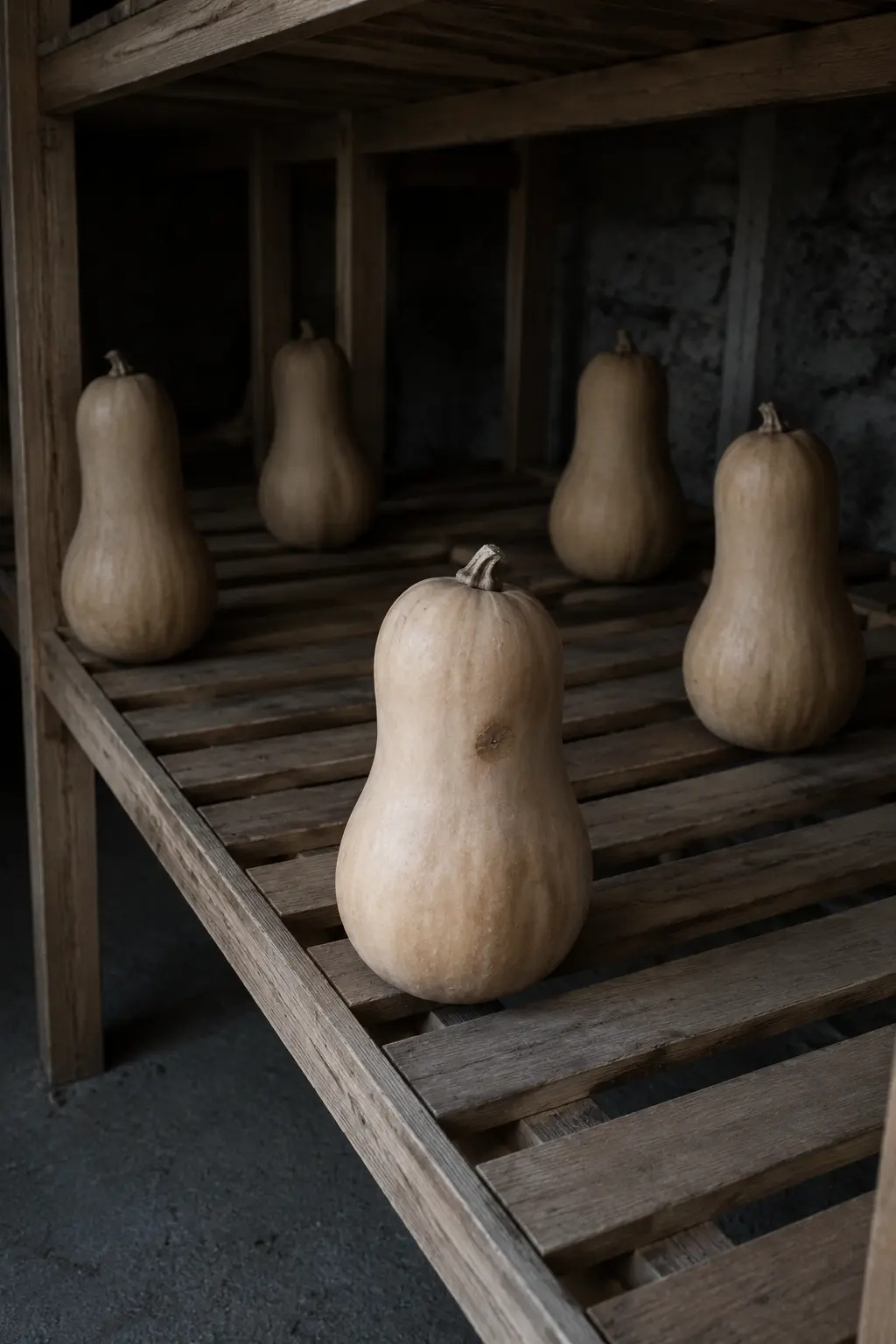
After curing, switch from warmth to cool, dry storage. Utah State University gives an optimal winter-squash range of 50–60°F and 50–70% relative humidity, with about 55°F and 60% humidity for long-term storage. Illinois Extension recommends a dry building around 50–55°F and a single layer when space allows.
A cool basement shelf or interior storage room can work if it stays above 45°F, remains dry, and has airflow. A refrigerator is too cold and humid for whole squash, while a warm kitchen shortens storage life. Keep fruit away from freezing walls, direct sun, and ripening apples or pears. Check each squash weekly rather than trusting a calendar alone.
Use damaged squash first and discard active decay
Curing heals small superficial injuries; it does not reverse deep cuts, bruises, frost damage, or rot. Use a mature squash with a broken stem or shallow blemish promptly if it remains firm and sound. Do not place it beside the long-storage crop.
Remove squash that develops a soft or sunken area, leaking liquid, spreading mold, or an off odor. Illinois Extension says butternut generally stores for up to about three months under suitable conditions, but variety, maturity, damage, and the actual temperature all matter. Write the harvest date on a shelf card and inspect the fruit instead of relying on a promised expiration date.
Is curing squash an Amish practice?
Curing winter squash is a broad postharvest horticultural method, not a uniquely Amish practice. The Young Center for Amish Studies cautions against generalizing from one Amish community because affiliations and local church districts vary in technology and household practice.
Plain & Frugal presents this as an Amish-inspired, old-fashioned way to waste less of a garden harvest. The temperatures, timing, crop exceptions, and storage limits here come from current university Extension guidance, not from an invented cultural claim.
Frequently asked questions
Can you eat butternut squash without curing it?
Yes. Curing is mainly for improving storage quality, not for making mature squash safe to eat. A sound, fully mature butternut can be cooked after harvest, although curing may improve keeping quality and flavor development.
How long should butternut squash cure?
Use about 10 days as a practical home target. Utah State University recommends 10 days at 75–85°F, while Illinois Extension gives a broader 10–20 days around 70°F. Keep the fruit dry, ventilated, and separated throughout the process.
Should you wash butternut squash before curing?
For a home crop, brush or wipe off loose dry soil and keep the rind dry during curing. Wash the squash under running water immediately before cutting and cooking it.
Can you cure butternut squash indoors?
Yes, if the location is warm, dry, and ventilated. Measure the temperature, use a slatted shelf or rack, keep fruit in one layer, and avoid a sealed container or humid laundry room.
Should whole butternut squash be refrigerated?
No. Store whole cured squash around 50–55°F in a dry, ventilated place. Refrigerate cut squash, but whole squash deteriorates faster in the refrigerator's cold, humid conditions.
How long does cured butternut squash last?
Illinois Extension gives up to about three months for butternut under suitable storage conditions. Treat that as an upper estimate, inspect weekly, and use any squash with stem damage or surface blemishes first.
Sources and further reading
- Penn State Extension — Prevent Rot of Winter Squash in Storage (December 3, 2025)
- Illinois Extension — Winter Squash
- Utah State University Extension — Harvest and Handling
- Utah State University Extension — Harvest and Storage of Vegetables and Fruits
- Elizabethtown College Young Center — Amish Diversity
This article may use AI-assisted research organization and drafting. Claims involving safety, energy, or household costs are checked against the named sources above. Read about the founder and our editorial standards.