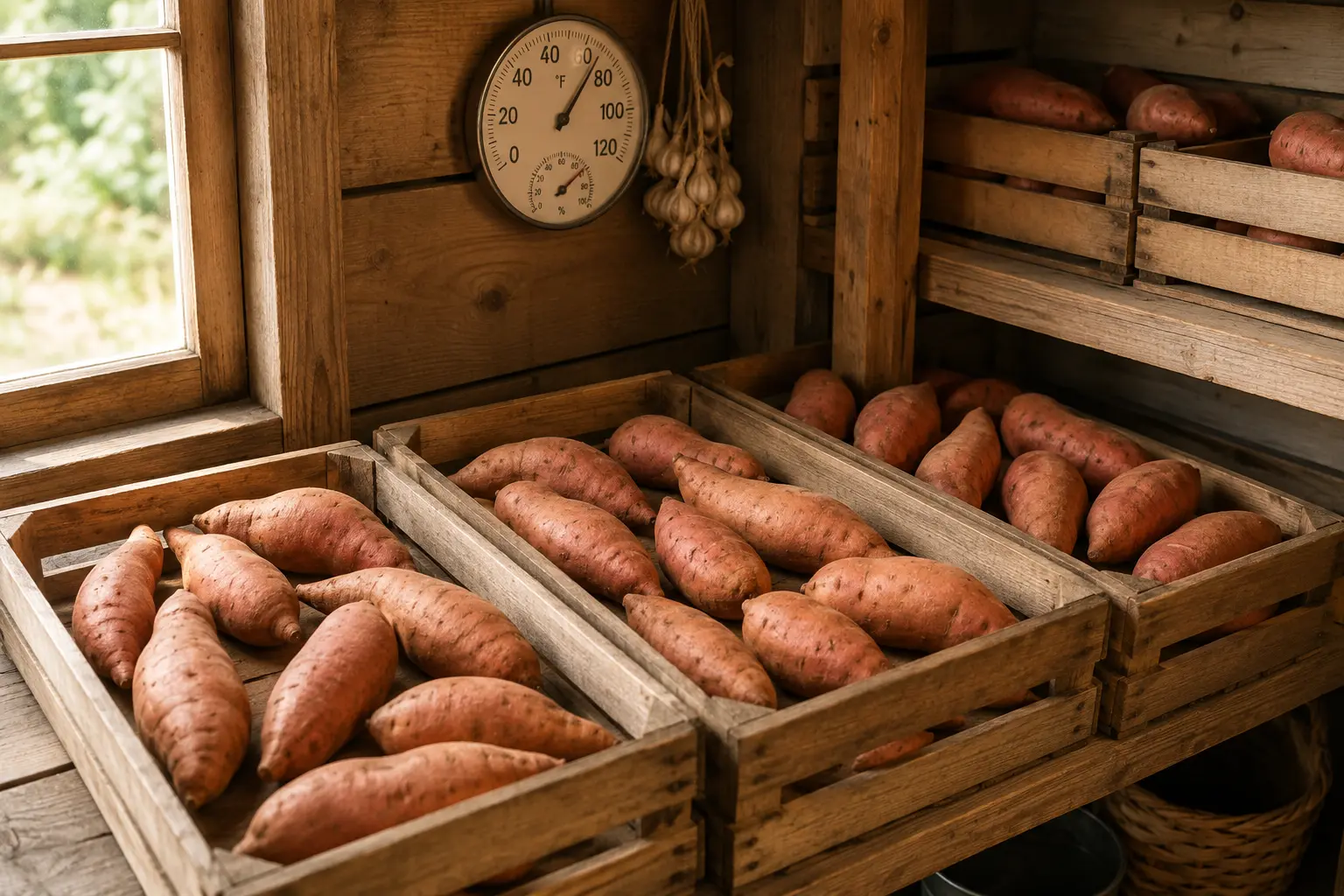
Cure sweet potatoes immediately after harvest. Handle them gently, brush off loose soil without washing, and place only sound roots in a warm, humid, ventilated area at 80–85°F and 85–90% relative humidity for 7–10 days. This heals small harvest wounds and improves sweetness and storage quality. After curing, move them to a dark, well-ventilated place at 55–60°F. Do not refrigerate raw sweet potatoes: prolonged storage below 55°F can cause chilling injury, hard centers, and altered flavor.
Print a clean copy or save it as a PDF for the kitchen.
Saveable field method
How to cure sweet potatoes after harvest
A six-step home-garden method for harvesting, curing, sorting, and storing sweet potatoes.
What you need
- Freshly harvested, sound sweet potatoes
- Garden fork or shovel
- Ventilated crate, slatted shelf, or shallow breathable basket
- Thermometer-hygrometer
- Clean damp towel for a small monitored curing setup
- Harvest before cold soil
Dig in late summer or early fall before soil temperatures fall below 60°F. Choose conditions that will not excessively skin the roots.
- Lift and handle gently
Insert a fork or shovel far enough from the crown to avoid cuts, then lift each hill carefully. Do not toss, scrape, or pile the tender roots.
- Brush, do not wash
Gently remove loose soil without washing. Set aside roots with deep cuts, soft spots, decay, or extensive skinning instead of curing them for long storage.
- Build a ventilated curing area
Arrange roots loosely in a ventilated crate or shallow layer. Use a thermometer-hygrometer and maintain airflow rather than sealing the crop in an airtight container.
- Hold 80–85°F and 85–90% humidity
Maintain those conditions for 7–10 days. Keep checking temperature, humidity, condensation, and any developing soft spots.
- Move to cool, dark storage
After wounds have healed, store sound roots at 55–60°F in darkness with good ventilation. Inspect them regularly and never refrigerate them raw.
Harvest before soil temperatures fall below 60°F
Sweet potatoes do not ripen in the same way as tomatoes or melons. Mississippi State University Extension says most varieties take roughly 90–120 days and recommends harvesting in late summer to early fall before soil temperatures drop below 60°F. Use the maturity range for your variety, local weather, and a test hill rather than waiting for a universal color change.
Insert a shovel or garden fork well away from where the vine enters the soil, loosen the hill, and lift carefully. The skin is tender at harvest. Cuts, abrasions, and excessive skinning shorten storage life and create routes for decay. Mississippi State also notes that very dry soil can increase skinning, so avoid rough digging in bone-dry ground when possible.
Do not wash sweet potatoes before curing
Gently brush away loose soil, but leave washing until you are ready to cook. NC State's Plants for Human Health Institute specifically advises not washing before curing. Added surface moisture and unnecessary handling work against the goal of healing the skin.
Sort before the roots enter the curing area. Keep firm roots with minor superficial harvest wounds. Separate anything with deep cuts, extensive skinning, insect damage, soft areas, black or brown cavities, or visible decay. Curing helps small wounds heal; it does not restore badly damaged or rotting roots.
Use warmth, humidity, and airflow together
Mississippi State's home-garden guidance specifies 80–85°F and 85–90% relative humidity for 7–10 days. NC State gives a broader optimal window of about 85°F, 80–90% humidity, good ventilation, and 4–14 days. For a simple, repeatable household target, use the Mississippi State range and measure it with a thermometer-hygrometer rather than guessing.
High humidity must not mean stagnant, airtight storage. Arrange the roots loosely in a ventilated crate, on a slatted shelf, or in another shallow breathable setup. NC State suggests a milk crate covered with a damp towel or a single layer in a ventilated burlap or perforated bag for small-scale curing. Whichever setup you use, watch for condensation, keep air moving, and remove a root that begins to soften or leak.
- Target 80–85°F, not ordinary cool-room temperature.
- Target 85–90% relative humidity without sealing out airflow.
- Cure for 7–10 days and check the conditions daily.
- Keep roots in shallow, uncrowded layers and handle them as little as possible.
Know what curing changes—and what it cannot fix
Curing helps small harvest wounds heal, reduces moisture loss and the risk of rot during storage, and begins converting starches to sugars. Mississippi State says it also improves aroma and texture. University of Minnesota Extension identifies healed wounded areas as the practical sign that potatoes and sweet potatoes are ready to leave curing conditions.
Curing is not a safety reset. A root that is already soft, moldy, badly cut, or decaying should not be mixed with the sound crop. The process also does not make refrigeration appropriate. Curing and storage are two separate stages with different target temperatures.
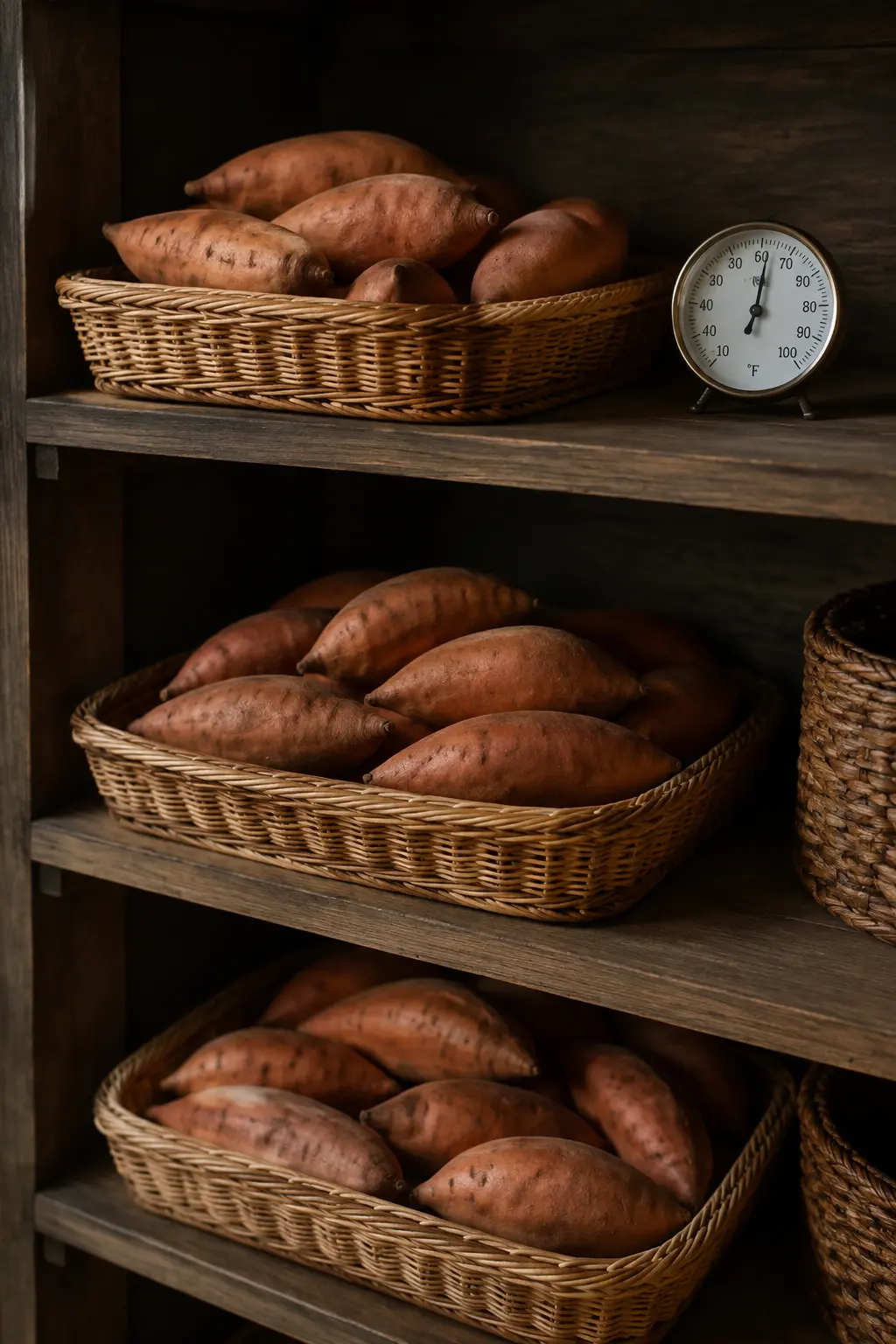
Store cured sweet potatoes at 55–60°F
After curing, move the roots to a dark, cool, well-ventilated space at 55–60°F. Mississippi State warns that extended storage below 55°F can cause chilling injury, including hard cores and altered flavor when cooked. Temperatures above 60°F encourage sprouting. A standard refrigerator is therefore too cold for raw whole sweet potatoes.
Use a breathable basket, slatted crate, or other ventilated container and avoid a sealed plastic tote. Inspect the crop every week or two and remove any root that becomes soft, wet, moldy, or foul-smelling. Properly cured roots can last for months under controlled conditions, but a warm kitchen cabinet or fluctuating garage will shorten that potential; do not promise yourself a fixed shelf life when the temperature is not measured.
Is curing sweet potatoes an Amish practice?
Curing sweet potatoes is a general postharvest horticultural method, not a uniquely Amish practice. Amish affiliations and local church districts differ substantially, so no single storage routine should be presented as universal Amish tradition without direct documentation.
Plain & Frugal treats this as an Amish-inspired old-fashioned habit: protect a homegrown crop, use simple equipment, and waste less. The temperature, humidity, timing, and storage limits in this guide come from current university Extension sources, not from a cultural claim.
Frequently asked questions
How long do sweet potatoes need to cure after harvest?
Mississippi State University Extension recommends 7–10 days at 80–85°F and 85–90% relative humidity. NC State gives a broader 4–14-day window near 85°F, so measure conditions and look for healed harvest wounds rather than using the calendar alone.
Can you cure sweet potatoes at room temperature?
Ordinary room temperature is usually below the research-based 80–85°F target, so it will not reproduce the recommended curing process predictably. Use a monitored warm, humid, ventilated location rather than assuming a kitchen counter is sufficient.
Should you wash sweet potatoes before curing?
No. Gently brush off loose soil and keep the roots dry. Wash them under running water only when you are ready to prepare them for cooking.
How do you cure sweet potatoes without special equipment?
NC State suggests small-scale setups such as a ventilated milk crate covered with a damp towel or a shallow layer in a breathable or perforated bag. Whatever you use, verify temperature and humidity, preserve airflow, and avoid airtight containers.
How do you know when sweet potatoes are cured?
The minor cuts and skinned areas from harvest should be healed and dry rather than fresh or weeping. Remove any root with soft spots, cavities, active decay, or wounds that have not healed before storage.
Can cured sweet potatoes go in the refrigerator?
No. Store raw cured sweet potatoes at 55–60°F. Prolonged storage below 55°F can cause chilling injury, hard centers, and altered flavor; temperatures above 60°F encourage sprouting.
Sources and further reading
- Mississippi State University Extension — Growing Sweet Potatoes at Home
- NC State Plants for Human Health Institute — Curing Sweetpotatoes
- University of Minnesota Extension — Postharvest Handling of Fruit and Vegetable Crops
- University of Minnesota Extension — Harvesting and Storing Home Garden Vegetables
- Elizabethtown College Young Center — Amish Diversity
This article may use AI-assisted research organization and drafting. Claims involving safety, energy, or household costs are checked against the named sources above. Read about the founder and our editorial standards.