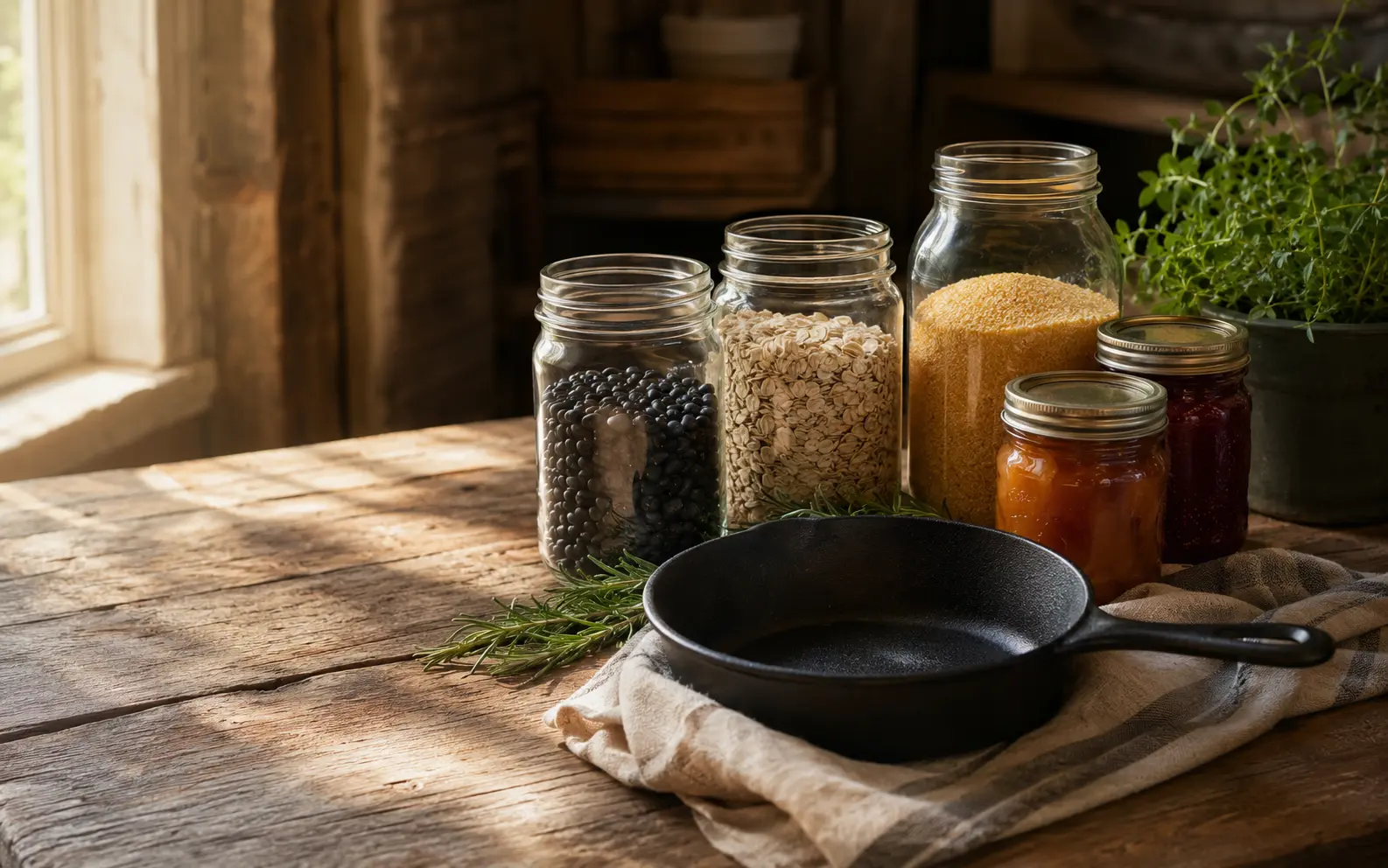
A frugal garden begins with a few foods your household buys repeatedly, that grow reliably in your climate, and that cost comparatively more at the store. Herbs, salad greens, and productive local favorites often make a better first test than a large mixed garden.
Print a clean copy or save it as a PDF for the kitchen.
Price the harvest before buying the garden
Seeds may be inexpensive, but beds, soil, fencing, irrigation, tools, and unused produce can erase the saving. Set a modest first-season budget and record what you harvest.
Choose crops with a job
Give each crop a purpose: frequent fresh use, freezer supply, preservation, or an expensive ingredient replacement. If you cannot name the meals that will use it, grow a smaller amount.
- High-use herbs near the kitchen.
- Quick greens planted in small repeated batches.
- One locally reliable, productive vegetable.
- One crop specifically chosen for freezing or preserving.
Protect the crop from waste
Plan harvest meals before the produce arrives. Keep freezer space, containers, and tested preservation instructions ready. Share surplus early rather than waiting until quality declines.
Use local extension advice
Planting dates, pests, varieties, and water needs vary by region. Cooperative Extension information is more useful than a generic national planting calendar.
Frequently asked questions
What is the cheapest food to grow?
There is no universal answer. Compare local prices, climate, yield, water, space, and what your household eats. Frequently used herbs and greens can be good small-space tests.
Does a vegetable garden always save money?
No. It saves money only when the value of produce used exceeds the cost of supplies and avoidable waste.
Sources and further reading
- USDA National Institute of Food and Agriculture — Cooperative Extension
- U.S. EPA — Preventing Wasted Food at Home
This article may use AI-assisted research organization and drafting. Claims involving safety, energy, or household costs are checked against the named sources above. Read about the founder and our editorial standards.