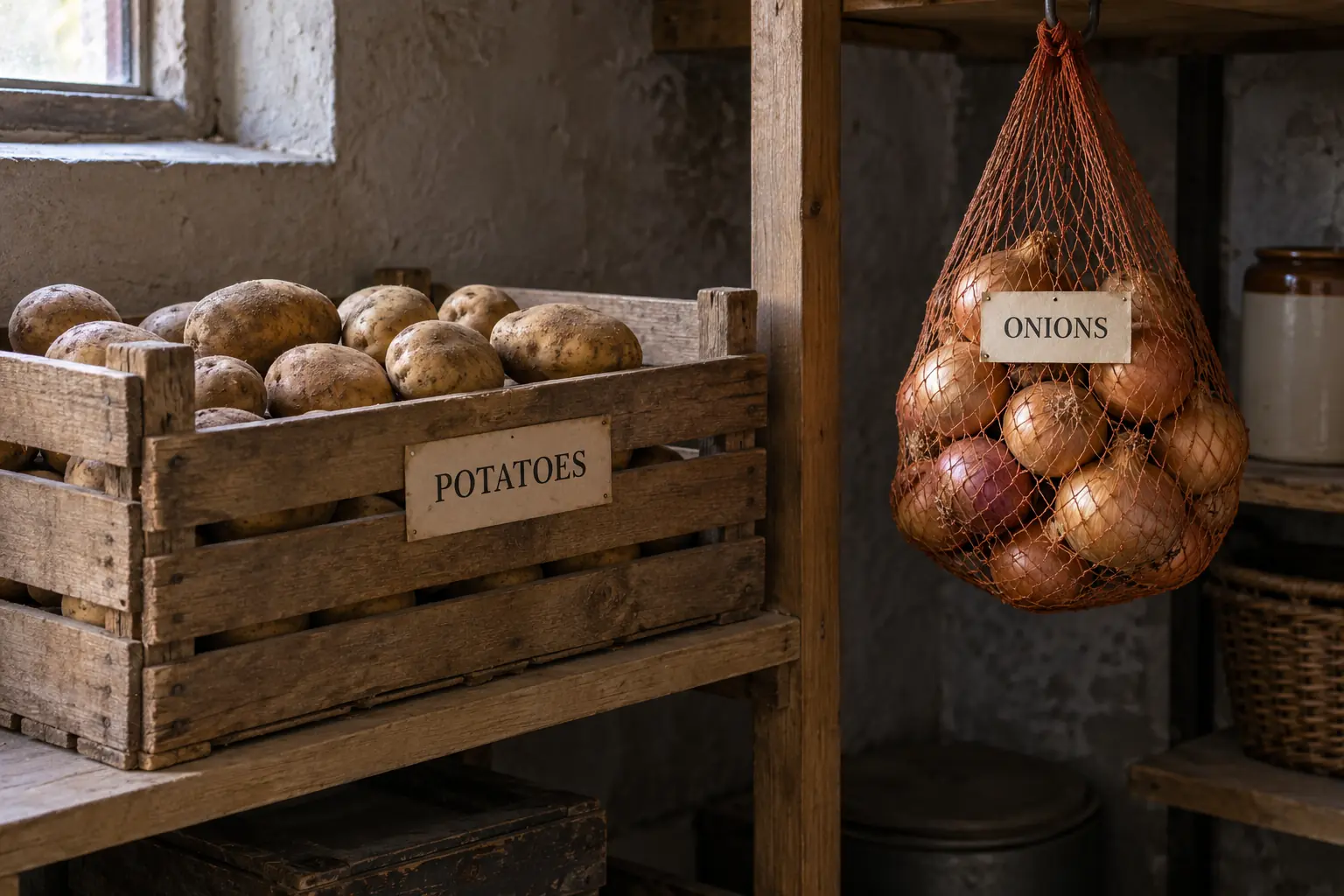
Can You Store Onions and Potatoes Together?
No—not for long-term storage. Onions need drier air, while potatoes need darkness and more humidity. Use two ventilated containers and separate storage zones.
Read the practical guideGrow what your household uses
Small-space gardening and household growing plans that account for supplies, yield, and avoidable waste.
A money-saving garden begins with a small budget, reliable local guidance, and crops that already have a job in your kitchen.
9 practical guidesHarvest-to-storage reference
Carrots can sometimes stay in the ground; sweet potatoes need warmth and high humidity; butternut squash, onions, and garlic need drier airflow. Compare the researched targets before moving a crop into storage.
| Crop | Cure | Store |
|---|---|---|
| Carrots | No curing; leave sound roots after light frost under heavy mulch | In-ground while soil stays workable, or 32–35°F at 98–100% humidity |
| Apples | No curing; sort sound, mature fruit and keep it unwashed | 32–40°F in perforated bags; keep separate from potatoes and squash |
| Butternut squash | About 10 days at 75–80°F with dry airflow | 50–55°F, dry and ventilated; keep fruits separated |
| Sweet potatoes | 7–10 days at 80–85°F and 85–90% humidity | 55–60°F, dark and ventilated; do not refrigerate |
| Potatoes | About 2 weeks at 50–60°F, dark and ventilated | 40–45°F for most kitchen uses; protect from light |
| Onions | 2–3 weeks in a warm, dry, airy place | 32–40°F and 65–70% humidity with airflow |
| Garlic | About 3–4 weeks in a warm, dry, airy place | Cool and dry with airflow; avoid freezing |
Storage compatibility check
Temperature is only one part of storage. Humidity, light, and ethylene can make two individually sound crops poor neighbors.
| Crop pair | Verdict | Why |
|---|---|---|
| Potatoes + onions | Store separately | Onion ethylene can encourage potato sprouting or spoilage; potato moisture can make onions brown and rot. |
| Potatoes + apples | Store separately | Ripening apples release ethylene that promotes potato sprouting. |
| Onions + garlic | Same dry zone; separate containers | Both suit 32–40°F and 65–70% humidity after curing, with good airflow. |
| Carrots + onions | Use different humidity zones | Carrots need nearly saturated humidity; onions keep best in moderately dry air. |
Plain & Frugal research library
Every guide opens with the direct answer and names the evidence behind safety or savings claims.
No—not for long-term storage. Onions need drier air, while potatoes need darkness and more humidity. Use two ventilated containers and separate storage zones.
Read the practical guide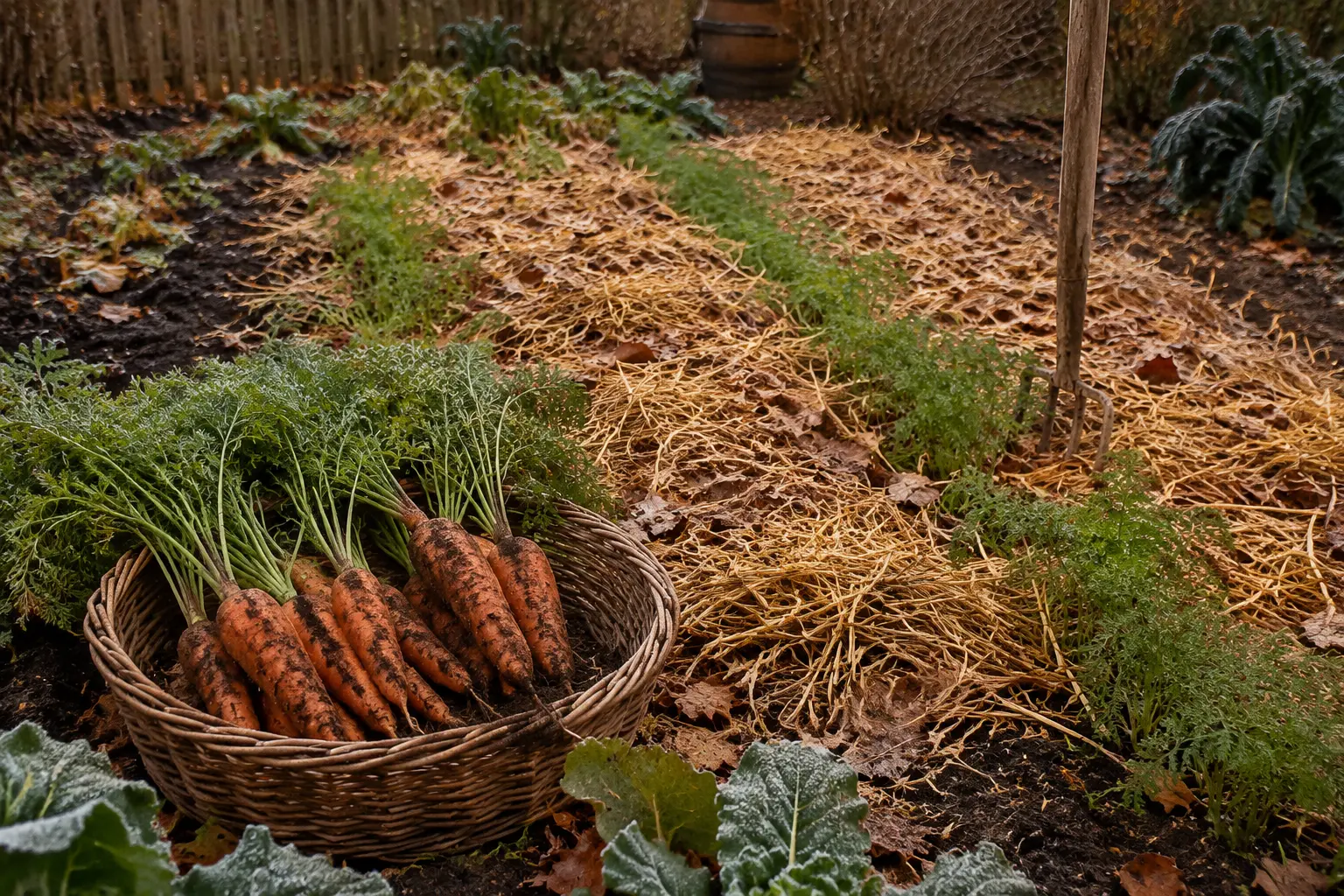
Yes—carrots can stay in well-drained garden soil after light frosts when a heavy mulch keeps the ground workable. Know when winter, water, or pests make indoor storage safer.
Read the practical guide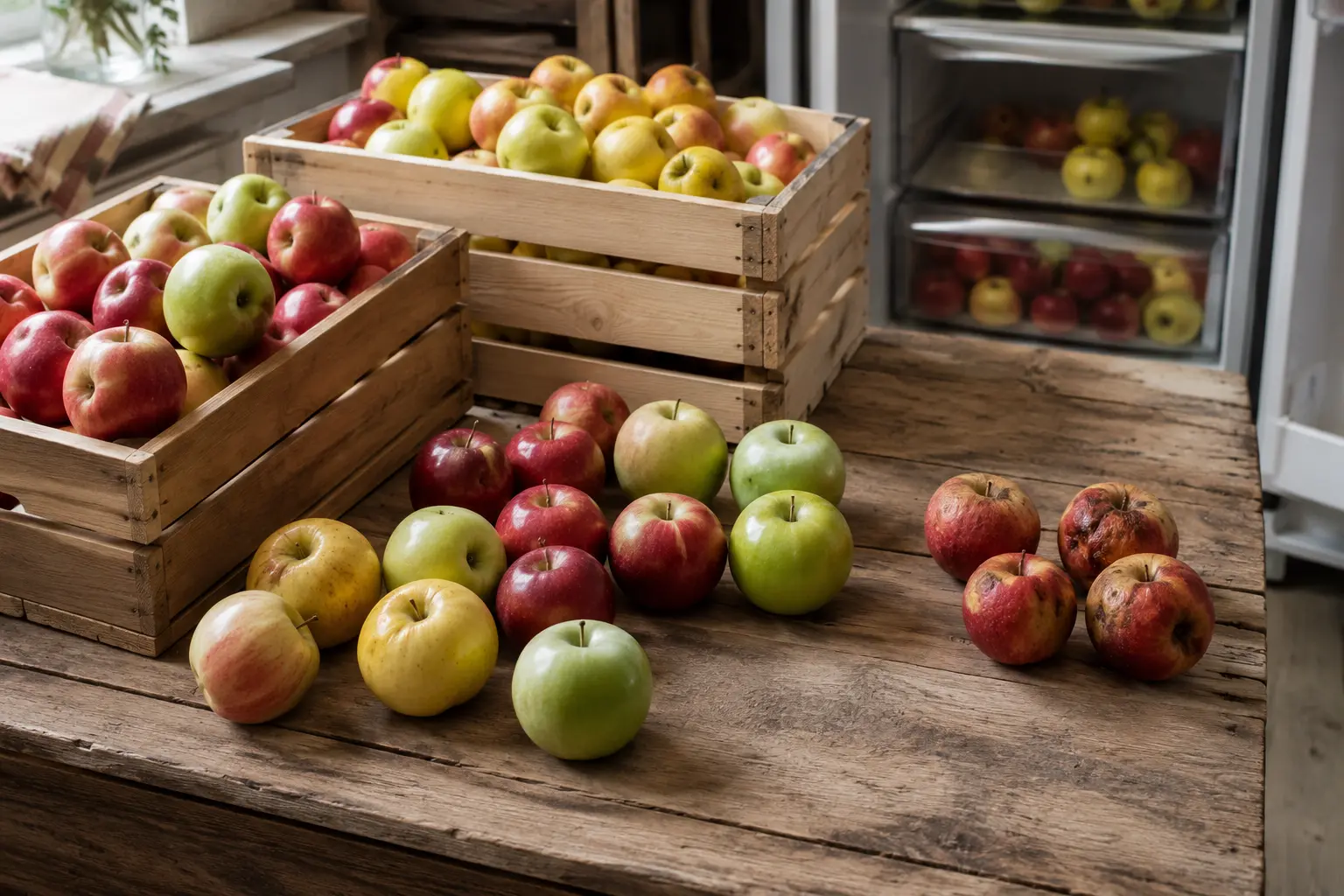
Store sound apples in a refrigerator crisper or another monitored 32–40°F space, using perforated bags to retain humidity without trapping condensation.
Read the practical guide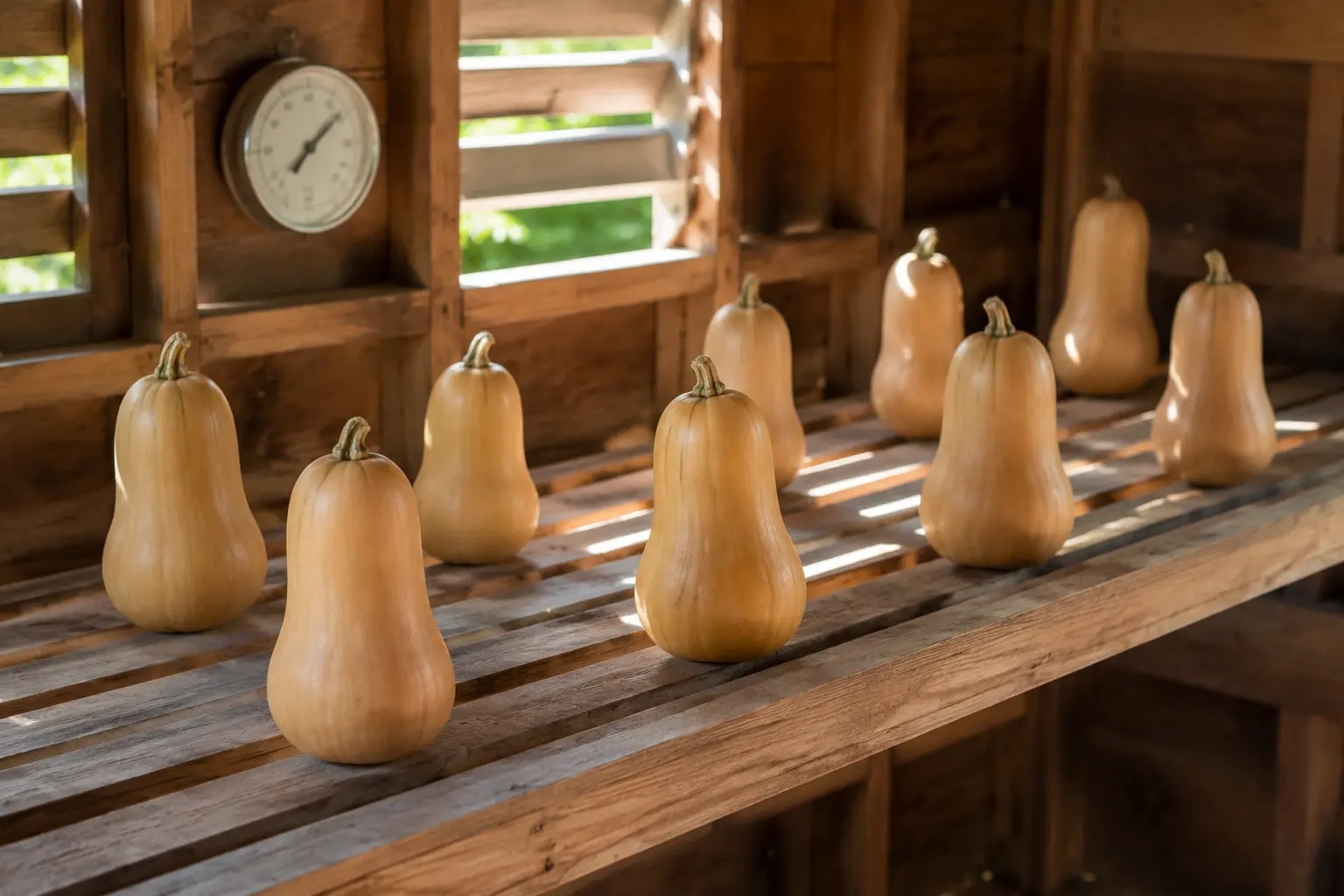
Yes—cure mature butternut squash for about 10 days in a warm, ventilated place, then store it dry at 50–55°F without letting fruits touch.
Read the practical guide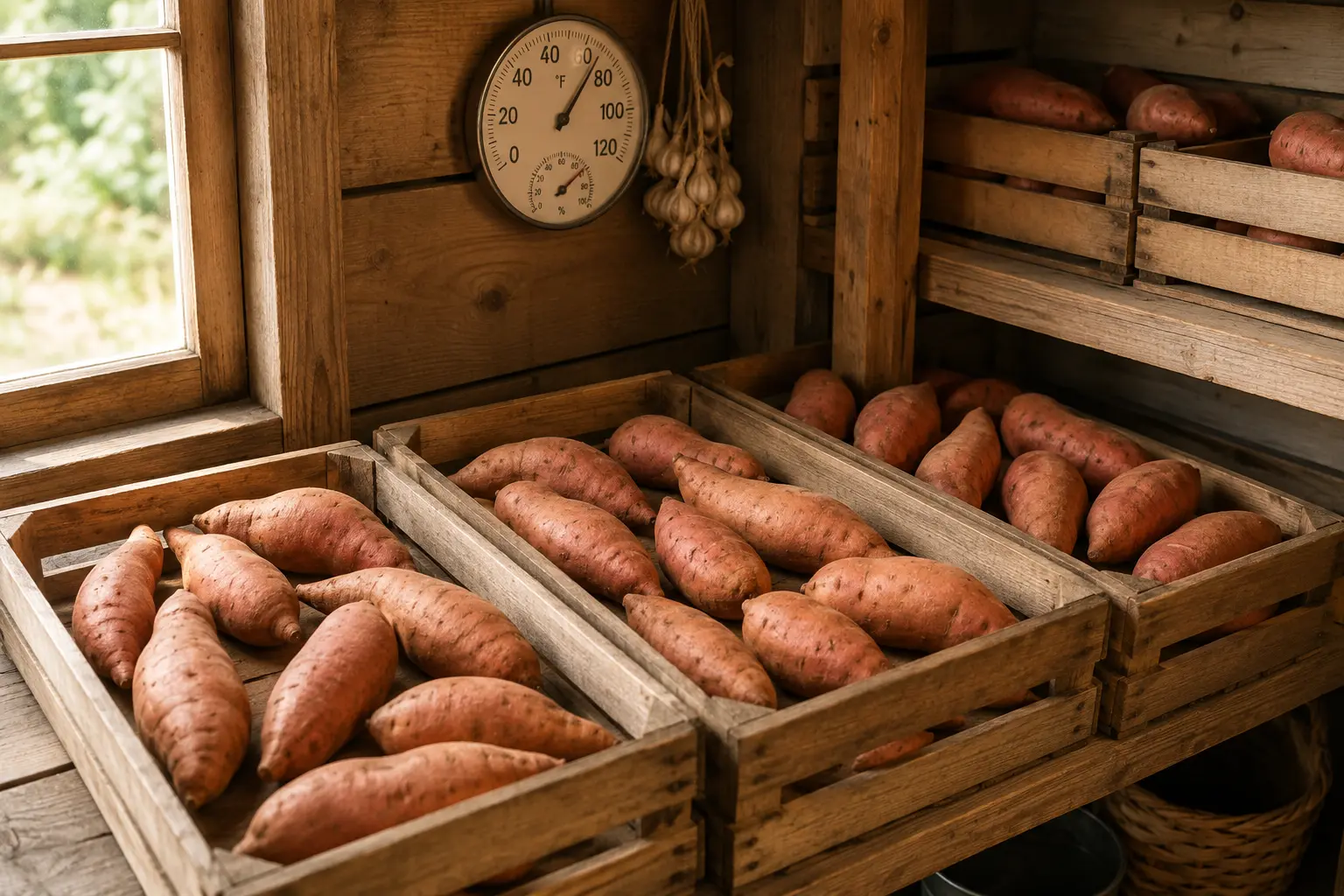
Cure freshly harvested sweet potatoes immediately at 80–85°F and 85–90% humidity for 7–10 days, then store them dark and ventilated at 55–60°F.
Read the practical guide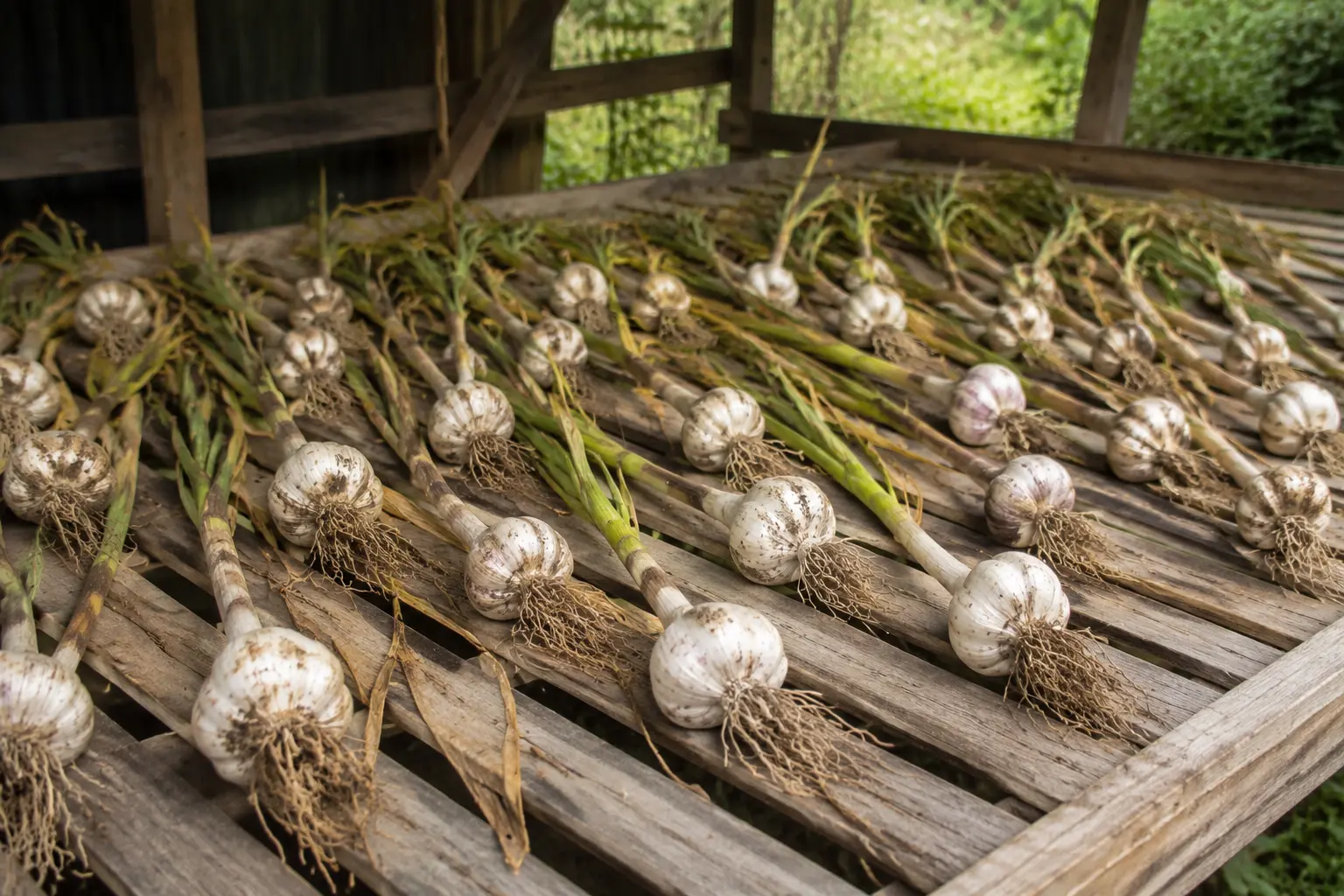
Cure freshly dug garlic with the tops attached in a warm, dry, airy, shaded place for about 3–4 weeks, then trim, sort, and store it cool and dry.
Read the practical guide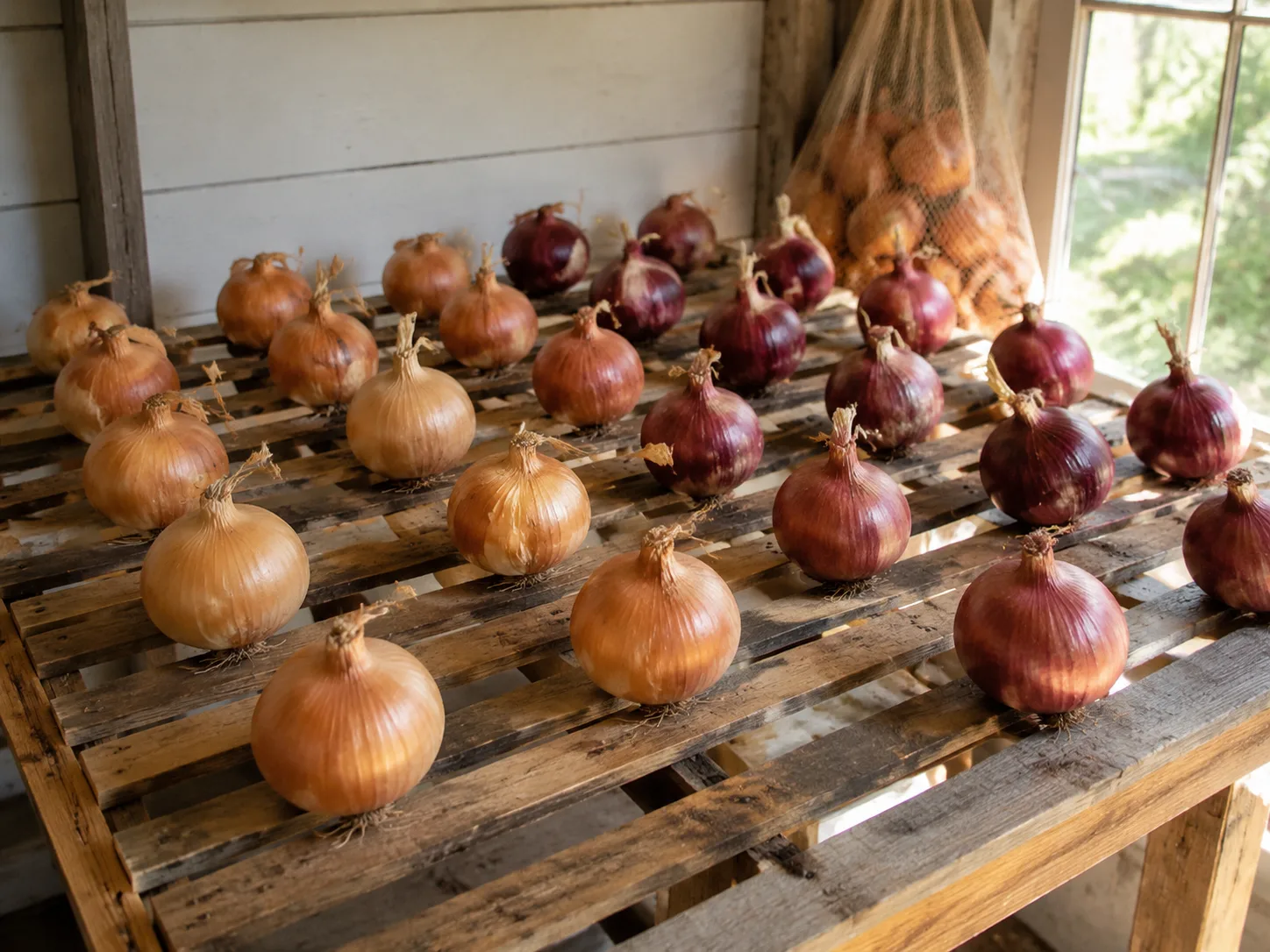
Harvest mature storage onions in dry weather, cure them in one airy layer for 2–3 weeks, then store only firm, dry bulbs at 32–40°F.
Read the practical guide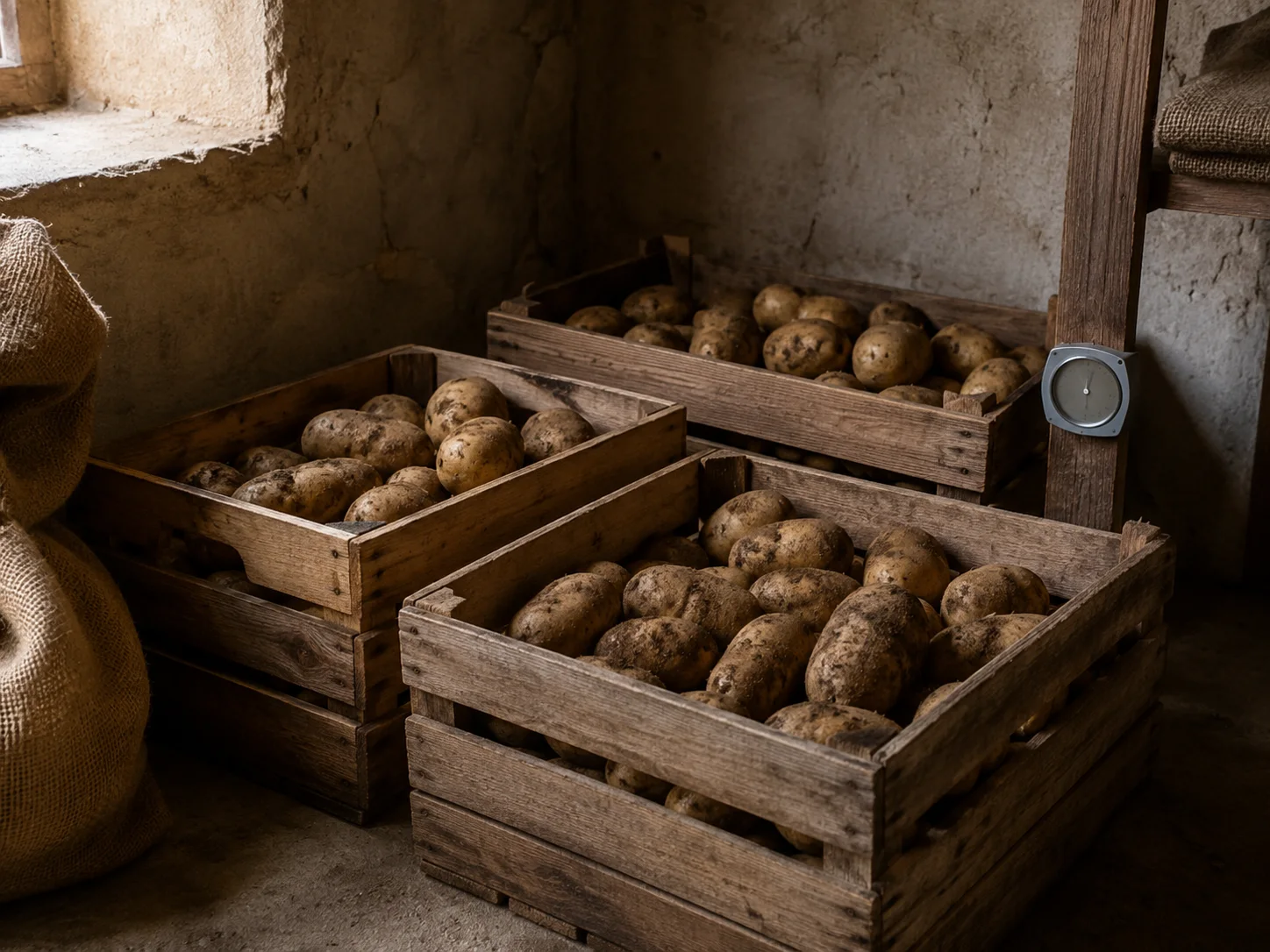
Use the coolest dark, ventilated place you can keep near 40–45°F—and store only an amount that location can realistically protect.
Read the practical guide
Choose high-use crops, measure yield, and avoid turning a money-saving garden into an expensive hobby.
Read the practical guide