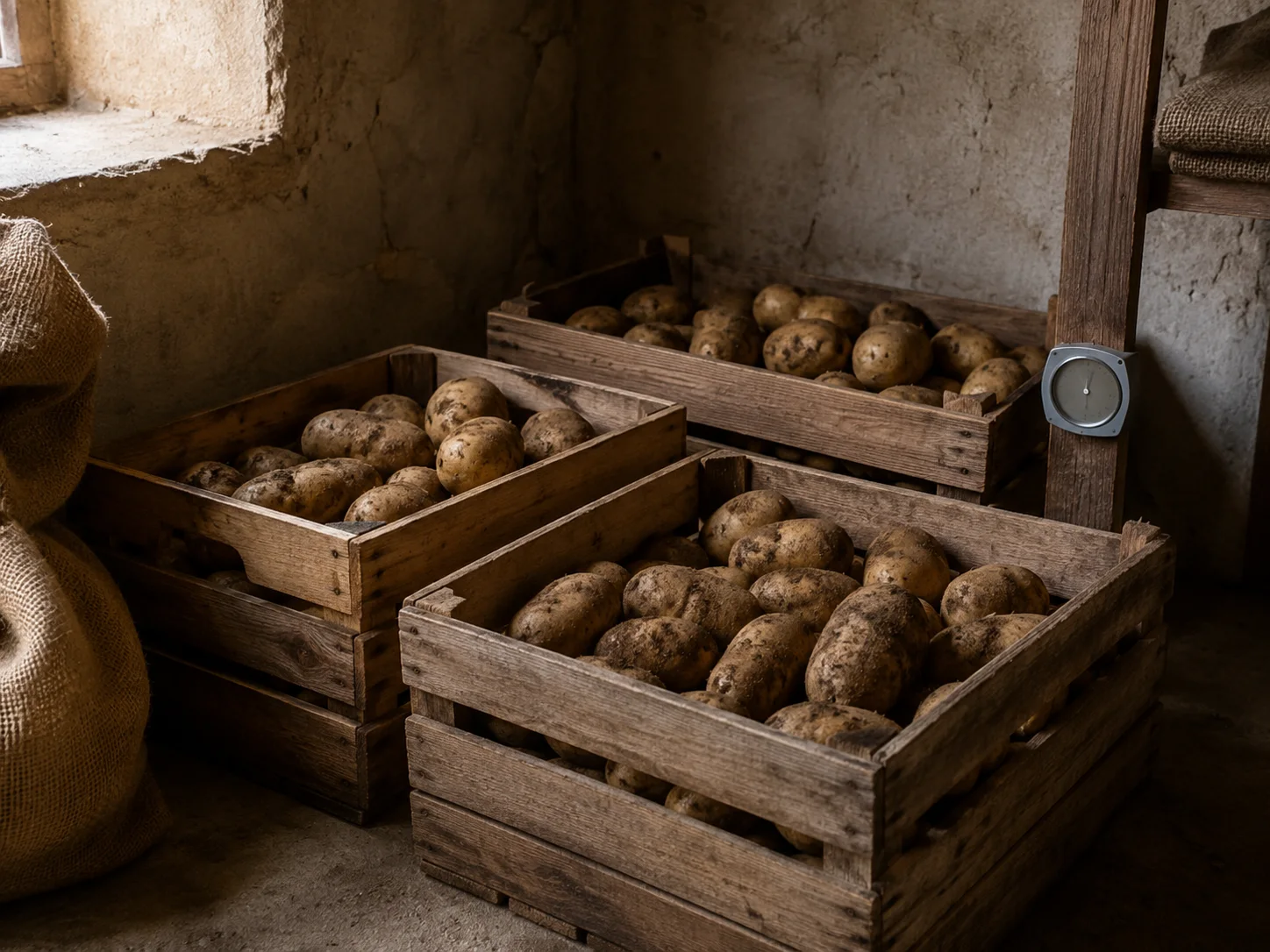
You do not need a purpose-built root cellar, but you do need similar conditions. For homegrown storage potatoes, brush off dry soil without washing, cure them for about 2 weeks in a dark, ventilated place around 45–60°F, then move only sound tubers into ventilated boxes or crates in the coolest reliably dark location you have—ideally about 40–45°F. Check them weekly and remove any soft, leaking, moldy, badly green, or heavily sprouted potato. If your home stays warm, store a smaller quantity for a shorter time instead of expecting winter-long storage.
Print a clean copy or save it as a PDF for the kitchen.
Start by measuring the place, not buying a container
A decorative wooden bin cannot create root-cellar conditions. Put a simple thermometer in the basement corner, interior closet, insulated garage, spare refrigerator, or other candidate location for several days. The useful space is the one that stays cool, dark, and above freezing without large temperature swings.
Utah State University Extension recommends storing cured potatoes in darkness at about 40°F, while its home-garden guide gives a practical range of 40–45°F. University of Minnesota Extension lists 32–40°F with high humidity as the general ideal, but recommends 40–50°F for potatoes intended for frying to reduce cold-induced sweetening and dark frying color. An ordinary 65–75°F kitchen pantry is therefore a short-term holding place, not a winter root cellar.
Cure homegrown storage potatoes first
Curing is for mature, freshly harvested storage potatoes—not thin-skinned new potatoes and not a grocery bag that has already traveled through commercial handling. Harvest after the vines die and when the soil is dry. Handle each tuber gently because bruises and cuts become storage failures.
Brush off loose, dry soil but do not wash the crop before storage. University of Minnesota recommends curing at 50–60°F for 14 days; Utah State gives about 2 weeks at 45–60°F. Keep the crop dark with good air movement, then sort it again. Use cut, bruised, diseased, or otherwise questionable potatoes promptly rather than placing them with the storage batch.
Build a no-root-cellar storage setup
Use shallow slatted crates, ventilated boxes, or perforated produce bags. Darkness prevents greening, while ventilation prevents trapped condensation. A light-blocking cover can help, but do not seal the potatoes in an airtight tote or wrap damp potatoes in plastic.
Keep the layers shallow enough to inspect. Do not place crates directly against a damp wall or on a wet floor, and never use an outdoor shed or garage if the potatoes could freeze. Utah State also advises keeping potatoes away from apples and pears because ethylene from those fruits encourages sprouting.
- Record the temperature for several days before committing the harvest.
- Choose only firm, sound, dry potatoes for the storage batch.
- Use a breathable crate, box, or perforated bag and block light without blocking airflow.
- Label the container with the harvest or purchase date.
- Inspect weekly and remove problem potatoes immediately.
- Plan meals around the oldest or least-perfect sound potatoes first.
Can a refrigerator replace a root cellar?
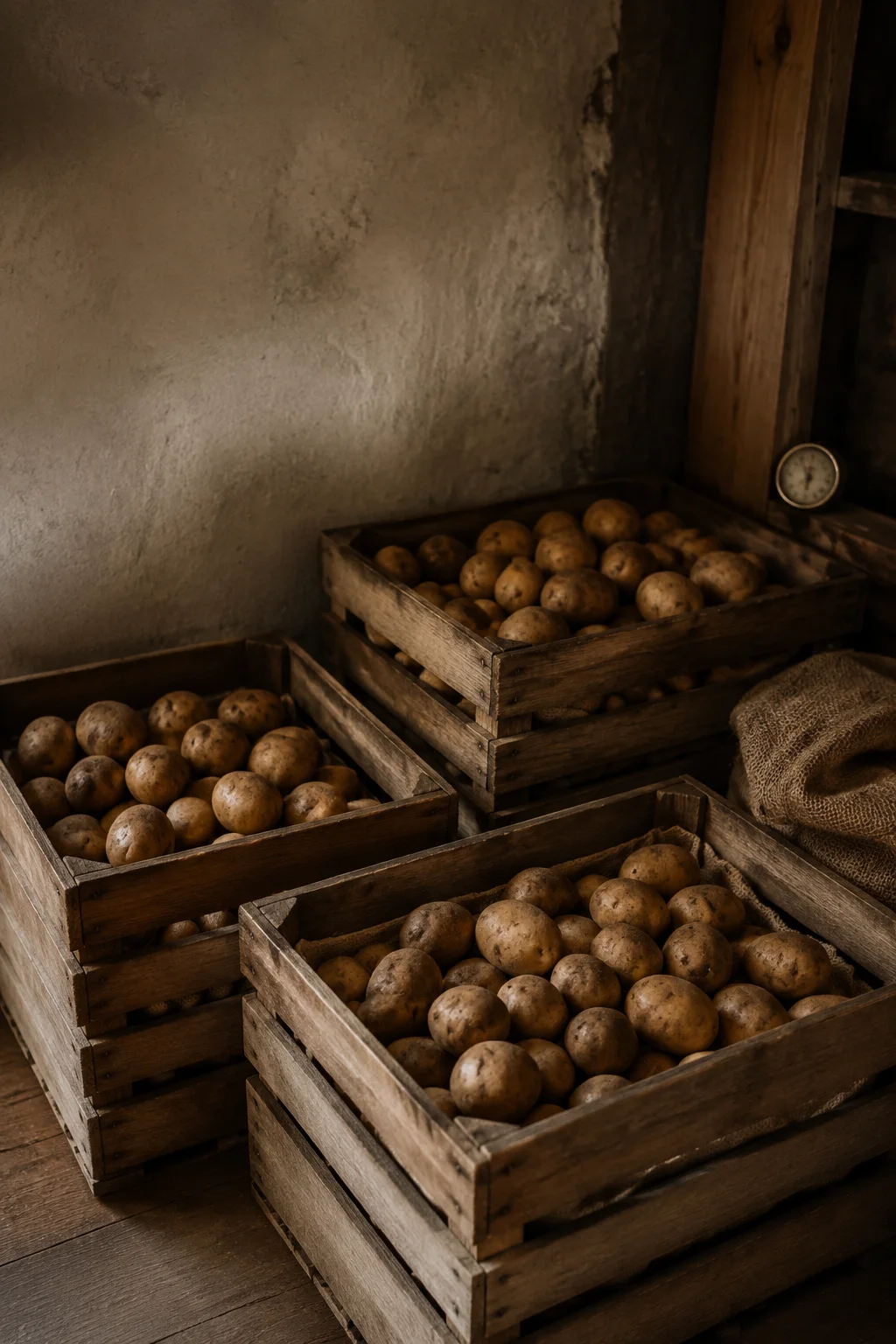
For a moderate quantity, refrigeration can provide the cold conditions that a warm apartment lacks. University of Minnesota notes that perforated plastic bags can help create a colder, moister environment for vegetables, while an unperforated bag can trap condensation and support mold or bacterial growth.
A household refrigerator is usually drier than ideal and may not hold a large harvest. It can also be colder than the preferred 40–50°F range for potatoes you plan to fry. Use it as a practical small-batch option, keep the potatoes dark and ventilated, and judge success by condition—not by an optimistic calendar promise.
How long should you expect potatoes to last?
University of Minnesota gives an expected shelf life of about 6 months under its recommended cold, dark, moist conditions. That is an ideal-condition estimate, not a promise for a warm cupboard. Variety, maturity, harvest damage, curing, temperature, humidity, and inspection all change the result.
If you cannot maintain suitable conditions, the frugal answer is to store fewer potatoes and replenish them. Losing half of a bulk purchase to rot is more expensive than buying a smaller bag. A weekly inspection is part of the storage method, not an optional extra.
When a stored potato should not be used
Remove sprouts before preparing a sound potato and never eat the sprouts themselves. University of Minnesota advises cutting away small green areas before cooking and not consuming potatoes with extensive greening. Discard potatoes that are soft, leaking, moldy, badly decayed, or heavily green rather than trying to rescue them.
One spoiled potato can wet or contaminate neighboring tubers, which is why shallow containers and weekly checks matter. When in doubt about a damaged potato, discard it; storage savings are not worth a food-safety gamble.
Is root-cellar storage specifically Amish?
No. Cool underground or cellar storage is a broad historical food-storage practice used in many rural and urban households; it is not uniquely Amish. The Young Center for Amish Studies emphasizes that Amish communities differ in their technology choices and household practices, so a single storage method should not be presented as universal Amish tradition.
The useful Amish-inspired lesson is to preserve a harvest with simple equipment and regular attention. The temperatures, curing steps, container advice, and discard guidance in this article come from current university Extension sources rather than cultural assumptions.
Frequently asked questions
What is the best place to store potatoes without a root cellar?
Choose the coolest reliably dark, ventilated location that stays above freezing—often a cool basement corner, insulated garage, interior closet, or spare refrigerator. Measure the temperature instead of guessing; about 40–45°F is a practical target for cured storage potatoes.
Can you store potatoes in a cardboard box?
Yes, if the box is clean, dry, ventilated, kept dark, and shallow enough for regular inspection. Do not close damp potatoes inside an airtight container, and keep the box off wet floors and away from freezing temperatures.
Should potatoes be washed before storage?
Do not wash freshly harvested storage potatoes before curing or long storage. Let the soil dry and gently brush it off. Moisture and damaged skin shorten storage life; wash the potatoes when you are ready to prepare them.
Can potatoes be stored in the refrigerator?
A refrigerator can work for a modest amount when the home is too warm, especially with ventilated or perforated packaging. It is drier than ideal, and potatoes intended for frying are better kept around 40–50°F to reduce cold-induced sweetening and dark frying color.
How long do potatoes last without a root cellar?
Under ideal cold, dark, humid conditions, University of Minnesota lists an expected shelf life of about 6 months. A warm pantry may provide only short-term storage. Temperature, variety, curing, damage, humidity, and weekly sorting determine the real result.
Can you eat green or sprouted potatoes?
Never eat potato sprouts. Remove small green areas before cooking, but discard potatoes with extensive greening, severe sprouting, softness, leaking, mold, or decay.
Sources and further reading
- University of Minnesota Extension — Harvesting and Storing Home Garden Vegetables
- University of Minnesota Extension — Growing Potatoes in Home Gardens
- Utah State University Extension — Harvest and Storage of Vegetables and Fruits
- Utah State University Extension — Potatoes in the Garden
- Elizabethtown College Young Center — Amish Diversity
This article may use AI-assisted research organization and drafting. Claims involving safety, energy, or household costs are checked against the named sources above. Read about the founder and our editorial standards.