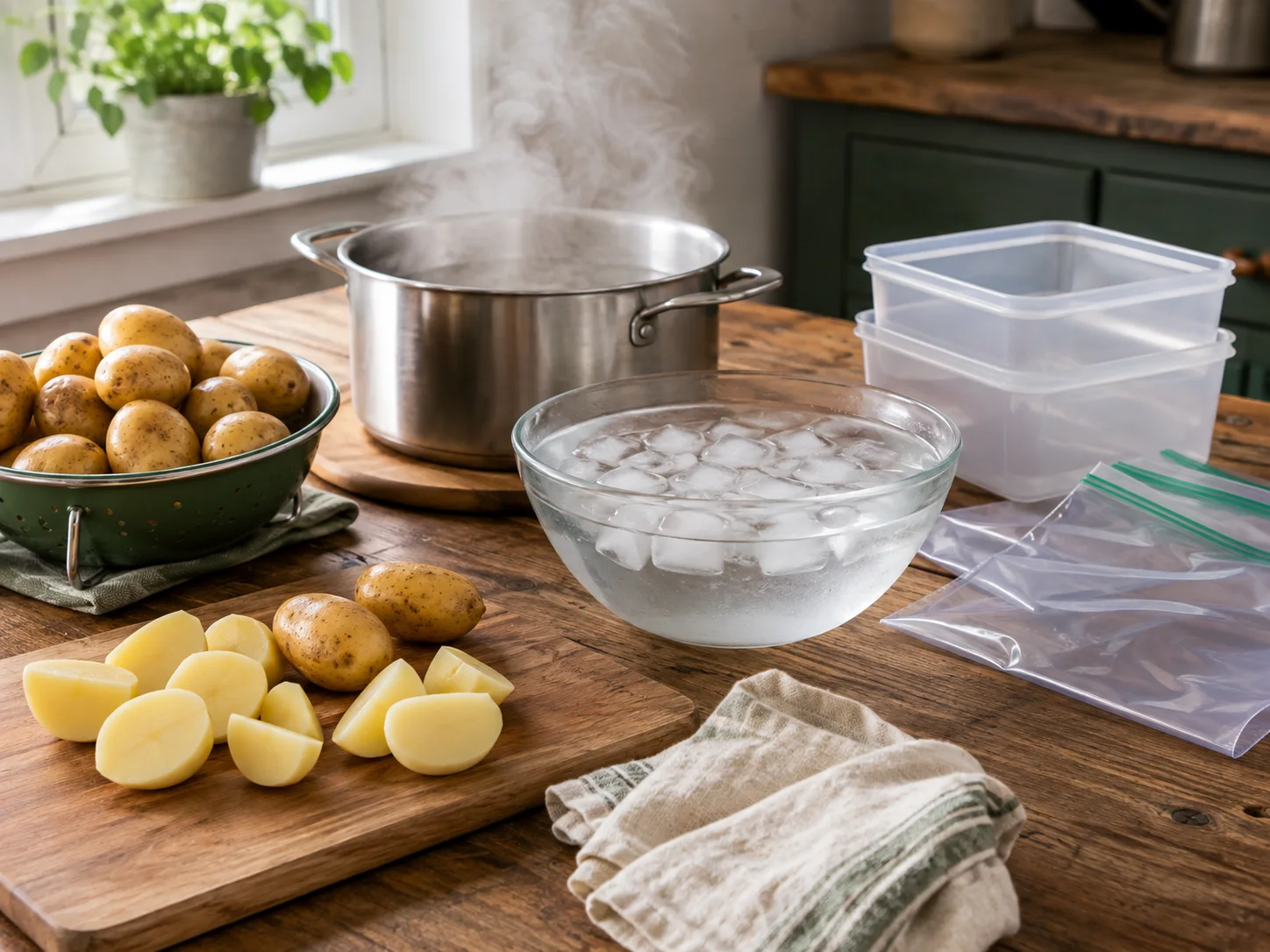
Do not freeze raw potatoes if you want dependable color and texture. The National Center for Home Food Preservation gives a tested method for smooth new potatoes: peel or scrape and wash them, water-blanch for 3 to 5 minutes depending on size, cool promptly, drain, package whole or sectioned with ½ inch of headspace, seal, and freeze. Mature potatoes intended for homemade fries use a different method: partially fry them before cooling and freezing.
Print a clean copy or save it as a PDF for the kitchen.
What happens if you freeze potatoes raw?
A raw potato will become solid in the freezer, but that is not the same as preserving it well. Freezing does not stop every enzyme-related quality change, and untreated potatoes are prone to discoloration and an unpleasant watery, grainy, or mushy texture after thawing and cooking.
Blanching is a brief timed heat treatment, not full cooking. It slows the enzymes that damage flavor, color, and texture during frozen storage. The correct preparation depends on the potato and the way you intend to cook it later; there is no honest one-time-fits-every-potato rule.
The tested method for new potatoes
The National Center's directions are specifically for smooth new potatoes taken directly from the garden. New potatoes are young, freshly harvested potatoes with thin skins—not simply any small mature potato sold in a bag.
Prepare the ice-water bath before blanching. Work in batches small enough that the water returns to a boil quickly, and keep different sizes in separate batches so the timing is consistent.
- Scrub the uncut potatoes under cool running water with a clean produce brush; do not use soap or bleach.
- Peel or scrape them, wash again as needed, and leave them whole or cut them into useful sections.
- Lower one batch into vigorously boiling water and water-blanch for 3 to 5 minutes, depending on size.
- Move the potatoes promptly into plenty of ice water to stop the cooking.
- Drain and dry the surface well so excess water does not become ice inside the package.
- Pack whole or sectioned potatoes in freezer bags or rigid freezer containers, leaving ½ inch of headspace.
- Remove excess air, seal, label with the preparation and date, and freeze promptly at 0°F (-18°C) or below.
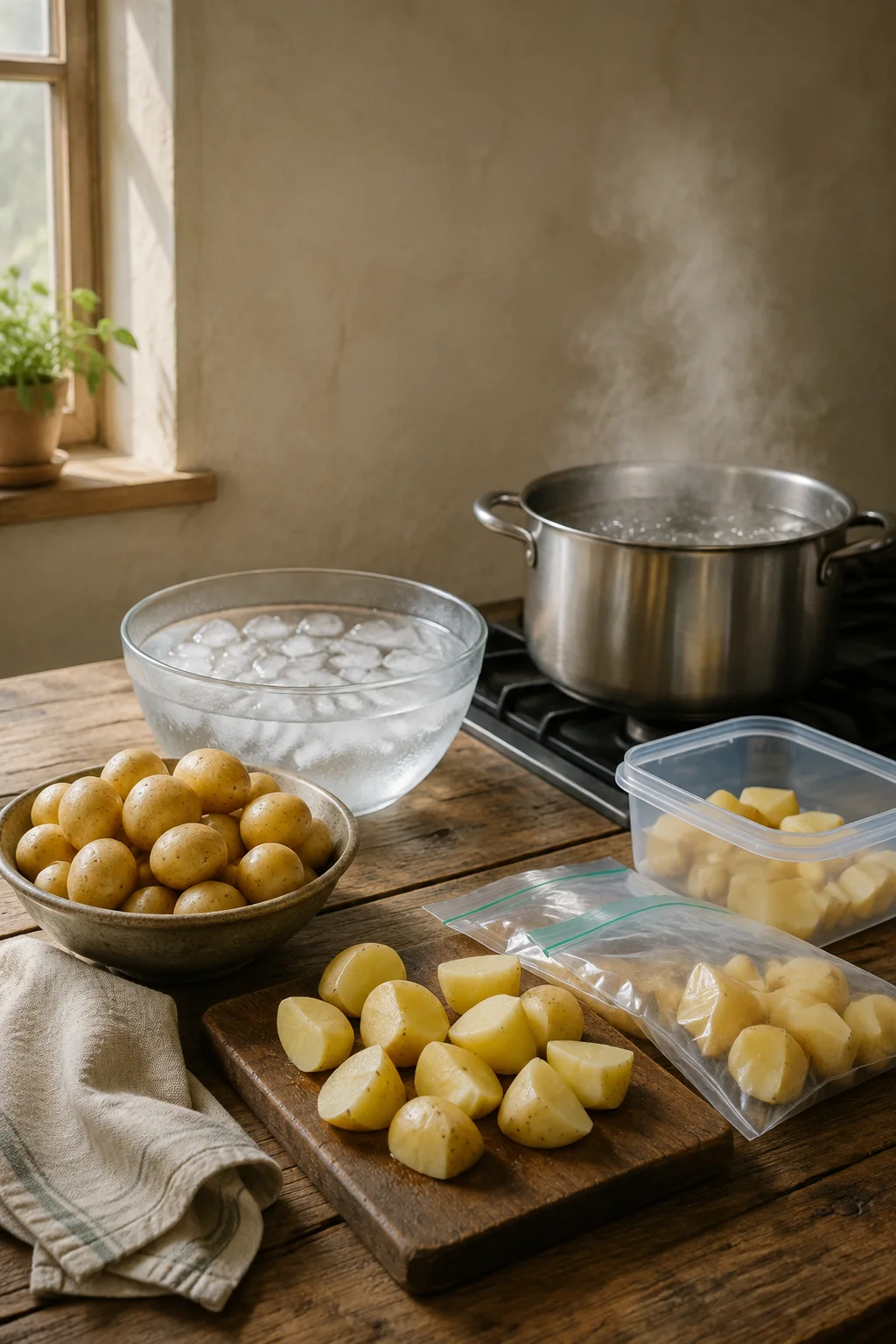
How to freeze homemade French fries
The National Center provides a separate method for French fries. Start with mature potatoes that have been stored for 30 days. Wash and peel them, cut lengthwise into ⅓-inch sticks and then crosswise into ⅜-inch strips, rinse in cold water, and dry thoroughly.
Fry small batches in deep fat at 360°F (182°C) for about 5 minutes, only until tender—not brown. Drain on paper towel, cool completely, package, seal, and freeze. When serving, finish browning the frozen fries in a 475°F (246°C) oven. This partial-fry method is not interchangeable with the brief blanch used for new potatoes.
Should you tray-freeze potato pieces?
Tray-freezing can keep properly prepared pieces from becoming one solid block. After blanching, cooling, and draining, spread the potatoes in a single layer on a shallow tray and freeze only until firm, then move them promptly into airtight freezer packaging.
The tray is an organization step, not a substitute for blanching or cooking. Freeze recipe-size portions and label the intended use—soup, skillet, roasted side, or fries—so the batch has a realistic plan instead of becoming forgotten freezer inventory.
How long frozen potatoes keep
The National Center gives an approximate best-quality range of 8 to 12 months for properly prepared and packaged fruits and vegetables held at 0°F (-18°C) or below. That is a general quality range, not a promise that every potato preparation will keep an ideal texture for a full year.
Keep the freezer at 0°F or colder and use airtight, moisture-vapor-resistant packaging. Rotate the oldest packages first. If a package thaws, follow current refreezing guidance rather than relying on appearance alone; freezing does not sterilize food.
Is freezing potatoes an Amish practice?
No. Freezing potatoes is a modern food-preservation method used broadly in American households, not a uniquely Amish tradition. The Young Center for Amish Studies warns that it is risky to generalize about all Amish groups; technology practices vary among affiliations and local church districts.
The Amish-inspired principle is narrower: preserve a useful surplus and plan meals around food already available. The preparation temperatures, blanching times, packaging, and freezer guidance in this article come from research-based preservation authorities—not cultural folklore.
Frequently asked questions
How long do you blanch potatoes before freezing?
For smooth new potatoes directly from the garden, the National Center says to water-blanch for 3 to 5 minutes depending on size, then cool promptly, drain, and package. Other sizes and preparations may require a different method.
Can you freeze whole potatoes with the skin on?
The tested new-potato method says to peel or scrape and wash the potatoes before blanching. It allows them to be packaged whole or sectioned after blanching, cooling, and draining; it does not direct you to freeze raw whole potatoes with their skins on.
Can you freeze diced raw potatoes for soup?
Raw diced potatoes are likely to discolor and develop poor texture. Use a research-based blanching or cooking method first, cool promptly, drain well, and freeze in the portion your soup needs.
Can homemade French fries be frozen before cooking?
Not completely raw under the tested method. The National Center directs you to rinse and dry the cut strips, fry them at 360°F for about 5 minutes until tender but not brown, cool, package, and freeze; finish browning at 475°F when serving.
Why did my frozen potatoes turn dark or mushy?
Common causes include freezing them raw, using the wrong preparation for the potato, slow freezing, excess air or moisture in the package, or temperature fluctuation. Correct heat treatment, rapid cooling, thorough draining, airtight packaging, and a steady 0°F freezer improve quality.
Sources and further reading
- National Center for Home Food Preservation — Freezing New Irish Potatoes
- Penn State Extension — Freezing Potatoes, August 2026
- National Center for Home Food Preservation — Blanching Vegetables
- National Center for Home Food Preservation — Frozen Food Storage Times
- FoodSafety.gov — Safe Ways to Handle and Clean Produce
- Elizabethtown College Young Center — Amish Diversity
This article may use AI-assisted research organization and drafting. Claims involving safety, energy, or household costs are checked against the named sources above. Read about the founder and our editorial standards.