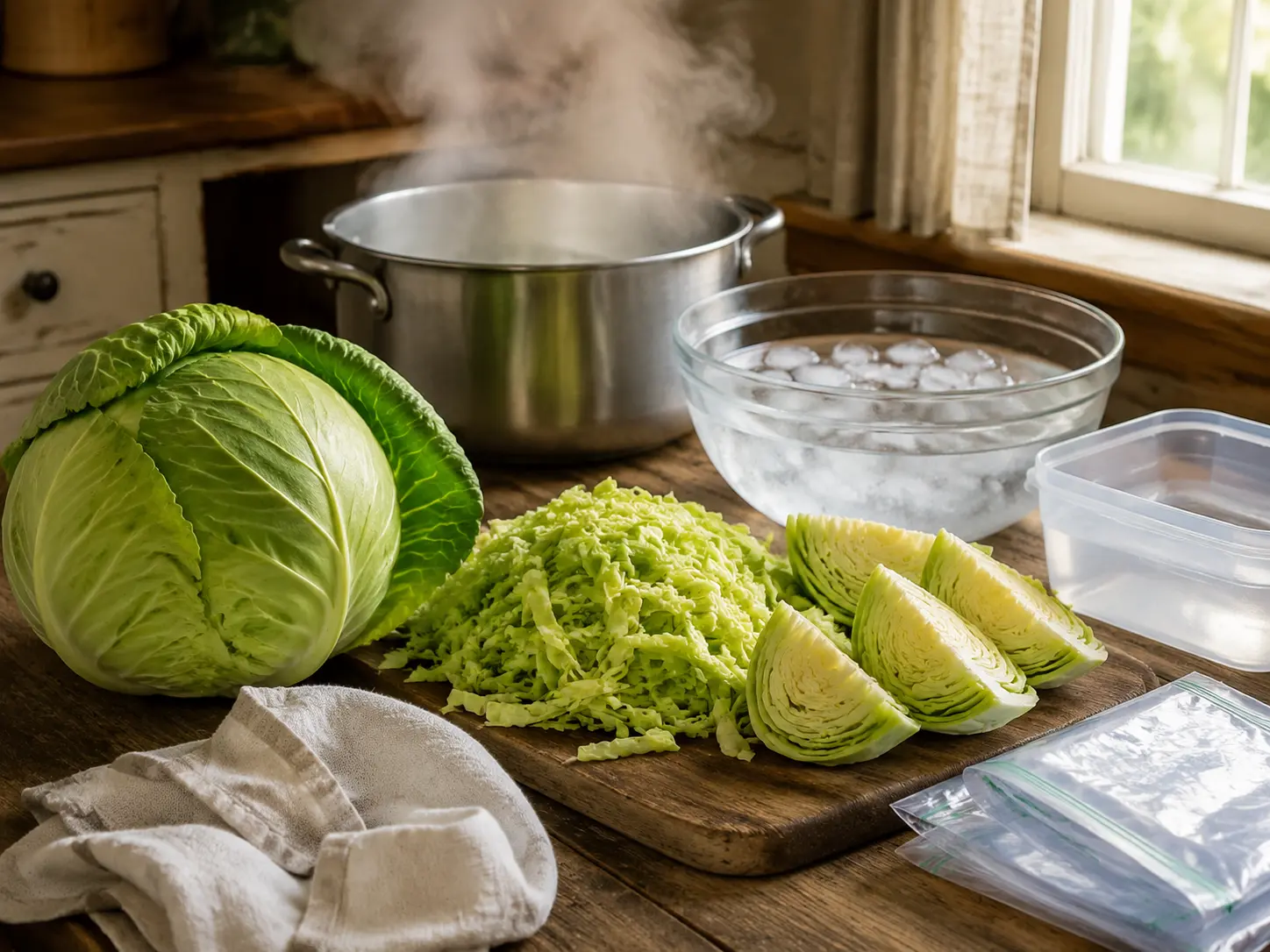
You can put raw cabbage in the freezer, but blanching is the tested method for better long-term quality. Choose a freshly picked, solid head; remove coarse outer leaves; cut it into medium-to-coarse shreds, thin wedges, or separate leaves; water-blanch for 1½ minutes; cool promptly in ice water; drain well; package with ½ inch of headspace; seal, label, and freeze at 0°F (-18°C) or below. Plan to use thawed cabbage only in cooked dishes.
Print a clean copy or save it as a PDF for the kitchen.
What happens when cabbage is frozen raw?
Raw cabbage will become frozen, but freezing alone does not stop the enzymes that gradually damage a vegetable's flavor, color, and texture. The shortcut may look successful at first, yet the difference becomes clearer during storage and after thawing.
Blanching is a brief, timed heat treatment—not full cooking. The National Center for Home Food Preservation says underblanching can stimulate enzyme activity, while overblanching causes avoidable losses in flavor, color, vitamins, and minerals. That is why the 1½-minute timing matters.
The tested way to freeze cabbage
Start with a freshly picked, solid head of green, red, savoy, napa, or other Chinese cabbage. Trim away coarse outer leaves, rinse the cabbage under cool running water, and cut it into the form you expect to cook later: medium-to-coarse shreds, thin wedges, or separate leaves.
Prepare the ice-water bath before the cabbage goes into the pot. Work in modest batches so the water returns to a boil quickly and every piece receives the full timed treatment.
- Bring about 1 gallon of water to a vigorous boil for each pound of prepared cabbage.
- Lower one batch into the water, cover the pot, and begin timing when the water returns to a boil.
- Water-blanch shreds, thin wedges, or separated leaves for 1½ minutes.
- Move the cabbage immediately into plenty of ice water and cool it for about 1½ minutes.
- Drain thoroughly. A salad spinner or clean towel can remove excess surface water without crushing the leaves.
- Pack meal-size portions in freezer bags or rigid freezer containers, leaving ½ inch of headspace.
- Press out as much air as practical, seal, label with the form and date, and freeze promptly at 0°F (-18°C) or below.
Can you freeze shredded cabbage for coleslaw?
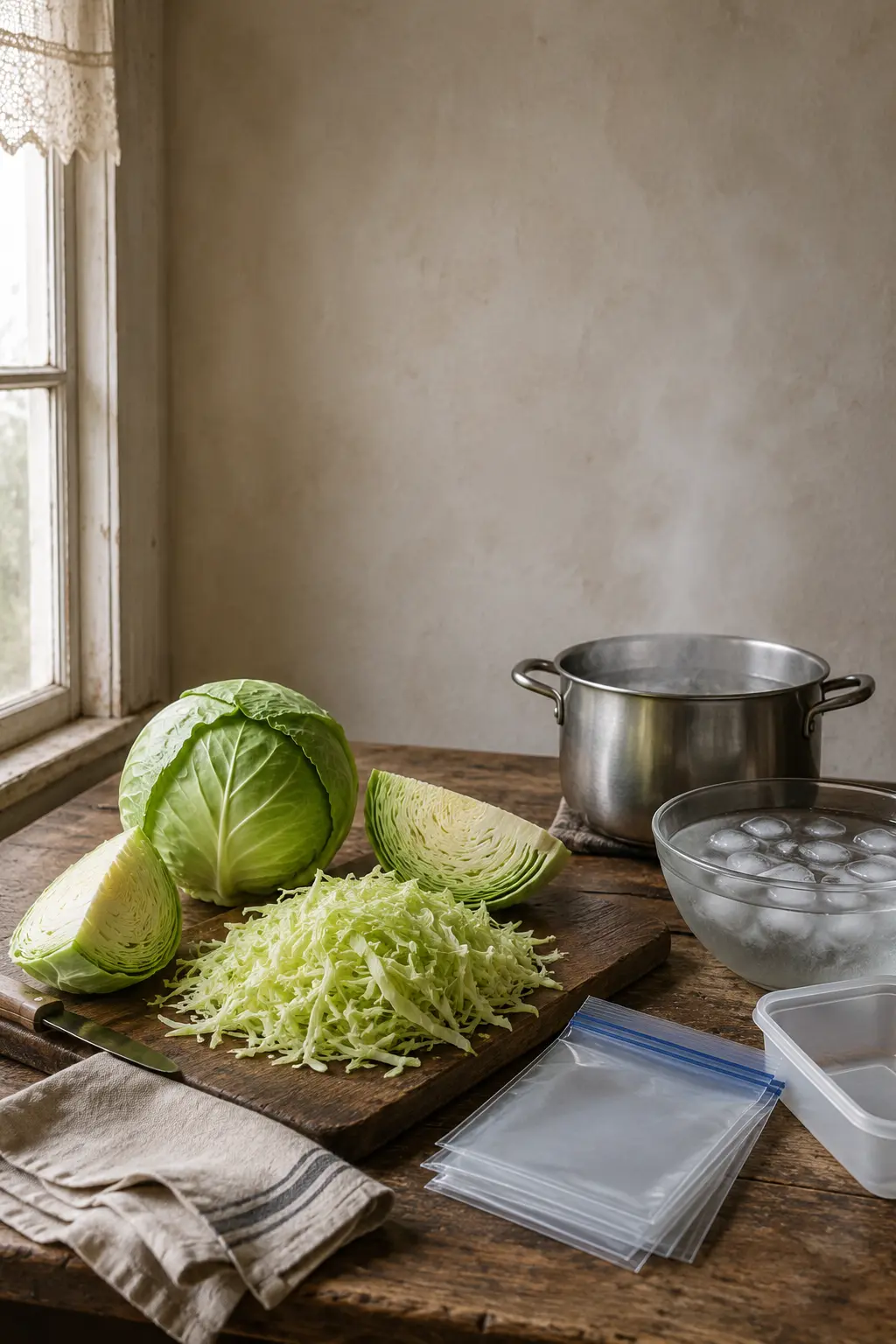
You can freeze shredded cabbage, but thawed cabbage will not have the crisp bite expected in fresh coleslaw. The National Center specifically describes frozen cabbage as suitable only for use as a cooked vegetable.
If your goal is a freezer slaw rather than plain frozen cabbage, use a tested freezer-slaw recipe designed around a vinegar-and-sugar dressing. Do not assume that plain thawed shreds will behave like freshly cut cabbage in a raw salad.
How to use frozen cabbage
Freeze cabbage in the same portions your household normally cooks. Shreds are useful in soup, stir-fry, fried cabbage, skillet meals, or a pot of beans. Leaves and thin wedges work in braised dishes, casseroles, or cooked cabbage rolls where a softer texture is welcome.
For soups and skillets, cabbage can usually go into the pan while still frozen. When a recipe needs it thawed first, thaw it in the refrigerator and drain away released liquid. Do not expect it to return to fresh-crisp texture.
How long frozen cabbage keeps
Properly prepared and packaged fruits and vegetables keep their best quality for about 8 to 12 months at 0°F (-18°C) or below. Food kept continuously frozen remains safe longer, but quality gradually falls, especially when air or moisture can enter the package.
Label each package with 'cabbage,' the cut style, the date, and an intended dish. The National Center recommends freezing meal-size quantities and rotating packages first in, first out, which makes it less likely that a bargain or garden surplus becomes forgotten freezer waste.
Is freezing cabbage an Amish practice?
No. Freezing cabbage is a general modern home-preservation method, not a uniquely Amish practice. Elizabethtown College's Young Center warns against making universal claims from one Amish community; technology choices vary among affiliations and local church districts.
The Amish-inspired principle here is simply to preserve a useful surplus and avoid waste. The preparation, 1½-minute timing, cooling, packaging, and storage guidance in this article come from research-based food-preservation sources—not cultural folklore.
Frequently asked questions
How long do you blanch cabbage before freezing?
Water-blanch medium-to-coarse shreds, thin wedges, or separated cabbage leaves for 1½ minutes. Cool promptly in ice water for about the same time, then drain thoroughly before packaging.
Can you freeze a whole head of cabbage?
A whole head is not the tested preparation and would freeze and thaw unevenly. Remove coarse outer leaves and cut the head into medium-to-coarse shreds or thin wedges, or separate it into leaves, before blanching and freezing.
Can you freeze red cabbage or napa cabbage?
Yes. The National Center's method covers cabbage and Chinese cabbage. Select a solid, fresh head; prepare shreds, thin wedges, or leaves; water-blanch for 1½ minutes; cool, drain, package, and freeze.
Does frozen cabbage stay crunchy?
No. Ice crystals damage plant cells, so thawed cabbage becomes softer than fresh cabbage. Use it in cooked dishes rather than expecting the crisp texture needed for a fresh salad or ordinary coleslaw.
Can frozen cabbage go straight into soup?
Yes. Add a meal-size portion directly to soup, beans, stew, or a hot skillet and allow a little extra cooking time. If a recipe requires thawing first, use the refrigerator and drain excess liquid.
Sources and further reading
- National Center for Home Food Preservation — Freezing Cabbage or Chinese Cabbage
- National Center for Home Food Preservation — Blanching Vegetables
- National Center for Home Food Preservation — How Long Can I Store Frozen Foods?
- Penn State Extension — Let's Preserve: Freezing Vegetables, June 8, 2023
- Elizabethtown College Young Center — Diversity in Amish Communities
This article may use AI-assisted research organization and drafting. Claims involving safety, energy, or household costs are checked against the named sources above. Read about the founder and our editorial standards.