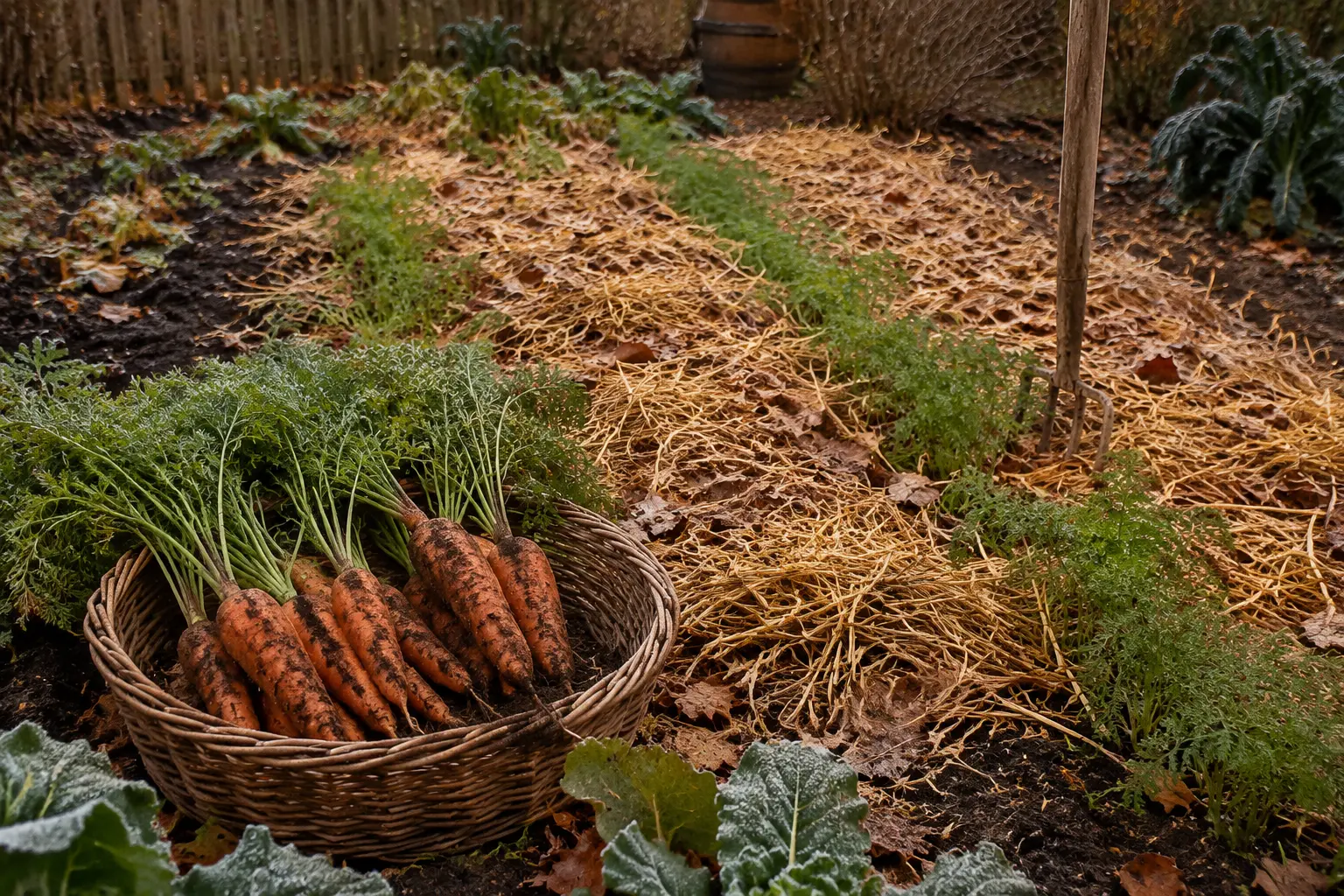
Yes. Mature carrots can remain in well-drained garden soil after light frosts, and many gardeners harvest them as needed through winter under a heavy layer of clean straw or leaves. Apply the mulch before the ground freezes and mark the row so you can find it. This works only while you can keep the soil workable and the roots protected from standing water and animals. If your ground freezes deeply, stays wet, or has persistent vole damage, lift the carrots instead, trim the tops, and store them cold and humid.
Print a clean copy or save it as a PDF for the kitchen.
Saveable field method
How to leave carrots in the ground for winter harvest
Sort the crop, protect a well-drained row with loose mulch, and harvest only while the roots remain sound and the soil can be reached safely.
What you need
- Mature, undamaged carrots in well-drained soil
- Clean, dry straw or shredded leaves
- A visible weatherproof row marker
- Garden fork or narrow spade
- Gloves
- Perforated produce bags for any roots moved to the refrigerator
- Check the site
Use this method only in a bed that drains well and remains accessible in winter. Plan to harvest instead if water pools there, the soil becomes impenetrably frozen, or rodents routinely damage root crops.
- Sort before cold weather
Lift split, diseased, insect-damaged, or exposed roots first and use sound ones promptly. Leave only healthy, fully buried carrots in the row.
- Leave carrots through light frost
Utah State University Extension says carrot plants may remain in the garden after light frosts. Do not wait until a hard freeze has already locked the soil before preparing the bed.
- Cover the row heavily
Before the ground freezes, spread a deep, loose layer of clean straw or shredded leaves over the carrots and beyond both sides of the row. The goal is to insulate the soil, not to seal wet material against the roots.
- Mark and open only what you need
Place a tall marker at each end of the row. Pull back one section of mulch, loosen the soil with a fork, harvest the needed carrots, and replace the mulch over the opening.
- End the in-ground storage when conditions change
Check every harvest for soft spots, tunnels, off odors, or decay. Lift the remaining crop if the bed becomes saturated, roots show pest damage, or warming weather starts new top growth.
What frost does—and does not—mean for carrots
A light frost does not automatically end the carrot harvest. Utah State University Extension says plants can stay in the garden after light frosts and notes that many gardeners overwinter carrots beneath heavy mulch, harvesting as needed.
Mulch slows heat loss from the soil; it is not a heater and cannot make every winter site reliable. Snow cover, wind exposure, soil moisture, and the severity of cold all affect whether you can reach the roots. Treat the first hard freeze forecast as a deadline to protect the row or move the crop—not as a guarantee that mulch applied later can thaw frozen ground.
When in-ground winter storage works best
The best candidate is a mature crop in loose, well-drained soil, with a bed you can reach safely from a path. Leave only firm, healthy roots. Harvest carrots with exposed shoulders, splits, disease, or insect injury first because damaged produce is a poor storage candidate.
A heavy cover of clean straw or shredded leaves helps keep the soil from freezing around the roots. Extend the cover beyond the row so cold does not enter as quickly from the sides. A tall marker matters more than it sounds: a level blanket of snow can make a narrow carrot row surprisingly difficult to locate.
When you should harvest the whole crop instead
Lift the carrots before winter if the bed stays wet, freezes too deeply to dig, or has regular vole or other rodent damage. In-ground storage trades refrigerator space for weather and pest exposure; it is useful, but it is not risk-free.
Also choose harvested storage when reliable access matters. An ice-covered garden, a buried gate, or a frozen path can make the food effectively unavailable even if the roots themselves are sound. Keep a smaller supply indoors if you expect stretches when the bed cannot be reached.
How to store carrots after you lift them
Trim the foliage to about one-half inch above the roots so the tops do not keep drawing moisture. Iowa State University recommends 32–35°F and 98–100% relative humidity for long storage; it notes that carrots may sprout or decay at 40°F or above and shrivel below 95% humidity.
At home, small amounts can go into perforated plastic bags in the coldest part of the refrigerator. Iowa State's carrot guide says ideal refrigerator conditions are about 32°F and 95–100% relative humidity and gives a quality window of up to three months. A normal home refrigerator is usually warmer and drier, so check the roots rather than relying only on a calendar.
Use climate tools without mistaking them for a harvest forecast
The 2023 USDA Plant Hardiness Zone Map describes average annual extreme minimum winter temperatures for perennial-plant survival. It does not predict this year's first hard freeze, snow cover, soil drainage, or whether your carrot bed will remain diggable.
Use the zone map for broad winter context, then consult your land-grant university or county Extension office for local frost timing and soil advice. The practical decision is site-specific: protect the row before your soil freezes, and keep an indoor fallback if winter access is uncertain.
Is leaving carrots in the ground an Amish practice?
No. Overwintering root vegetables under mulch is a general cold-climate gardening technique, not an exclusively Amish custom. The Young Center explains that Amish affiliations and local church districts vary substantially, including in permitted technologies, so a single garden method should not be presented as universal Amish practice.
This guide is Amish-inspired only in the broad plain-living goal of using a garden harvest carefully and avoiding unnecessary equipment. The winter and storage guidance comes from university Extension and USDA sources, not from an invented cultural claim.
Frequently asked questions
How cold can carrots stay in the ground?
Carrots can remain after light frosts, but there is no single air-temperature cutoff that guarantees success. Mulch, snow, wind, soil moisture, and local winter severity determine whether the soil stays workable. Protect the row before a hard freeze or harvest the crop.
What should you mulch overwintered carrots with?
Use a heavy, loose layer of clean straw or shredded leaves applied before the ground freezes. Cover beyond the edges of the row, mark its location, and replace the mulch after each harvest.
Should you cut carrot tops before leaving them in the ground?
You do not need to cut every top merely to leave healthy roots in place. The foliage will die back with cold. Trim tops to about one-half inch when you lift carrots for cold storage so the leaves do not draw moisture from the roots.
Can carrots stay in the ground under snow?
They can, if the row was insulated before the soil froze and the roots remain sound. Snow may add insulation, but it can also make access and row location difficult. Mark the bed and never rely on snow alone as your plan.
What can ruin carrots stored in the garden?
Deeply frozen soil, standing water, repeated saturation, and feeding by voles or other animals can make in-ground storage fail. Lift the crop if you see tunnels, soft roots, decay, or worsening site conditions.
How long do harvested carrots keep in the refrigerator?
Iowa State says carrots can keep for up to three months under ideal conditions near 32°F and 95–100% relative humidity. Most home refrigerators are warmer and drier, so use perforated bags, inspect regularly, and expect conditions to shorten that estimate.
Sources and further reading
- Utah State University Extension — How to Grow Carrots in Your Garden
- Utah State University Extension — Fall Yard and Garden Tips (September 26, 2025)
- Iowa State University Extension — Storing Winter Storage Vegetables
- Iowa State University Extension — Growing Carrots and Parsnips (reviewed April 2023)
- USDA — 2023 Plant Hardiness Zone Map
- Young Center for Anabaptist and Pietist Studies — Amish Diversity
This article may use AI-assisted research organization and drafting. Claims involving safety, energy, or household costs are checked against the named sources above. Read about the founder and our editorial standards.