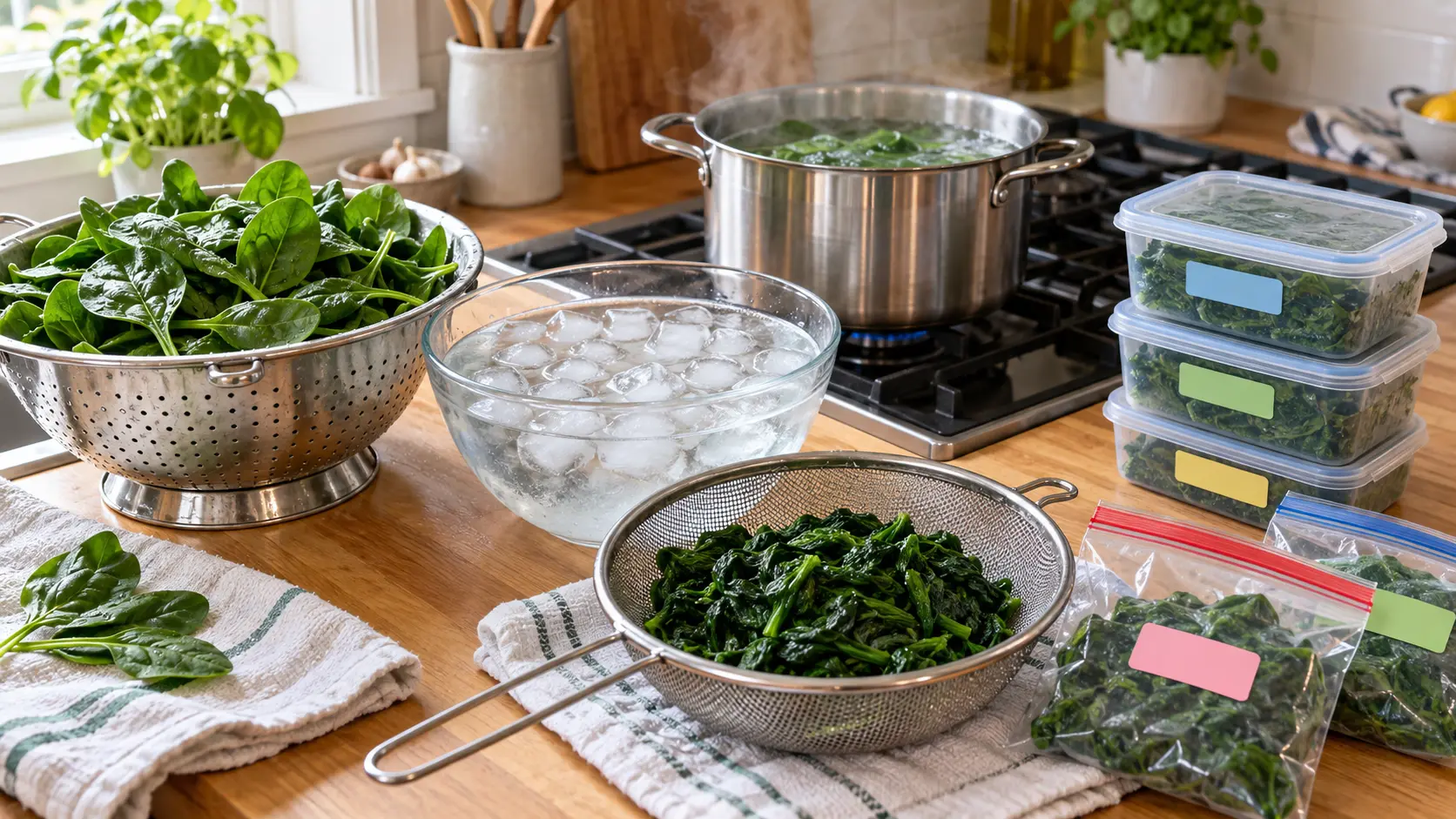
You can put raw spinach in a freezer, but the tested method for dependable long-term quality is to blanch it first. Choose young, tender leaves; wash them thoroughly; remove woody stems; water-blanch spinach for 2 minutes; cool it promptly in ice water for about the same time; drain very well; then package with ½ inch of headspace and freeze at 0°F or below. Collard greens need 3 minutes. Blanching protects quality—it is not a canning step.
Print a clean copy or save it as a PDF for the kitchen.
Saveable field method
How to freeze spinach for dependable quality
Wash, water-blanch, cool, drain, package, and freeze spinach using the National Center for Home Food Preservation method.
What you need
- Young, tender spinach leaves
- Water
- Ice
- Moisture-vapor-resistant freezer containers or freezer bags
- Labels and a permanent marker
- Large pot with lid
- Wire basket, blanching basket, or large slotted spoon
- Large bowl for ice water
- Colander or salad spinner
- Clean kitchen towels
- Sort and trim
Select young, tender leaves. Discard slimy, badly bruised, or decaying spinach and cut off woody stems.
- Wash thoroughly
Rinse the leaves well, separating them so grit and soil can wash away. Drain while the blanching water heats.
- Prepare boiling and ice water
Use about 1 gallon of water per pound of vegetables. Bring it to a vigorous boil and prepare a large bowl of ice water before adding the spinach.
- Water-blanch for 2 minutes
Lower the spinach into the boiling water, cover, and start timing when the water returns to a boil. Blanch spinach and most greens for exactly 2 minutes; collards need 3 minutes.
- Cool and drain promptly
Move the spinach straight into ice water and cool it for about the same length of time as blanching. Drain thoroughly so excess water does not become extra ice in the package.
- Pack, label, and freeze
Pack in freezer containers or bags, leaving ½ inch of headspace. Remove excess air where practical, seal, label with the date, and freeze promptly at 0°F or below.
Why blanch spinach before freezing?
Freezing slows change, but it does not stop every enzyme in a vegetable. The National Center for Home Food Preservation says blanching slows or stops enzymes that can cause losses of flavor, color, texture, and nutrients during frozen storage. It also wilts spinach, making a bulky harvest easier to pack.
Timing matters. Underblanching can stimulate enzyme activity and is worse than no blanching, while overblanching can cost flavor, color, texture, and nutrients. For spinach, the prescribed water-blanching time is 2 minutes.
Can you skip blanching?
Raw spinach will physically freeze, but that shortcut is not the tested NCHFP method for dependable long-term quality. If the goal is to preserve a garden harvest rather than merely chill leaves for a very short time, the two-minute blanch is the better-supported choice.
Blanching is a quality step, not a way to make spinach shelf-stable. Frozen spinach must remain frozen. Do not place it in a pantry, and do not treat these directions as a home-canning process.
The exact blanching and cooling setup
NCHFP recommends about 1 gallon of water per pound of vegetables. The water should return to a boil within 1 minute after the spinach is added; if it does not, the batch is too large for the pot. Begin the two-minute timer when the boil returns.
Cool the spinach immediately in ice water for about the same time as blanching, then drain it thoroughly. NCHFP cautions that microwave blanching may not stop enzymes effectively and has not been shown to save time or energy, so boiling water is the most straightforward home method.
How to package spinach without a block of ice
A colander removes the first rush of water; a salad spinner or clean towels can remove more without leaving the spinach sitting warm. Pack practical recipe-size portions so one thaw does not expose the rest of the batch to air and temperature changes.
Use freezer-grade bags or rigid freezer containers, leave ½ inch of headspace, and label the product and date. Freeze packages promptly at 0°F or below and avoid overloading the freezer with too many warm packages at once.
How long frozen spinach keeps and where it works best
NCHFP gives properly prepared fruits and vegetables an approximate 8-to-12-month quality window at 0°F. Those times assume correct preparation, packaging, and continuous frozen storage; use older packages first for the best flavor and texture.
Thawed spinach will be soft, so plan to use it in cooked dishes rather than crisp salads. Soups, casseroles, curries, dips, pasta fillings, egg dishes, and cooked side dishes all make good use of its changed texture.
Is freezing spinach an Amish practice?
No. Freezing and blanching spinach is general modern food-preservation guidance, not a practice unique to Amish households. Amish communities are diverse, and technology choices vary by affiliation and local church district.
The frugal principle—preserving a surplus instead of wasting it—fits many households. The technical directions here come from current university-based preservation guidance, not from an unsupported cultural claim.
Frequently asked questions
How long should you blanch spinach before freezing?
Water-blanch spinach for 2 minutes, starting the timer when the water returns to a boil. Cool it promptly in ice water for about 2 minutes, then drain thoroughly. Collards need 3 minutes.
Do you have to wash spinach before freezing it?
Yes. Select young, tender leaves, wash them thoroughly, and remove woody stems before blanching. Freezing does not remove soil or grit.
Can you microwave-blanch spinach?
NCHFP says microwave blanching may be ineffective because research shows some enzymes may not be inactivated. It has not been shown to save time or energy, so use the prescribed boiling-water method.
How much headspace does frozen spinach need?
Leave ½ inch of headspace in the freezer container or bag. Drain the spinach well before packing and remove excess air where practical.
How long is frozen spinach good for?
NCHFP lists an approximate 8-to-12-month best-quality window for properly prepared fruits and vegetables stored at 0°F or below. Date the package and use the oldest first.
Can thawed spinach be used in salad?
It will not retain the crisp texture of fresh leaves. Use thawed spinach in cooked dishes such as soups, casseroles, curries, dips, pasta fillings, or egg dishes.
Sources and further reading
- National Center for Home Food Preservation — Freezing Greens (Including Spinach)
- National Center for Home Food Preservation — Blanching Vegetables
- National Center for Home Food Preservation — How Long Can I Store Frozen Foods?
- Young Center for Anabaptist and Pietist Studies — Amish Diversity
This article may use AI-assisted research organization and drafting. Claims involving safety, energy, or household costs are checked against the named sources above. Read about the founder and our editorial standards.