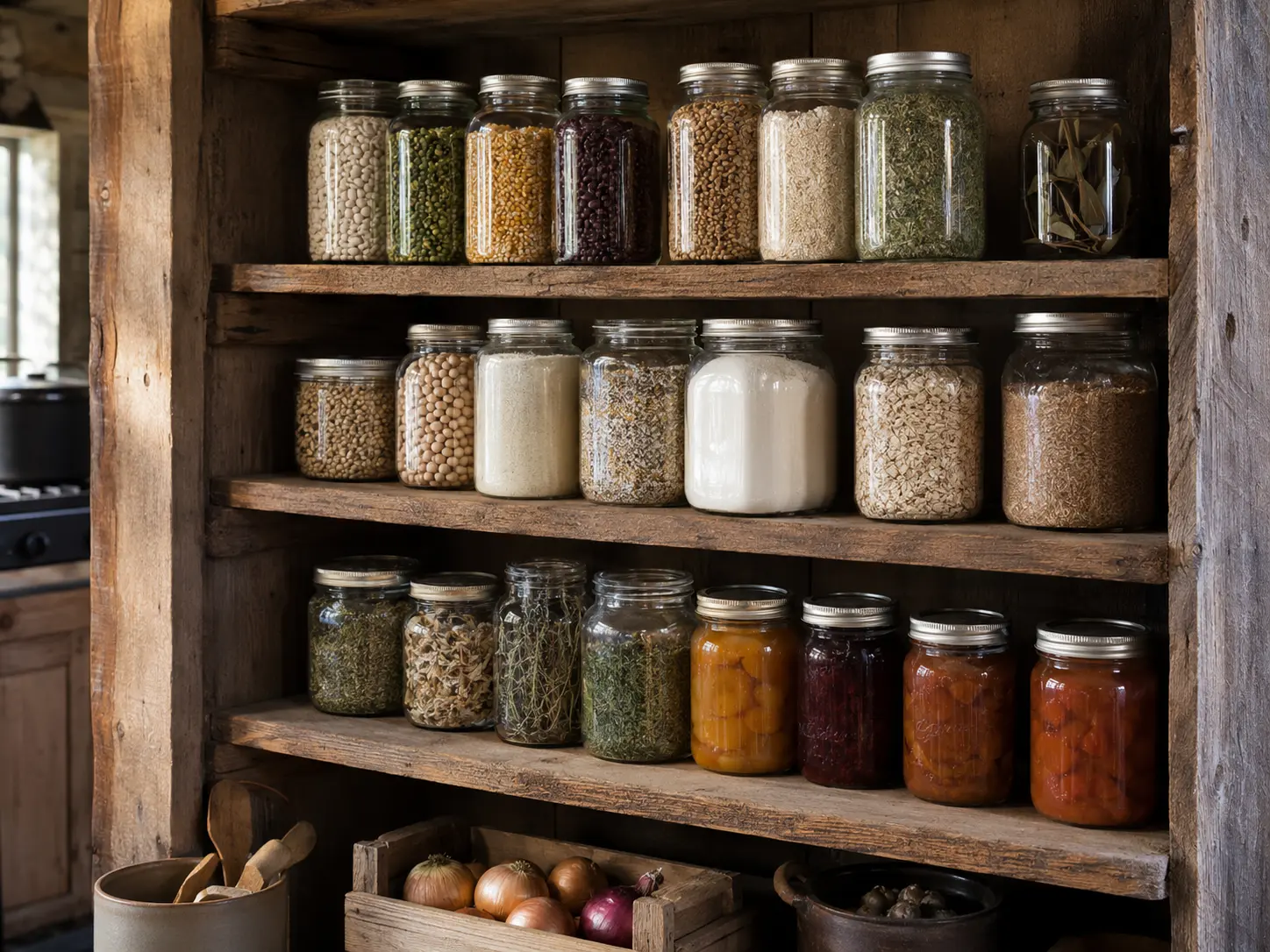
For seven days, build meals around food already in your pantry, refrigerator, and freezer. Buy only a short list of true gaps such as fresh produce, milk, or a necessary protein. Record what you use and what you still buy; the difference between your normal grocery spending and the week’s actual spending is your result.
Print a clean copy or save it as a PDF for the kitchen.
Why this is a useful 2026 search—and a useful household test
No-buy challenges are receiving renewed attention in 2026. A June 2026 Intuit Credit Karma survey reported that 36 percent of U.S. respondents were participating in or considering a no-buy challenge during the summer. A pantry version is narrower: it tests grocery habits without pretending that a household can safely stop buying every essential.
The goal is not to manufacture a dramatic savings claim. It is to uncover duplicates, use open packages, prevent avoidable waste, and learn which staples your household actually consumes.
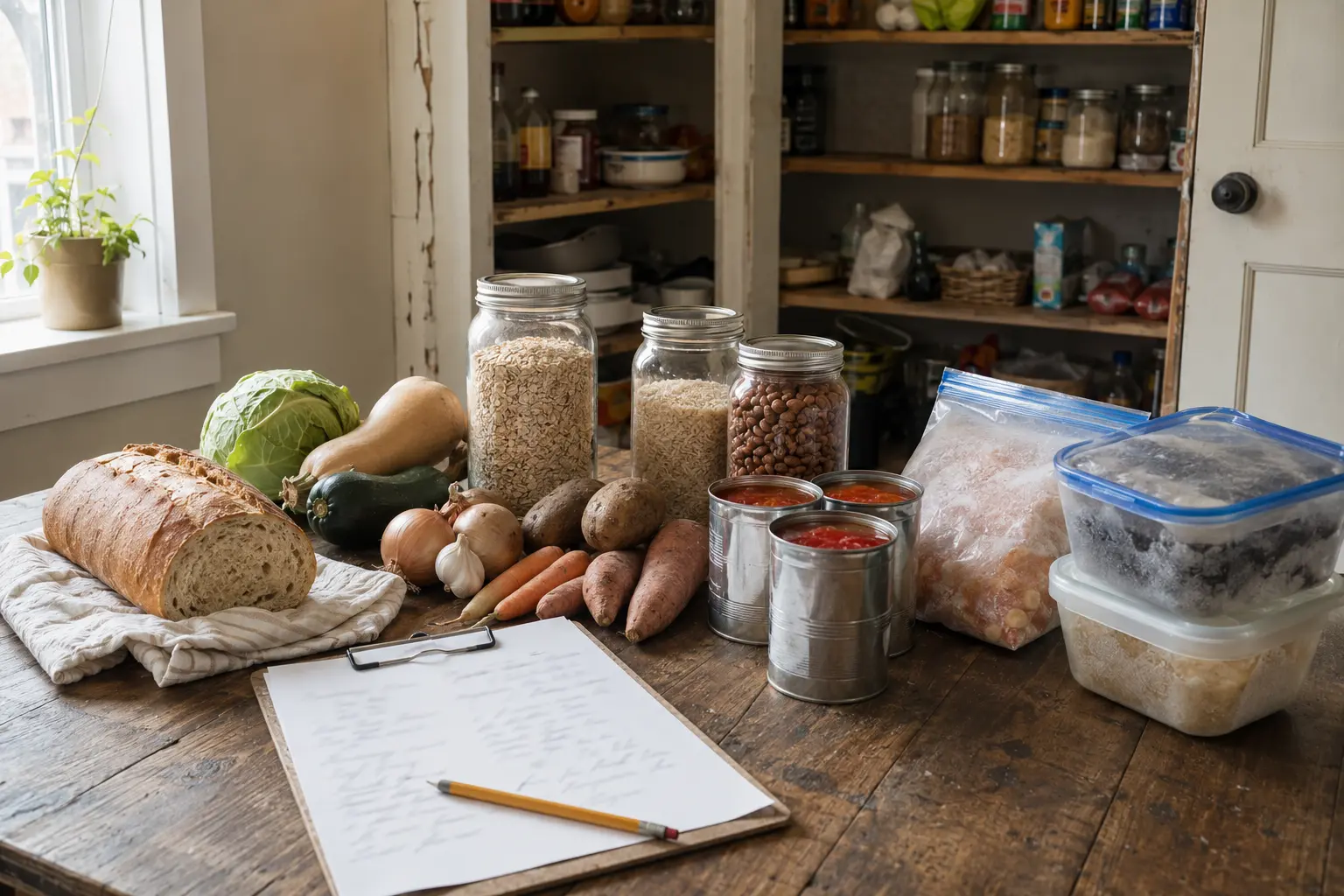
Day 1: make a three-place inventory
List usable food in the pantry, refrigerator, and freezer. Put opened packages and foods that need attention in a separate use-first list. Follow storage guidance and discard food that is unsafe; a savings challenge is never a reason to eat questionable food.
- Pantry: grains, pasta, canned foods, baking ingredients, sauces, and spices.
- Refrigerator: produce, dairy, leftovers, condiments, and opened packages.
- Freezer: proteins, vegetables, bread, prepared meals, and forgotten portions.
Day 2: build meals from anchors
Choose three or four anchor ingredients that need to be used. Combine them with flexible meal formats such as soup, grain bowls, pasta, tacos, omelets, casseroles, or baked goods. Do not search for a recipe requiring ten new ingredients to use one old ingredient.
Days 3–6: allow a controlled essentials list
A no-buy pantry week does not need to mean zero grocery spending. Write a short essentials list before shopping and buy only ingredients that complete multiple planned meals. This keeps the challenge practical for households with children, dietary needs, or limited stored food.
- Buy food required for health, safety, or a specific dietary need.
- Prefer one flexible ingredient that completes several meals.
- Do not buy decorative storage containers for the challenge.
- Photograph or keep the receipt so the result can be measured.
Day 7: calculate the result honestly
Compare this week’s actual grocery spending with a realistic baseline, such as the average of your last four comparable grocery weeks. Do not count food from the pantry as free; you paid for it earlier. The real gains are delayed replacement purchases, fewer duplicate purchases, and food used before it becomes waste.
Keep only the system that worked: a visible use-first shelf, a weekly inventory, or one pantry-based dinner each week. Repeating a small system is more valuable than completing one extreme challenge.
Frequently asked questions
Does a no-buy pantry challenge mean buying no groceries?
Not necessarily. A realistic version allows true essentials and ingredients needed to make existing food usable. Set the rule before the week begins.
How do I calculate what I saved?
Compare actual spending with the average of several recent, comparable grocery weeks. Report the difference as an estimate, not a guaranteed saving.
Should I use food after its date label?
Date labels have different meanings, and food safety depends on the product and storage conditions. Use USDA FoodKeeper guidance and discard food when safety is uncertain.
Sources and further reading
- Intuit Credit Karma — Summer of Sacrifice survey, June 16, 2026
- U.S. EPA — Preventing Wasted Food at Home
- USDA FoodKeeper storage guidance
- Better Homes & Gardens — No-Buy Pantry Challenge, January 29, 2026
This article may use AI-assisted research organization and drafting. Claims involving safety, energy, or household costs are checked against the named sources above. Read about the founder and our editorial standards.